
Benzaiten with monkey and rat
- Date:
- 1828
- Medium:
- Color woodblock print; shikishiban, surimono
- Source:
- Art Institute of Chicago
Description
This surimono by Totoya Hokkei, dated around 1828, depicts the goddess Benzaiten accompanied by a monkey and a rat. Benzaiten, the only female deity among the Seven Lucky Gods (Shichifukujin), presides over music, eloquence, wisdom, and flowing water, and she is typically shown holding a biwa (lute). The unusual pairing with a monkey and a rat suggests a calendrical or astrological context: monkeys and rats correspond to specific years in the Chinese zodiac, and surimono were frequently commissioned to mark New Year transitions between zodiac years. The print likely belongs to such a New Year commission, in which the imagery of Benzaiten was joined with the outgoing or incoming zodiac animals to bless the year ahead. Hokkei renders the deity and her animal companions with the inventive imagination that characterized the late Hokusai school, balancing devotional convention against pictorial wit. As a senior pupil of Katsushika Hokusai, Totoya Hokkei specialized in surimono throughout his career. These privately commissioned deluxe prints were used by kyoka poetry clubs to mark seasonal occasions, especially the New Year, and they combined striking imagery with kyoka comic verses on heavy paper enriched with metallic pigments and embossing. The Art Institute of Chicago, which preserves this impression, holds substantial strength in early nineteenth-century Japanese surimono. The technical refinements visible in the work, the careful color registration of the goddess's robes, the embossed details, the metallic pigments that lend luxury to the surface, all reflect the heightened production standards characteristic of the surimono tradition.
More Prints by Totoya Hokkei

Potted Plant (Ueki), from the series "Eighteen Illustrations of the Ladder of Ancient Words (Kogentei juhachiban tsuzuki)"
1831
Color woodblock print; shikishiban, surimono
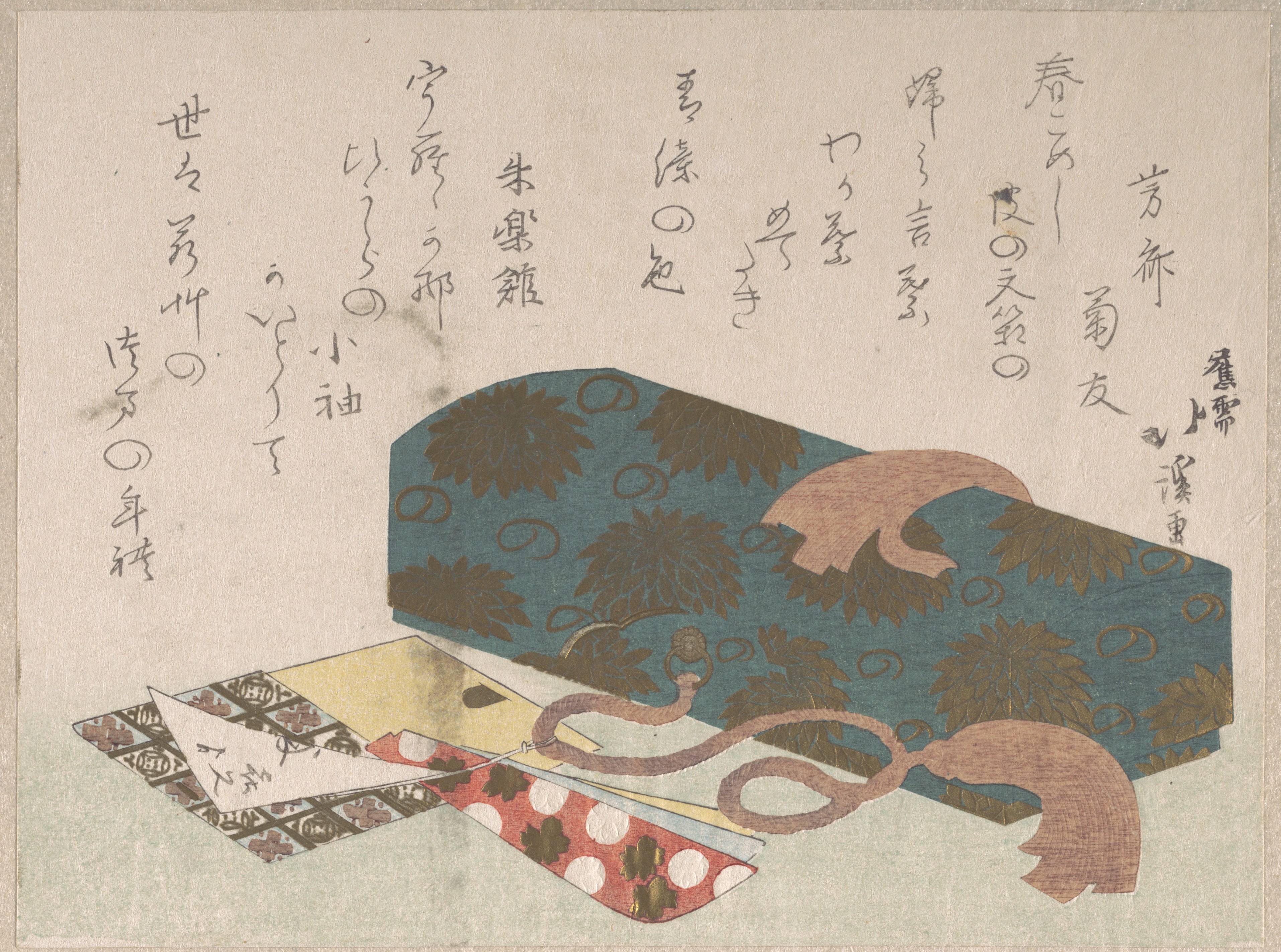
Letter-box and Toothpick Holders
19th century
Part of an album of woodblock prints (surimono); ink and color on paper

Illustration of a Chinese poem, from the series "Picture Book of Chinese Poems (Toshi gafu no uchi)"
c. 1830/44
Color woodblock print; chuban

Kyōka Verse Anthology of Elegant Friends (Kyōka gayū shū) 狂歌雅友集
1826 (Bunsei 9)
Woodblock printed book; ink and color on paper
Frequently Asked Questions
Benzaiten with monkey and rat was created by Totoya Hokkei (魚屋北渓) in 1828.