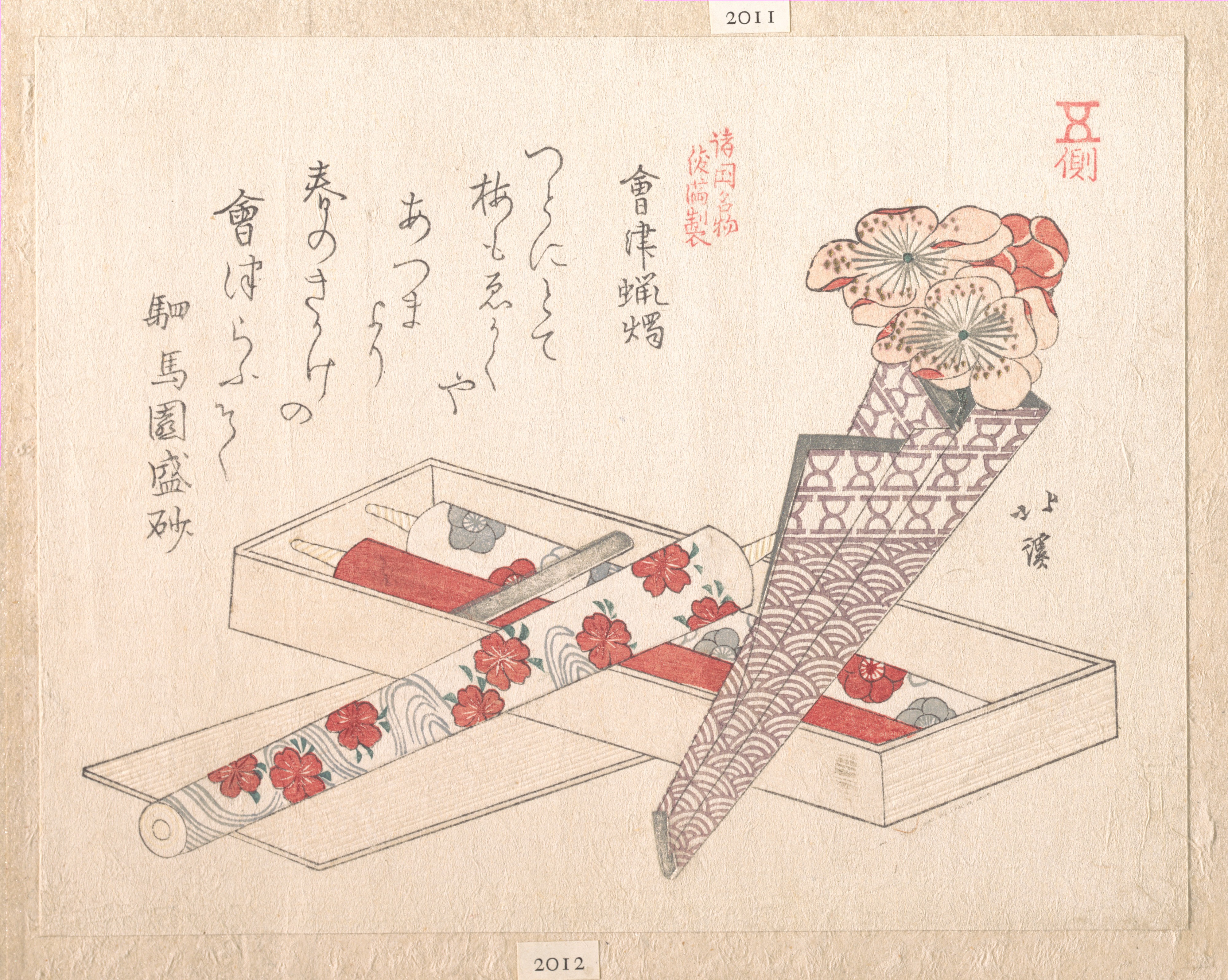
Candles of Aizu
- Date:
- 19th century
- Medium:
- Woodblock print (surimono); ink and color on paper
- Source:
- Metropolitan Museum of Art
Description
Candles of Aizu is a still-life surimono by Totoya Hokkei, a printmaker of the Hokusai school working in early nineteenth-century Edo. The image presents a bundle or display of candles, identified as products of Aizu in the Tohoku region, an area famous for its hand-poured wax candles decorated with painted flowers. Hokkei treats the candles with quiet attention, arranging them in a careful pattern so that the painted decorations and the variation in candle thickness become the visual interest of the sheet. Aizu candles, large in scale and ornamented with seasonal motifs, were considered both practical objects and luxury goods, used in temples and aristocratic households as well as gifted for ceremonial occasions. By naming the regional speciality in the title, the print conveys a kind of connoisseurship of place that suited the kyoka world, whose poets prided themselves on knowing the finest goods produced in different provinces. As a surimono the sheet would have been commissioned by a poetry circle, the accompanying verses turning on themes of light, illumination, devotion, or the journey from province to province, and was issued in a small edition with metallic pigments and karazuri blind embossing emphasizing the painted decoration on the candles. Hokkei studied directly under Katsushika Hokusai and was particularly esteemed for his still-life compositions, in which everyday objects are presented with the gravity normally reserved for hanging-scroll paintings. The print is preserved in the Metropolitan Museum of Art and demonstrates the Hokusai school's interest in regional craft within the refined idiom of the Edo surimono.
More Prints by Totoya Hokkei

Potted Plant (Ueki), from the series "Eighteen Illustrations of the Ladder of Ancient Words (Kogentei juhachiban tsuzuki)"
1831
Color woodblock print; shikishiban, surimono
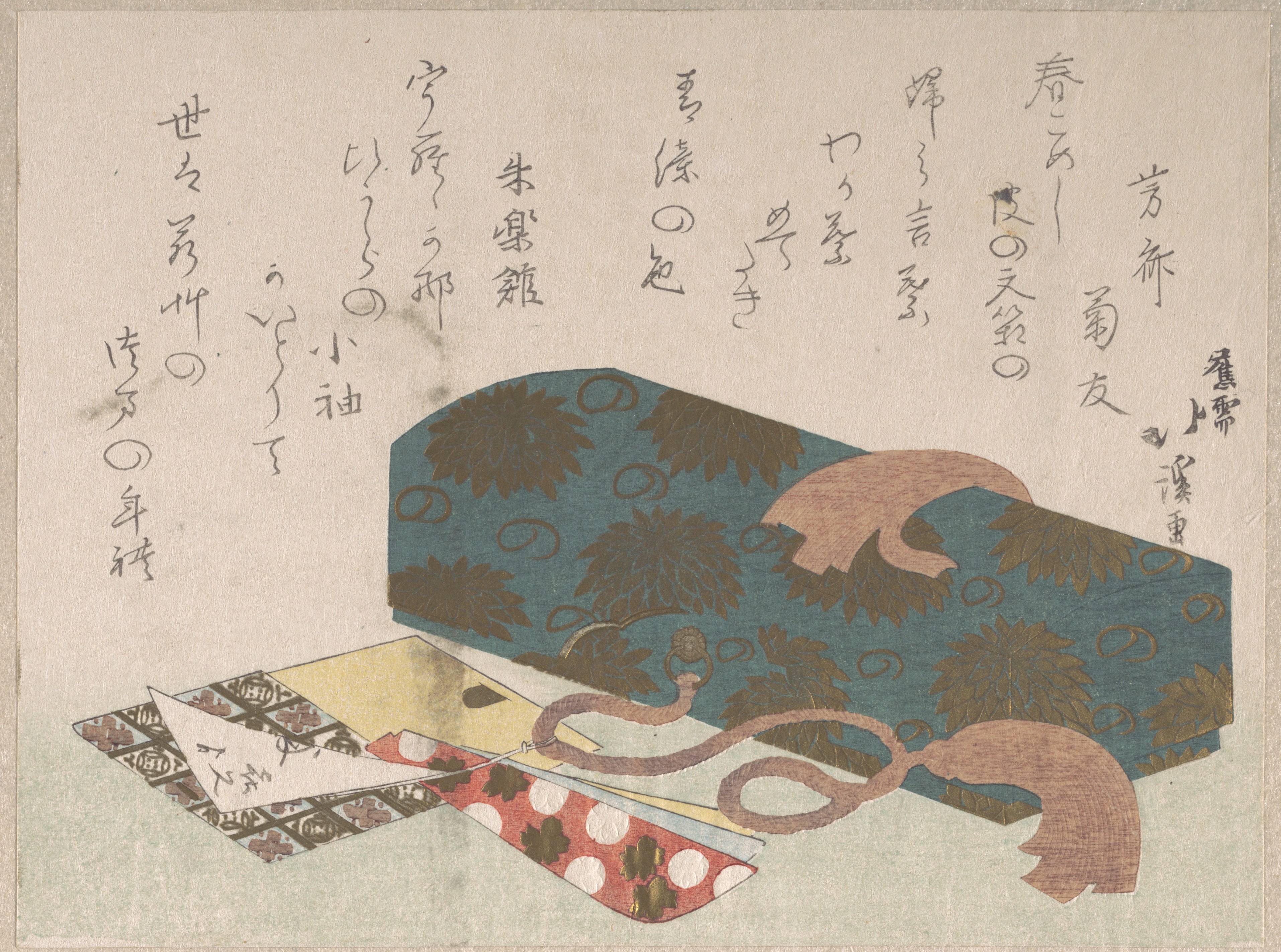
Letter-box and Toothpick Holders
19th century
Part of an album of woodblock prints (surimono); ink and color on paper

Illustration of a Chinese poem, from the series "Picture Book of Chinese Poems (Toshi gafu no uchi)"
c. 1830/44
Color woodblock print; chuban

Kyōka Verse Anthology of Elegant Friends (Kyōka gayū shū) 狂歌雅友集
1826 (Bunsei 9)
Woodblock printed book; ink and color on paper
Frequently Asked Questions
Candles of Aizu was created by Totoya Hokkei (魚屋北渓) in 19th century.