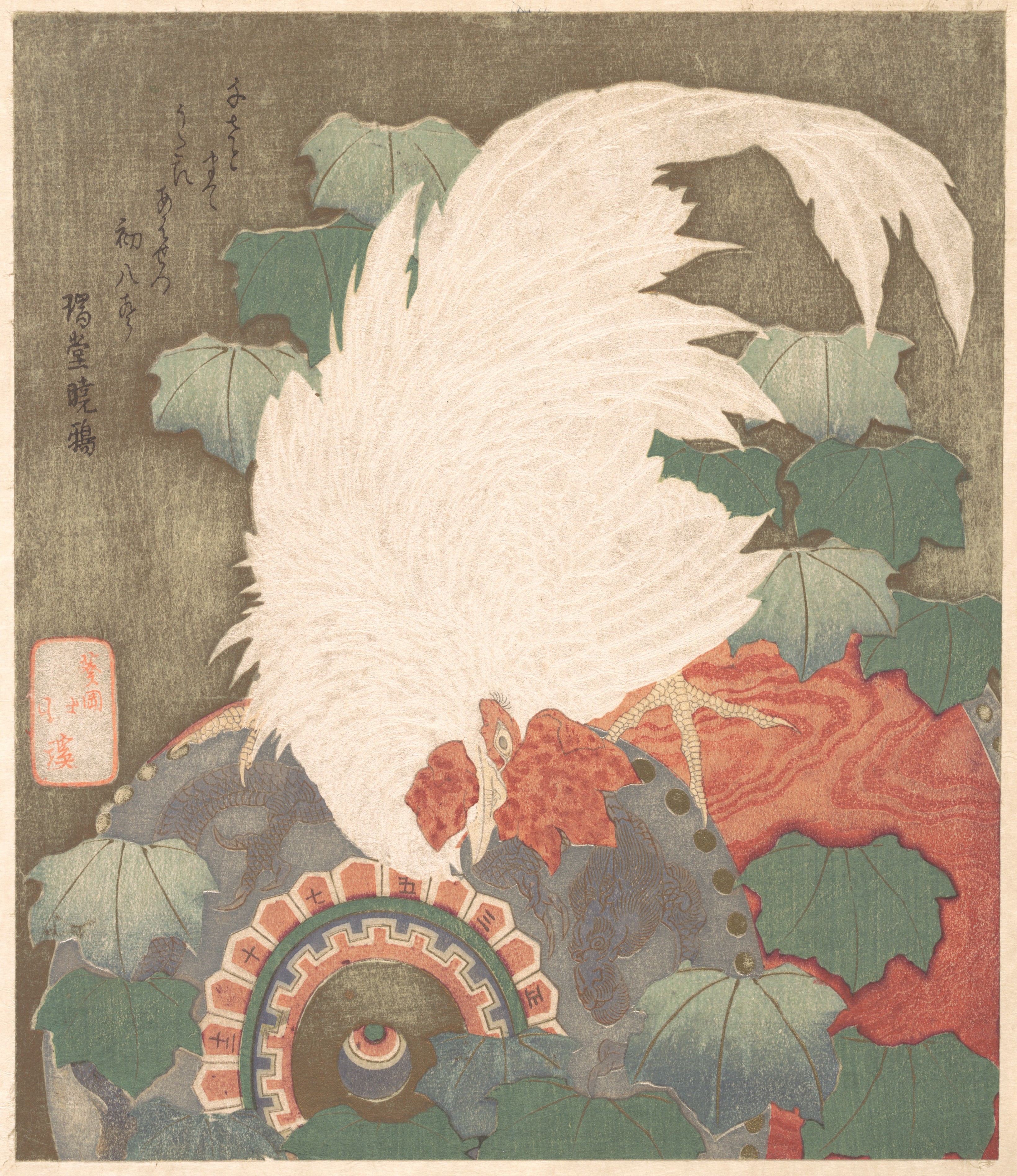
Cock on Drum
- Date:
- ca. 1825
- Medium:
- Woodblock print (surimono); ink and color on paper
- Source:
- Metropolitan Museum of Art
Description
Cock on Drum is a surimono by Totoya Hokkei, a printmaker of the Hokusai school active in Edo during the early nineteenth century. The composition shows a rooster perched on a large lacquered drum, the curve of his neck and the spread of his tail feathers echoing the rounded volume of the instrument beneath him. The image refers to a Chinese Confucian story about a drum set outside a palace gate to be struck by anyone with a grievance: in an age of perfect peace the drum stood unused for so long that a cock came to roost on it, and the motif became a stock emblem for prosperous, well-governed times. Hokkei treats the subject with characteristic precision, isolating the bird and drum against an empty ground and concentrating decorative elaboration on the bird's plumage and the colored cords binding the drum head. As a surimono, the sheet would have been commissioned by a kyoka poetry group, printed in a small edition with metallic pigments and blind embossing, and circulated with accompanying verses that played on themes of peace, longevity, and the New Year. Hokkei studied with Katsushika Hokusai and developed a refined still-life and bird-and-flower idiom that adapted Hokusai's manner to the intimate scale of privately published prints. His handling of the cock here is calm and statuesque, in keeping with the auspicious meaning of the image rather than any naturalistic dynamism. The print is preserved in the Metropolitan Museum of Art, where it stands among many surimono by Hokkei that illustrate how Hokusai school designers translated classical Chinese and Japanese emblems into the elegant decorative vocabulary that defined Edo poetry-club prints.
More Prints by Totoya Hokkei

Potted Plant (Ueki), from the series "Eighteen Illustrations of the Ladder of Ancient Words (Kogentei juhachiban tsuzuki)"
1831
Color woodblock print; shikishiban, surimono
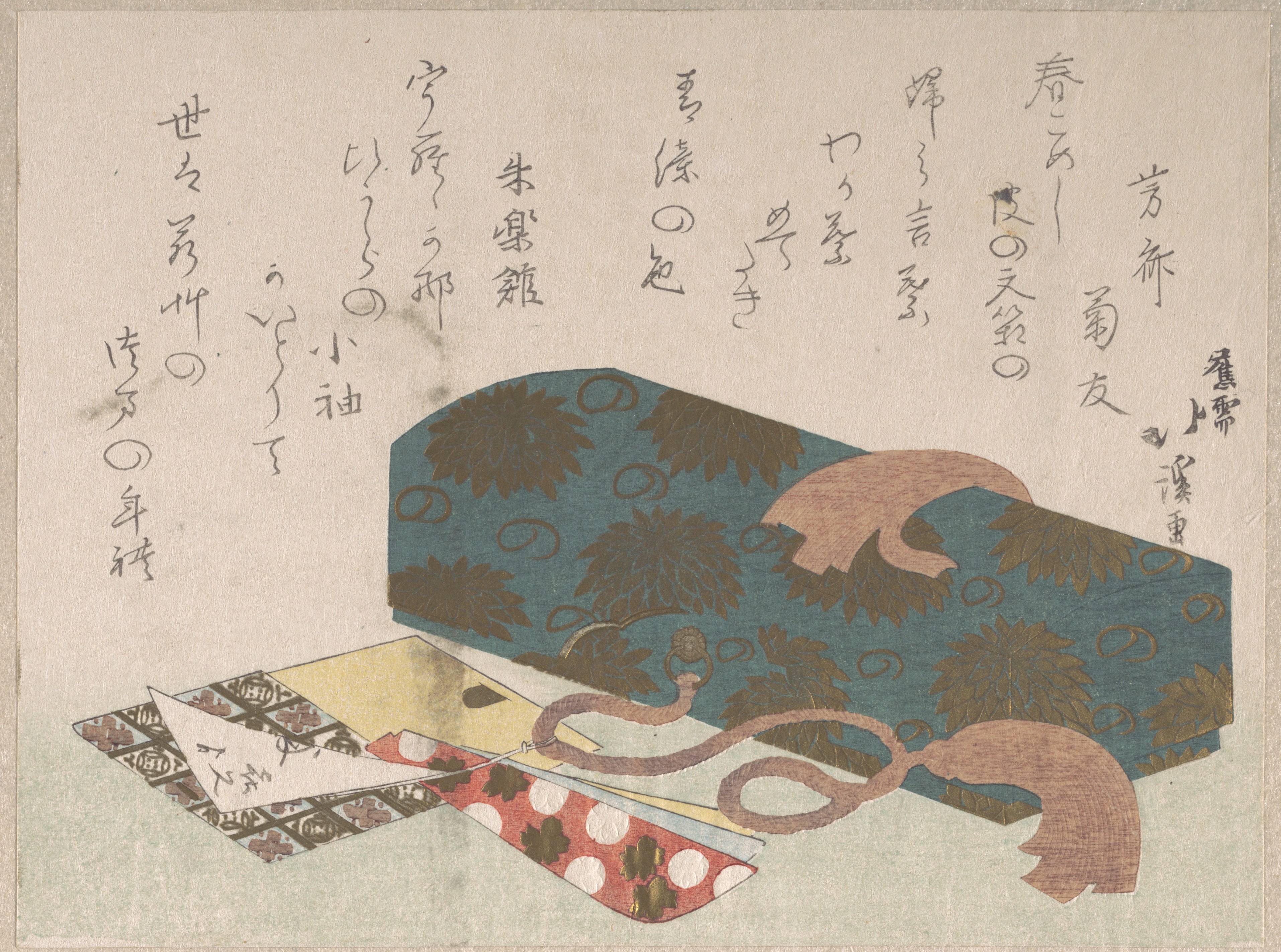
Letter-box and Toothpick Holders
19th century
Part of an album of woodblock prints (surimono); ink and color on paper

Illustration of a Chinese poem, from the series "Picture Book of Chinese Poems (Toshi gafu no uchi)"
c. 1830/44
Color woodblock print; chuban

Kyōka Verse Anthology of Elegant Friends (Kyōka gayū shū) 狂歌雅友集
1826 (Bunsei 9)
Woodblock printed book; ink and color on paper
Frequently Asked Questions
Cock on Drum was created by Totoya Hokkei (魚屋北渓) in ca. 1825.