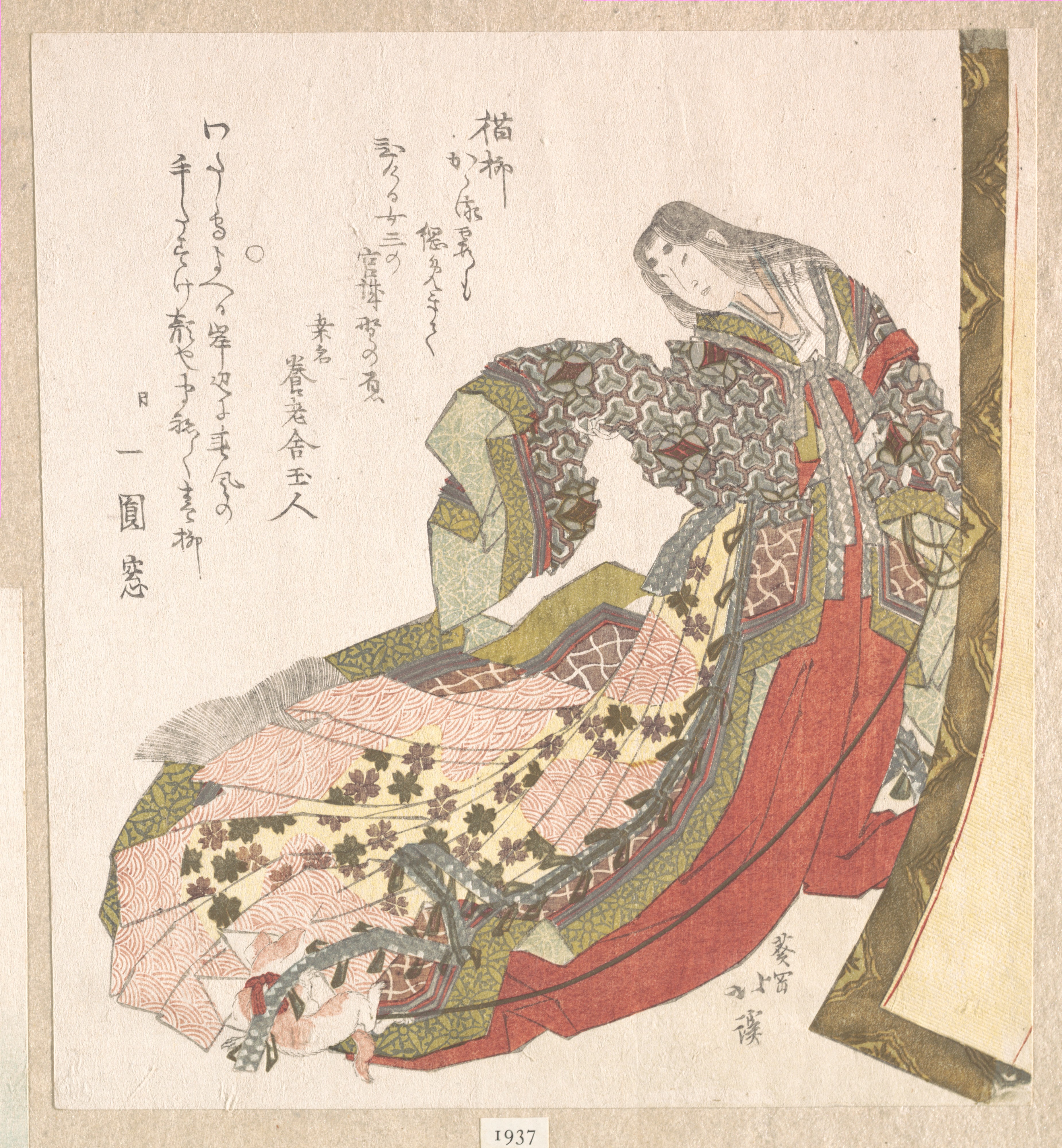
Court Lady
- Medium:
- Woodblock print (surimono); ink and color on paper
- Source:
- Metropolitan Museum of Art
Description
Court Lady is a surimono by Totoya Hokkei, a printmaker trained in the Hokusai school and a leading designer of privately commissioned prints in early nineteenth-century Edo. The figure is shown in the dress of a Heian period noblewoman, wearing the multiple layered robes of the junihitoe and her hair flowing long down her back. Hokkei treats the costume as the principal subject, layering colored garments and patterned outer robes that fan out around the seated or standing figure, while the face is rendered with the restrained features and high painted brows of classical court convention. Such depictions of Heian aristocratic women were common in kyoka surimono, especially within series alluding to The Tale of Genji, the Hyakunin Isshu collection of one hundred poems, or other waka anthologies that formed the literary backbone of poetry-club culture in Edo. The image would have accompanied verses inscribed alongside it, the contrast between the courtly subject and the witty modern voice of the kyoka providing much of its appeal. As a surimono, the sheet was produced in a small private edition on thick hosho paper, with elaborate techniques such as karazuri blind embossing on robe patterns and metallic pigment on textile gold. Hokkei studied with Katsushika Hokusai and developed a particularly elegant figural manner suited to such allusive subjects, with controlled outlines and confident pattern design. The print is preserved in the Metropolitan Museum of Art, where it illustrates the Hokusai school's continued engagement with classical Japanese literary culture and the role of surimono in keeping that imagery vivid for the educated townspeople of nineteenth-century Edo.
More Prints by Totoya Hokkei

Potted Plant (Ueki), from the series "Eighteen Illustrations of the Ladder of Ancient Words (Kogentei juhachiban tsuzuki)"
1831
Color woodblock print; shikishiban, surimono
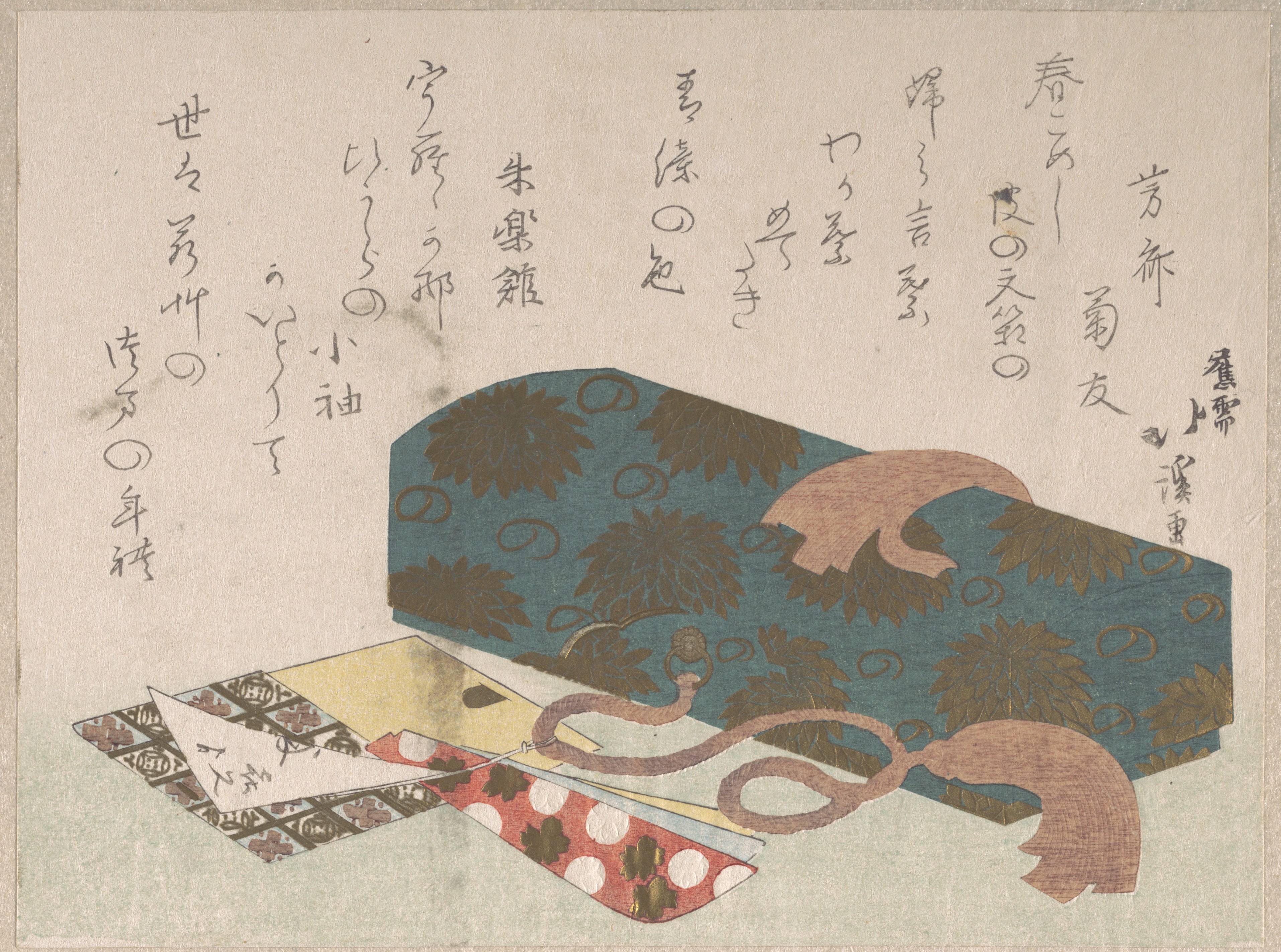
Letter-box and Toothpick Holders
19th century
Part of an album of woodblock prints (surimono); ink and color on paper

Illustration of a Chinese poem, from the series "Picture Book of Chinese Poems (Toshi gafu no uchi)"
c. 1830/44
Color woodblock print; chuban

Kyōka Verse Anthology of Elegant Friends (Kyōka gayū shū) 狂歌雅友集
1826 (Bunsei 9)
Woodblock printed book; ink and color on paper
Frequently Asked Questions
Court Lady was created by Totoya Hokkei (魚屋北渓).