
Courtesan and Attendant
- Date:
- 19th century
- Medium:
- Color woodblock print; surimono
- Source:
- Art Institute of Chicago
Description
This Art Institute of Chicago surimono depicts a Yoshiwara courtesan accompanied by her young attendant (kamuro), a subject that allowed Hokkei to engage one of the most celebrated themes of Edo print culture in the refined idiom of privately commissioned poetry-circle work. Where the great commercial bijin-ga of Utamaro and his successors aimed at marketable individual portraits, the surimono treatment of the same subject was more layered: the courtesan often functioned as a mitate figure, her presence alluding to classical literary or theatrical sources that the inscribed kyoka verses would activate. Hokkei renders the figures with the slender elegance characteristic of his surimono draftsmanship - elongated proportions, finely drawn features, attention to the patterning and color of the courtesan's robes that flatters the careful printing of which the surimono format was capable. The young kamuro provides scale and narrative texture. The Art Institute's impression preserves the kind of saturated pigments, fine paper, and meticulous registration that distinguished privately commissioned prints from commercial editions, and would likely have included original metallic dusting in select passages of the design.
More Prints by Totoya Hokkei

Potted Plant (Ueki), from the series "Eighteen Illustrations of the Ladder of Ancient Words (Kogentei juhachiban tsuzuki)"
1831
Color woodblock print; shikishiban, surimono
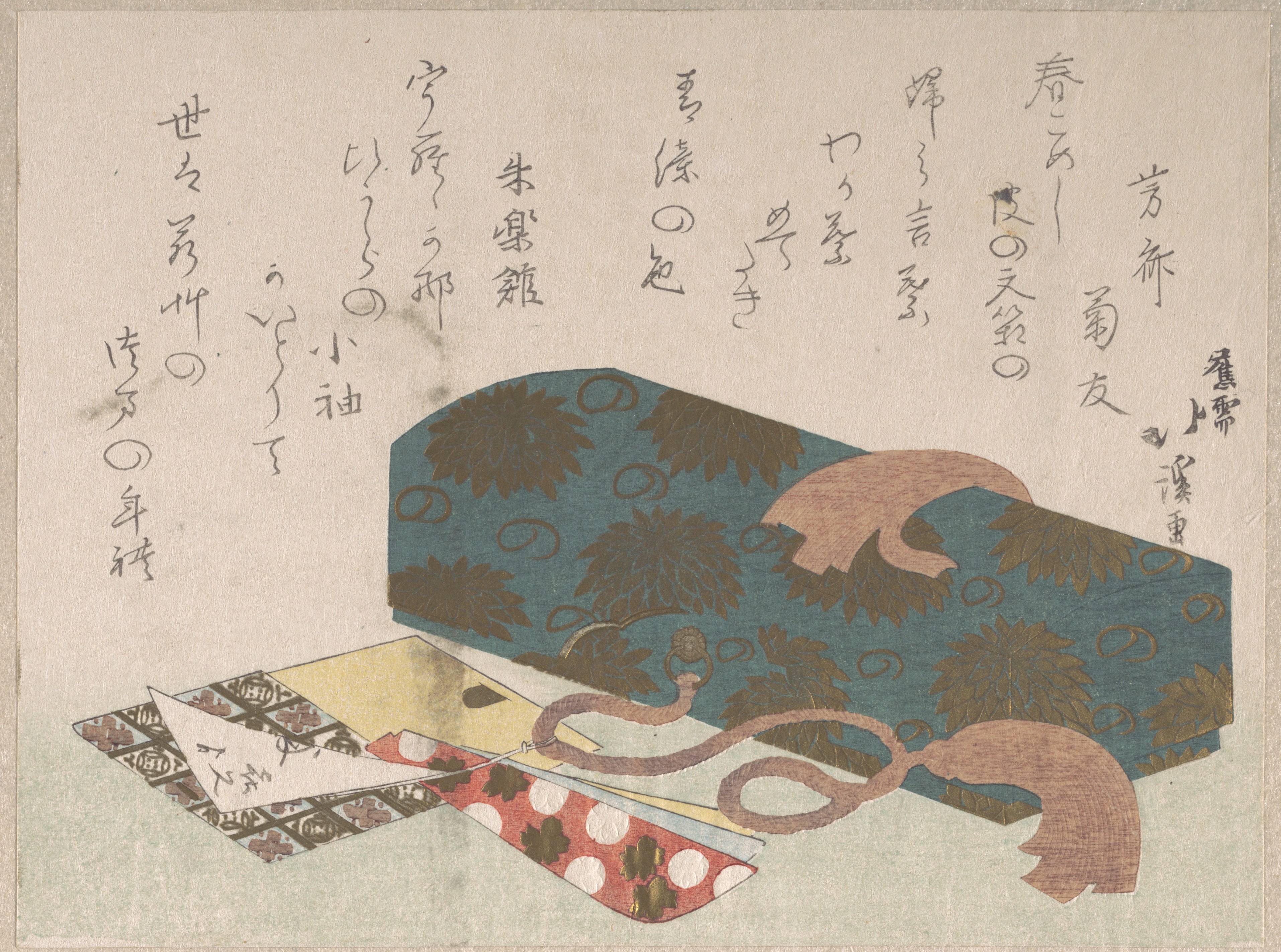
Letter-box and Toothpick Holders
19th century
Part of an album of woodblock prints (surimono); ink and color on paper

Illustration of a Chinese poem, from the series "Picture Book of Chinese Poems (Toshi gafu no uchi)"
c. 1830/44
Color woodblock print; chuban

Kyōka Verse Anthology of Elegant Friends (Kyōka gayū shū) 狂歌雅友集
1826 (Bunsei 9)
Woodblock printed book; ink and color on paper
Frequently Asked Questions
Courtesan and Attendant was created by Totoya Hokkei (魚屋北渓) in 19th century.