
Dōchū gafu
- Date:
- 1608
- Medium:
- Woodblock- printed book; 1 vol.
- Source:
- Art Institute of Chicago
Description
Dochu gafu, an illustrated book associated with Totoya Hokkei and preserved in the Art Institute of Chicago under accession entry 230987, belongs to the tradition of picture albums (gafu) and travel albums (dochu) produced by Hokusai school artists in the early nineteenth century. Such books offered patrons sets of compositions assembled in a single volume, often combining landscape vignettes, figures, and motifs that could be enjoyed in private reading as well as used as models by amateur painters. Working within the Hokusai school after his apprenticeship under Katsushika Hokusai, Hokkei produced not only single-sheet surimono but also book illustrations that extended his graphic style to the broader market for printed picture albums. Without a specific publication date confirmed by the museum record, the album is best contextualized by reference to the wider production of similar volumes during the 1820s and 1830s, when Hokusai school designers contributed substantially to the genre. The compositions in this kind of album typically employ economical line work, sparing use of color, and clear pictorial organization, qualities that align with Hokkei's known practice. Because albums were intended for repeated browsing, they encouraged a more sustained engagement with the artist's drawing than the single-sheet print and thus served as an important means by which the Hokusai school's visual vocabulary was disseminated among connoisseurs, students, and travelers. The presence of Dochu gafu in a major American institutional collection underscores the international reach of Edo-period Japanese print culture and the role of museum holdings in preserving printed books alongside the more commonly studied single-sheet works.
More Prints by Totoya Hokkei

Potted Plant (Ueki), from the series "Eighteen Illustrations of the Ladder of Ancient Words (Kogentei juhachiban tsuzuki)"
1831
Color woodblock print; shikishiban, surimono
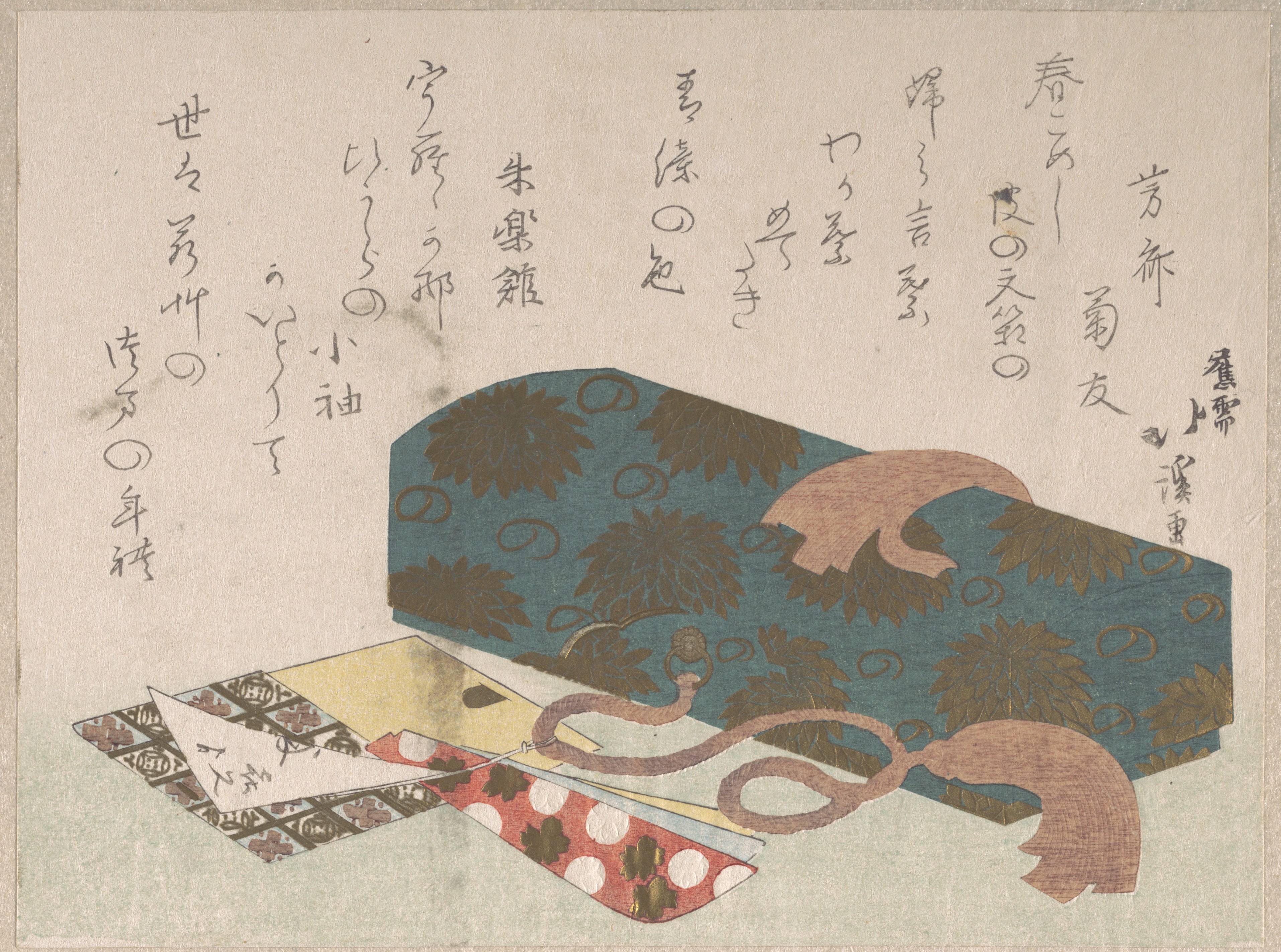
Letter-box and Toothpick Holders
19th century
Part of an album of woodblock prints (surimono); ink and color on paper

Illustration of a Chinese poem, from the series "Picture Book of Chinese Poems (Toshi gafu no uchi)"
c. 1830/44
Color woodblock print; chuban

Kyōka Verse Anthology of Elegant Friends (Kyōka gayū shū) 狂歌雅友集
1826 (Bunsei 9)
Woodblock printed book; ink and color on paper
Frequently Asked Questions
Dōchū gafu was created by Totoya Hokkei (魚屋北渓) in 1608.