
Dragon in the clouds
- Date:
- 1832
- Medium:
- Color woodblock print; shikishiban, surimono
- Source:
- Art Institute of Chicago
Description
Dragon in the clouds, designed by Totoya Hokkei in 1832, is a surimono whose subject combines auspicious symbolism with the dramatic visual potential of a dragon emerging from heavy cloud. The dragon has long been associated in East Asian visual culture with rain, prosperity, and imperial or transcendent power, and it appears frequently in Japanese painting and printmaking. Within the surimono tradition the motif lent itself particularly to New Year and other commemorative occasions, where wishes for abundance and good fortune dominated the literary and visual repertoire. Hokkei renders the dragon with strong, calligraphic outlines and a sense of churning cloud volume that draws on the Hokusai school's confidence with such dynamic forms, an inheritance from his training under Katsushika Hokusai. The deluxe character of surimono printing, with metallic pigments, embossing, and careful gradations, suited the spectacular subject and would have produced impressions of considerable visual impact when held in the hand. Above or beside the image, kyoka verses contributed by the poetry circle commissioning the print would have completed the gift, framing the dragon within the literary preoccupations of the patrons. As one of the most prominent surimono specialists of his generation, Totoya Hokkei produced dragon images of this kind throughout his career, and the 1832 sheet preserved in the Art Institute of Chicago under accession entry 36318 stands as a particularly striking example. The work shows how Hokusai school graphic conventions could be applied to an emblematic creature without losing the refinement appropriate to the surimono format.
More Prints by Totoya Hokkei

Potted Plant (Ueki), from the series "Eighteen Illustrations of the Ladder of Ancient Words (Kogentei juhachiban tsuzuki)"
1831
Color woodblock print; shikishiban, surimono
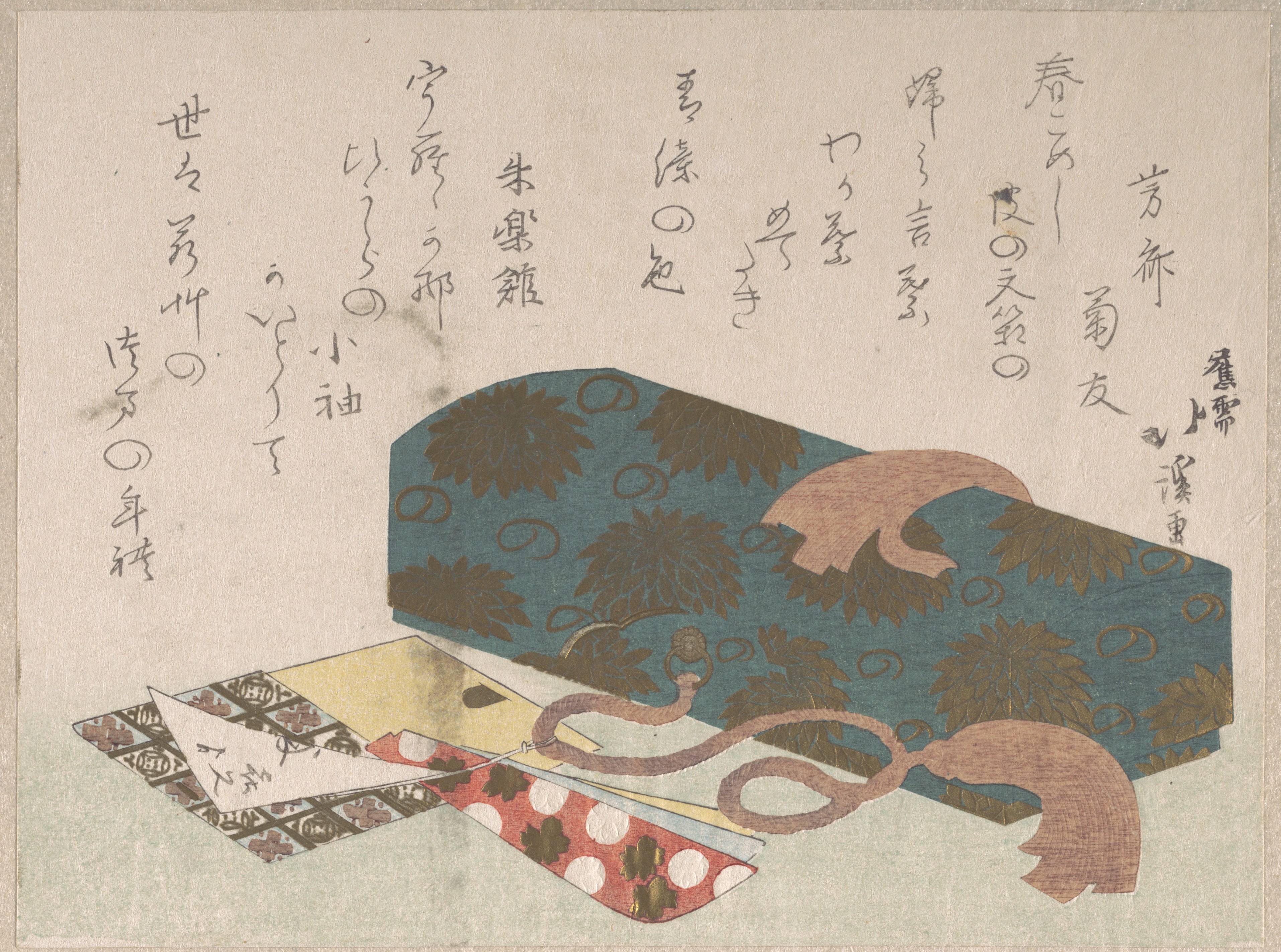
Letter-box and Toothpick Holders
19th century
Part of an album of woodblock prints (surimono); ink and color on paper

Illustration of a Chinese poem, from the series "Picture Book of Chinese Poems (Toshi gafu no uchi)"
c. 1830/44
Color woodblock print; chuban

Kyōka Verse Anthology of Elegant Friends (Kyōka gayū shū) 狂歌雅友集
1826 (Bunsei 9)
Woodblock printed book; ink and color on paper
Frequently Asked Questions
Dragon in the clouds was created by Totoya Hokkei (魚屋北渓) in 1832.