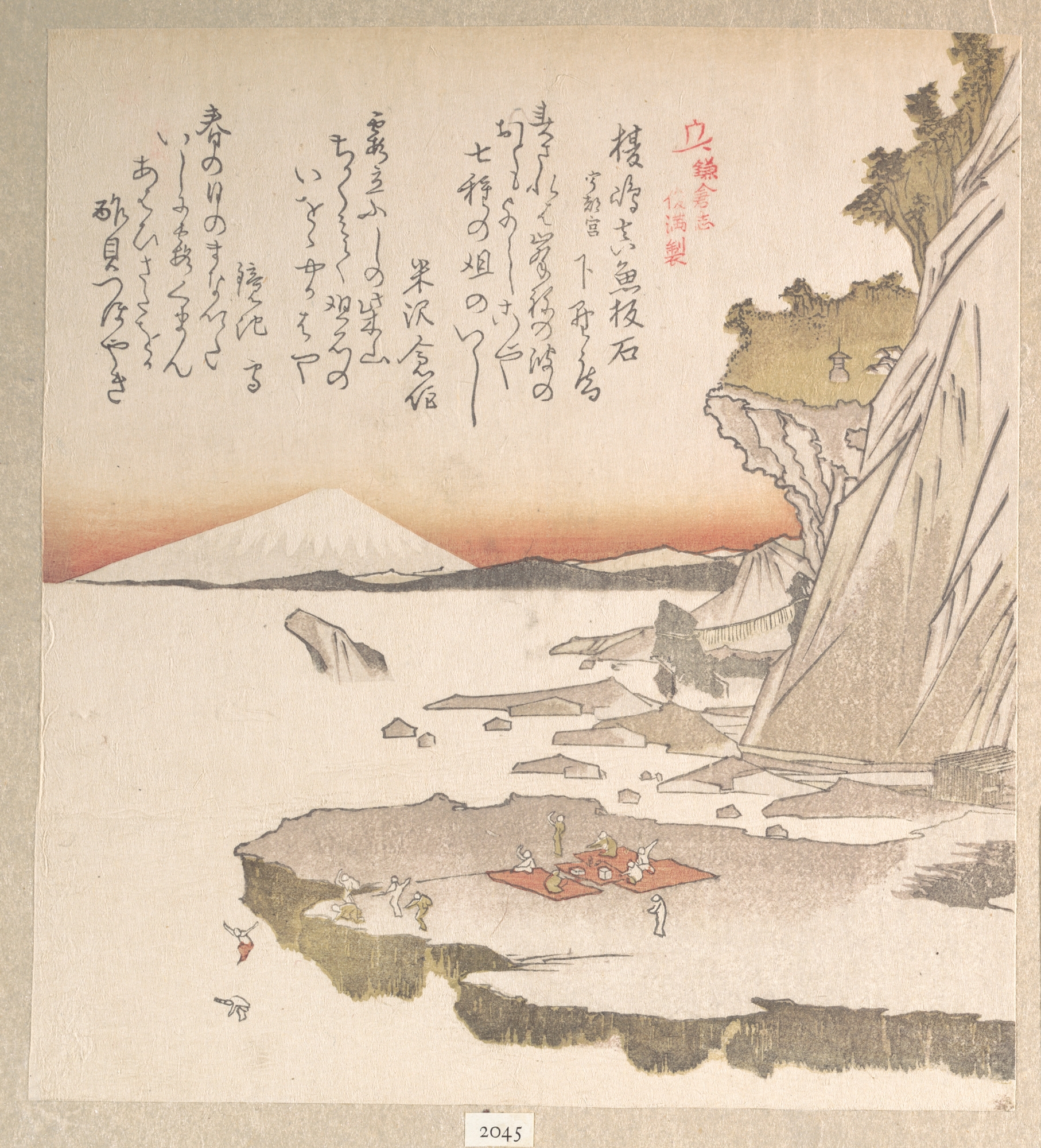
History of Kamakura: Enoshima Island
- Date:
- 19th century
- Medium:
- Woodblock print (surimono); ink and color on paper
- Source:
- Metropolitan Museum of Art
Description
History of Kamakura: Enoshima Island is a surimono by Totoya Hokkei, a Hokusai school printmaker active in early nineteenth-century Edo. The print belongs to a series treating sites associated with the medieval capital of Kamakura, and this sheet centers on Enoshima, the small sacred island off the coast just to the west. Enoshima, dedicated to the goddess Benten, was both a popular pilgrimage destination and a scenic spot famous for its caves, ocean views, and connections to medieval legend. Hokkei depicts the island as a rocky promontory rising from the sea, with travelers and shrine structures suggested in compact pictorial shorthand. The composition combines elements of landscape with the figural and emblematic conventions of the surimono format, allowing Hokkei to evoke both the topography of Enoshima and the cultural associations that travelers brought to it. The sheet would have been commissioned by a kyoka poetry club, the accompanying verses likely treating Benten, the sea, or the romance of pilgrimage, and was issued in a small edition on hosho paper with metallic pigments and blind embossing for spray and rock textures. Hokkei studied with Katsushika Hokusai and was particularly known for the elegant compactness of his small-format landscape designs, in which the geographic and the literary were laced tightly together. The print is preserved in the Metropolitan Museum of Art, where it joins other surimono in the collection that document Edo townspeople's interest in famous places near the capital. The image illustrates how the Hokusai school treated landscape as much through emblem and allusion as through topographical record.
More Prints by Totoya Hokkei

Potted Plant (Ueki), from the series "Eighteen Illustrations of the Ladder of Ancient Words (Kogentei juhachiban tsuzuki)"
1831
Color woodblock print; shikishiban, surimono
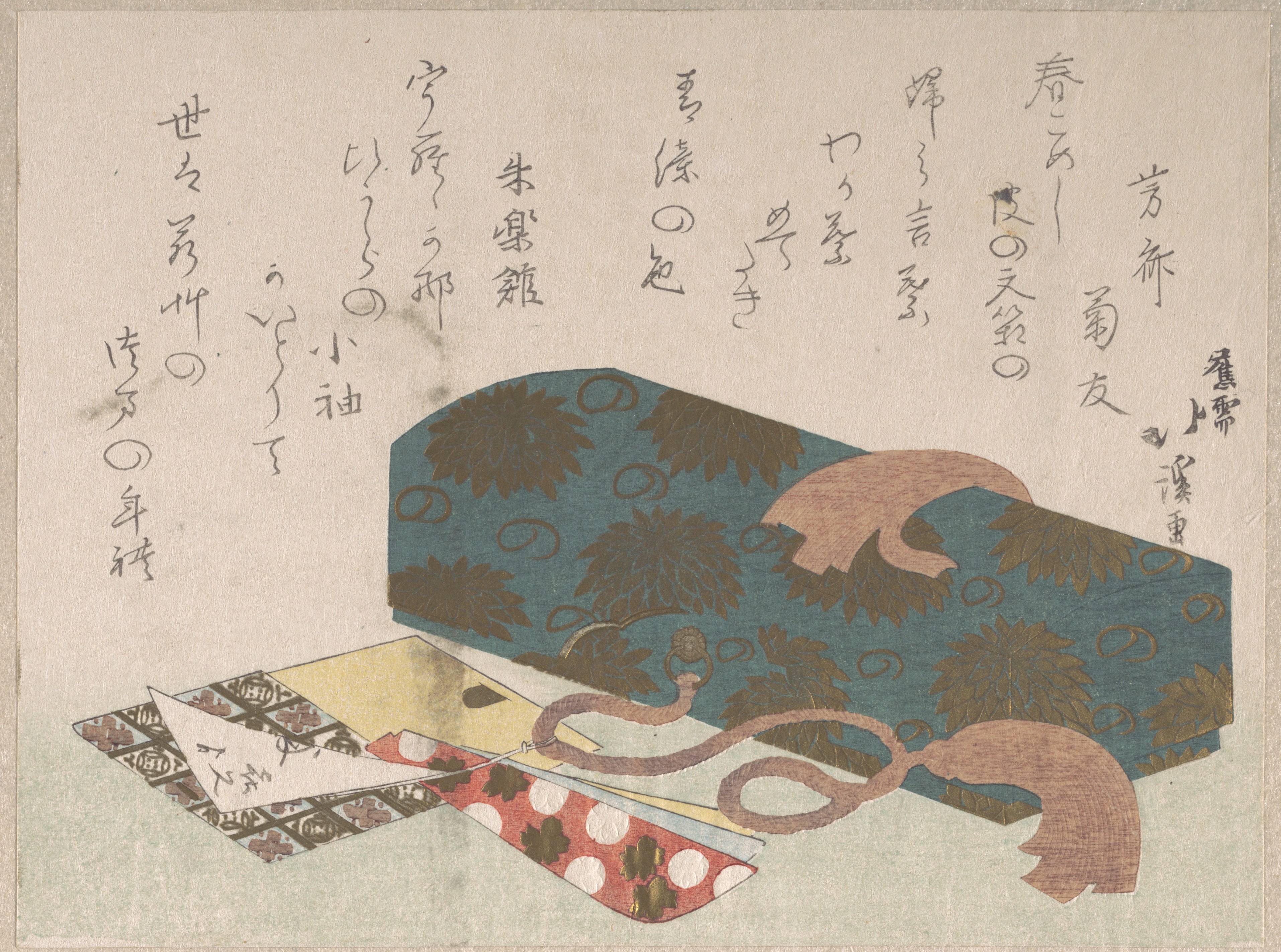
Letter-box and Toothpick Holders
19th century
Part of an album of woodblock prints (surimono); ink and color on paper

Illustration of a Chinese poem, from the series "Picture Book of Chinese Poems (Toshi gafu no uchi)"
c. 1830/44
Color woodblock print; chuban

Kyōka Verse Anthology of Elegant Friends (Kyōka gayū shū) 狂歌雅友集
1826 (Bunsei 9)
Woodblock printed book; ink and color on paper
Frequently Asked Questions
History of Kamakura: Enoshima Island was created by Totoya Hokkei (魚屋北渓) in 19th century.