
It is good to cut one's fingernails (Tsume tori yoshi), from the series "A Series for the Hanazono Group (Hanazono bantsuzuki)"
- Date:
- c. 1822
- Medium:
- Color woodblock print; shikishiban, surimono
- Source:
- Art Institute of Chicago
Description
Totoya Hokkei's surimono "It is good to cut one's fingernails" (Tsume tori yoshi), from the series A Series for the Hanazono Group (Hanazono bantsuzuki), is a wry domestic vignette tied to traditional household lore about which days are auspicious for trimming nails. Such customs were a regular subject of kyōka humor, allowing the Hanazono group of poets to build verses around the small superstitions that structured everyday life. As a Hokusai school designer Hokkei was well suited to this gentle social satire, and the print's small scale and carefully arranged figure or figures reflect his mature surimono manner. The Hanazono bantsuzuki series was a project commissioned by the Hanazono kyōka circle, and like other Edo kyoka-e series of the period it gave its members a chance to combine their poems with images that read both as personal exchanges and as a recognizable group identity. The Art Institute of Chicago holds the sheet within its very strong group of Hokkei surimono. The print sits naturally alongside the other Hanazono bantsuzuki sheets in the collection, where the cumulative effect is a remarkable record of how a single poetry group built a coherent series of surimono around the rhythms of household life. Image courtesy of the Art Institute of Chicago.
More Prints by Totoya Hokkei

Potted Plant (Ueki), from the series "Eighteen Illustrations of the Ladder of Ancient Words (Kogentei juhachiban tsuzuki)"
1831
Color woodblock print; shikishiban, surimono
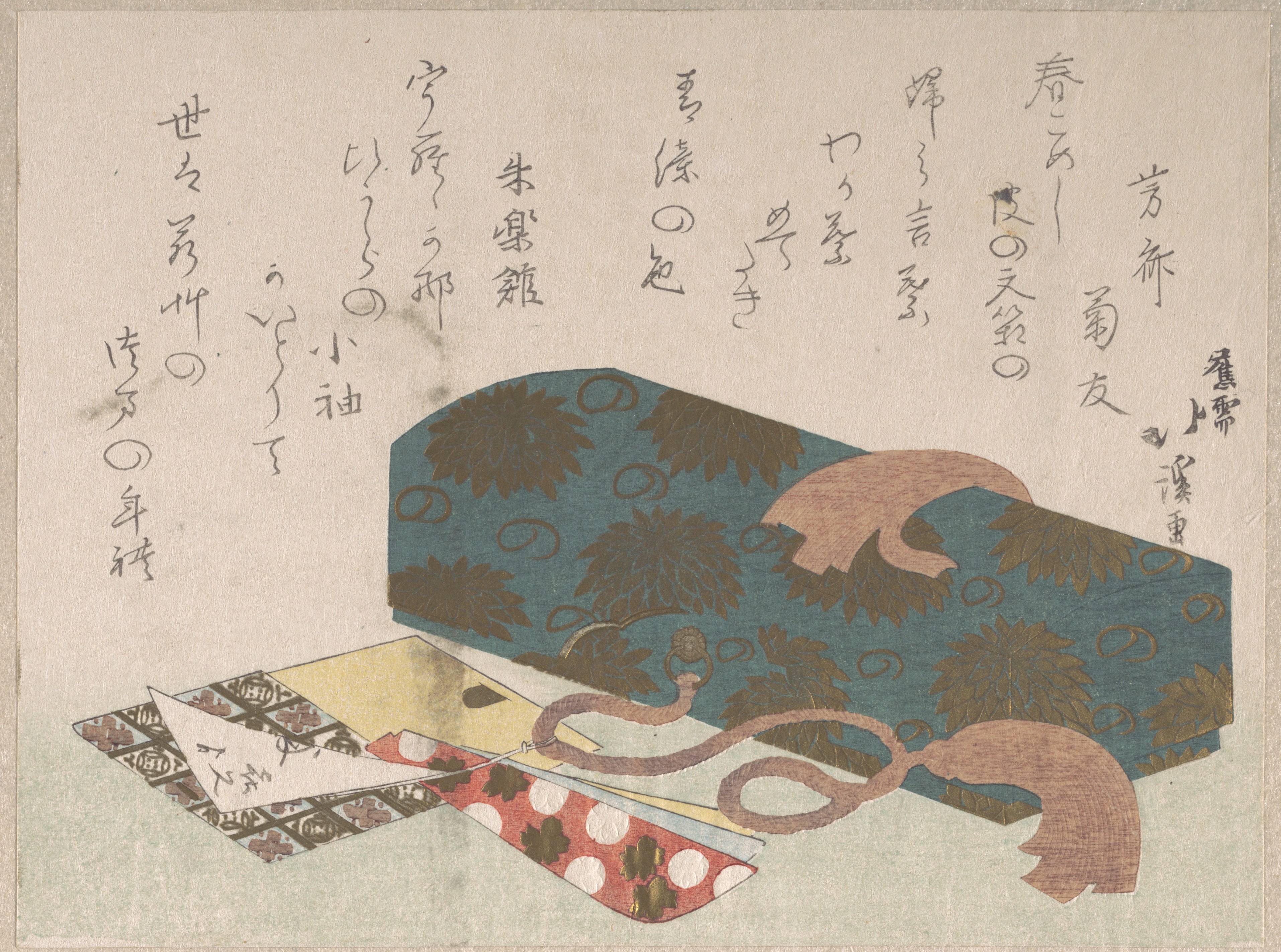
Letter-box and Toothpick Holders
19th century
Part of an album of woodblock prints (surimono); ink and color on paper

Illustration of a Chinese poem, from the series "Picture Book of Chinese Poems (Toshi gafu no uchi)"
c. 1830/44
Color woodblock print; chuban

Kyōka Verse Anthology of Elegant Friends (Kyōka gayū shū) 狂歌雅友集
1826 (Bunsei 9)
Woodblock printed book; ink and color on paper
Frequently Asked Questions
It is good to cut one's fingernails (Tsume tori yoshi), from the series "A Series for the Hanazono Group (Hanazono bantsuzuki)" was created by Totoya Hokkei (魚屋北渓) in c. 1822.