
Kintaro dreaming of his childhood
- Date:
- 1829
- Medium:
- Color woodblock print; shikishiban, surimono
- Source:
- Art Institute of Chicago
Description
Kintaro dreaming of his childhood, designed by Totoya Hokkei around 1829, is a surimono that turns to one of the most beloved figures of Japanese folklore for its subject. Kintaro, the strong boy raised in the mountains and traditionally associated with the historical warrior Sakata no Kintoki, was an enduring favorite of the Edo print public, embodying ideals of vitality and youthful resilience. By depicting him in a moment of reverie or dream, Hokkei reframes a familiar heroic figure in an introspective key, suited to the literary sensibilities of the kyoka poets for whom the print was made. Hokkei's drawing remains consistent with the Hokusai school manner he developed under Katsushika Hokusai, balancing strong outlines, controlled composition, and a sense of restrained color appropriate to the deluxe surimono medium. The inscribed verses, contributed by the participating poets, would have completed the print's meaning by amplifying its evocative theme, while the limited-edition production with embossing, metallic pigments, and refined registration would have heightened its presentation as a private gift. As one of the most committed surimono specialists among Hokusai's pupils, Totoya Hokkei produced many designs in which familiar narrative subjects served as the basis for refined literary play. The Art Institute of Chicago preserves this impression under accession entry 81020, where it provides a representative example of how Hokkei handled folk-narrative material within the elevated cultural framework of the late Edo kyoka circles.
More Prints by Totoya Hokkei

Potted Plant (Ueki), from the series "Eighteen Illustrations of the Ladder of Ancient Words (Kogentei juhachiban tsuzuki)"
1831
Color woodblock print; shikishiban, surimono
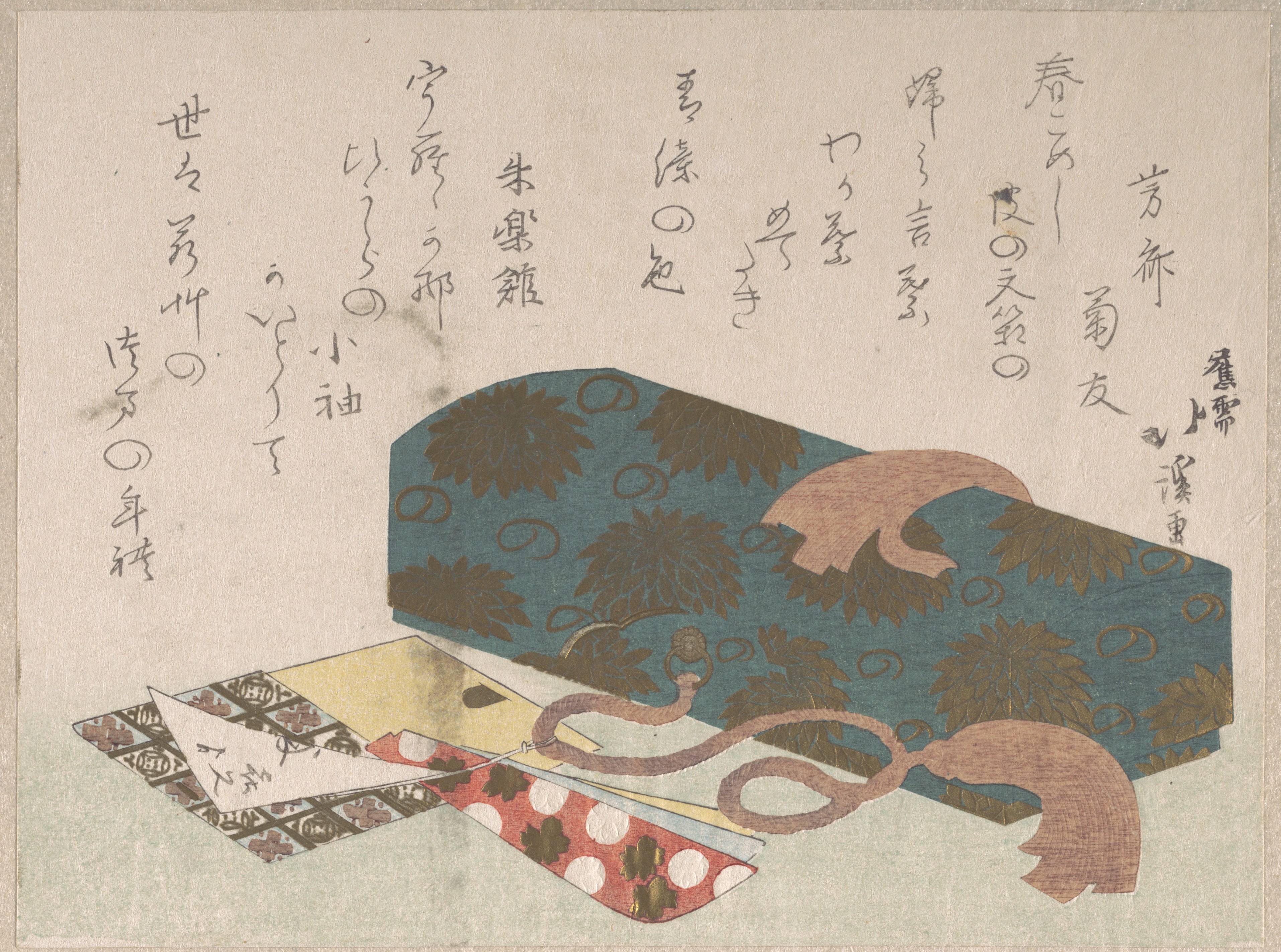
Letter-box and Toothpick Holders
19th century
Part of an album of woodblock prints (surimono); ink and color on paper

Illustration of a Chinese poem, from the series "Picture Book of Chinese Poems (Toshi gafu no uchi)"
c. 1830/44
Color woodblock print; chuban

Kyōka Verse Anthology of Elegant Friends (Kyōka gayū shū) 狂歌雅友集
1826 (Bunsei 9)
Woodblock printed book; ink and color on paper
Frequently Asked Questions
Kintaro dreaming of his childhood was created by Totoya Hokkei (魚屋北渓) in 1829.