
Lighthouse at Sumiyoshi, Osaka
- Date:
- 19th century
- Medium:
- Color woodblock print; surimono
- Source:
- Art Institute of Chicago
Description
Lighthouse at Sumiyoshi, Osaka brings Totoya Hokkei into the world of Osaka harbor scenery, depicting the celebrated stone lantern-lighthouse near Sumiyoshi Shrine. Sumiyoshi was both a major religious site, dedicated to the gods of seafaring, and a frequent subject for travel writers and printmakers, and its lighthouse — visible to ships entering the bay — became one of the recognizable emblems of the Osaka coast. Hokkei, working within the Hokusai school's developing interest in landscape, places the lighthouse against the horizon in the firm, geometric way the school favored for architectural subjects, while the surrounding water and shoreline are handled with the controlled bokashi gradation typical of high-end surimono printing. As an early-nineteenth-century Edo kyoka-e print, the sheet would have offered an opportunity for poets to compose kyōka verses on themes of pilgrimage, ports, and the protective gods of the sea. The Art Institute of Chicago holds this Sumiyoshi lighthouse design as part of its broader group of Hokkei travel and landscape surimono, where it sits alongside his Fuji and other regional landscape designs. The print is a quiet but interesting demonstration that Hokkei's reach extended beyond Edo to encompass the wider geography that nineteenth-century Japanese travelers and poets cared about. Image courtesy of the Art Institute of Chicago.
More Prints by Totoya Hokkei

Potted Plant (Ueki), from the series "Eighteen Illustrations of the Ladder of Ancient Words (Kogentei juhachiban tsuzuki)"
1831
Color woodblock print; shikishiban, surimono
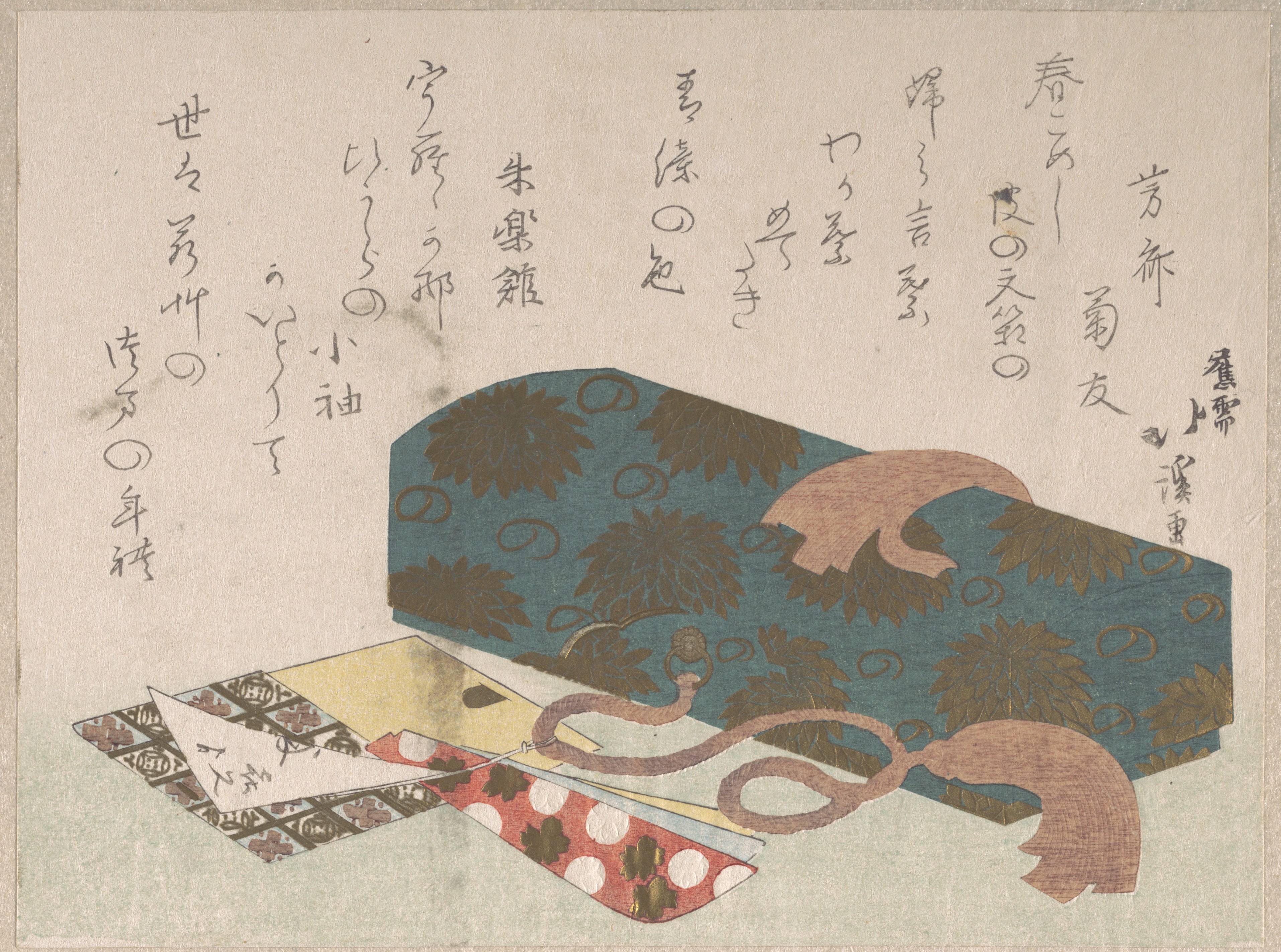
Letter-box and Toothpick Holders
19th century
Part of an album of woodblock prints (surimono); ink and color on paper

Illustration of a Chinese poem, from the series "Picture Book of Chinese Poems (Toshi gafu no uchi)"
c. 1830/44
Color woodblock print; chuban

Kyōka Verse Anthology of Elegant Friends (Kyōka gayū shū) 狂歌雅友集
1826 (Bunsei 9)
Woodblock printed book; ink and color on paper
Frequently Asked Questions
Lighthouse at Sumiyoshi, Osaka was created by Totoya Hokkei (魚屋北渓) in 19th century.