
Minamoto no Yoshitsune (Ushiwaka Maru) Playing a Flute
- Date:
- early 19th century
- Medium:
- Color woodblock print; surimono
- Source:
- Art Institute of Chicago
Description
This Art Institute of Chicago surimono depicts Minamoto no Yoshitsune in his youth - when he was known as Ushiwaka-maru - playing a flute, one of the most beloved episodes in Japanese heroic legend. As a boy at Kurama temple, Ushiwaka was said to play his flute beautifully in the moonlit grounds, his musical accomplishment standing in eloquent contrast to the martial destiny that awaited him as the great Genpei War commander Minamoto no Yoshitsune. The subject combines the romance of the young aristocratic hero with the cultivated arts that defined elite identity in classical Japan, making it an ideal mitate-e subject for kyoka poetry circles steeped in both military legend and refined cultural accomplishment. Hokkei would have rendered the figure with the elegant elongation characteristic of his bijin-ga style - the slender boy, the curving flute, the moonlit setting all calibrated to the shikishiban format and to the kyoka verses that would have completed the design's meaning. The Art Institute's impression preserves the refined printing characteristic of Hokkei's privately commissioned surimono.
More Prints by Totoya Hokkei

Potted Plant (Ueki), from the series "Eighteen Illustrations of the Ladder of Ancient Words (Kogentei juhachiban tsuzuki)"
1831
Color woodblock print; shikishiban, surimono
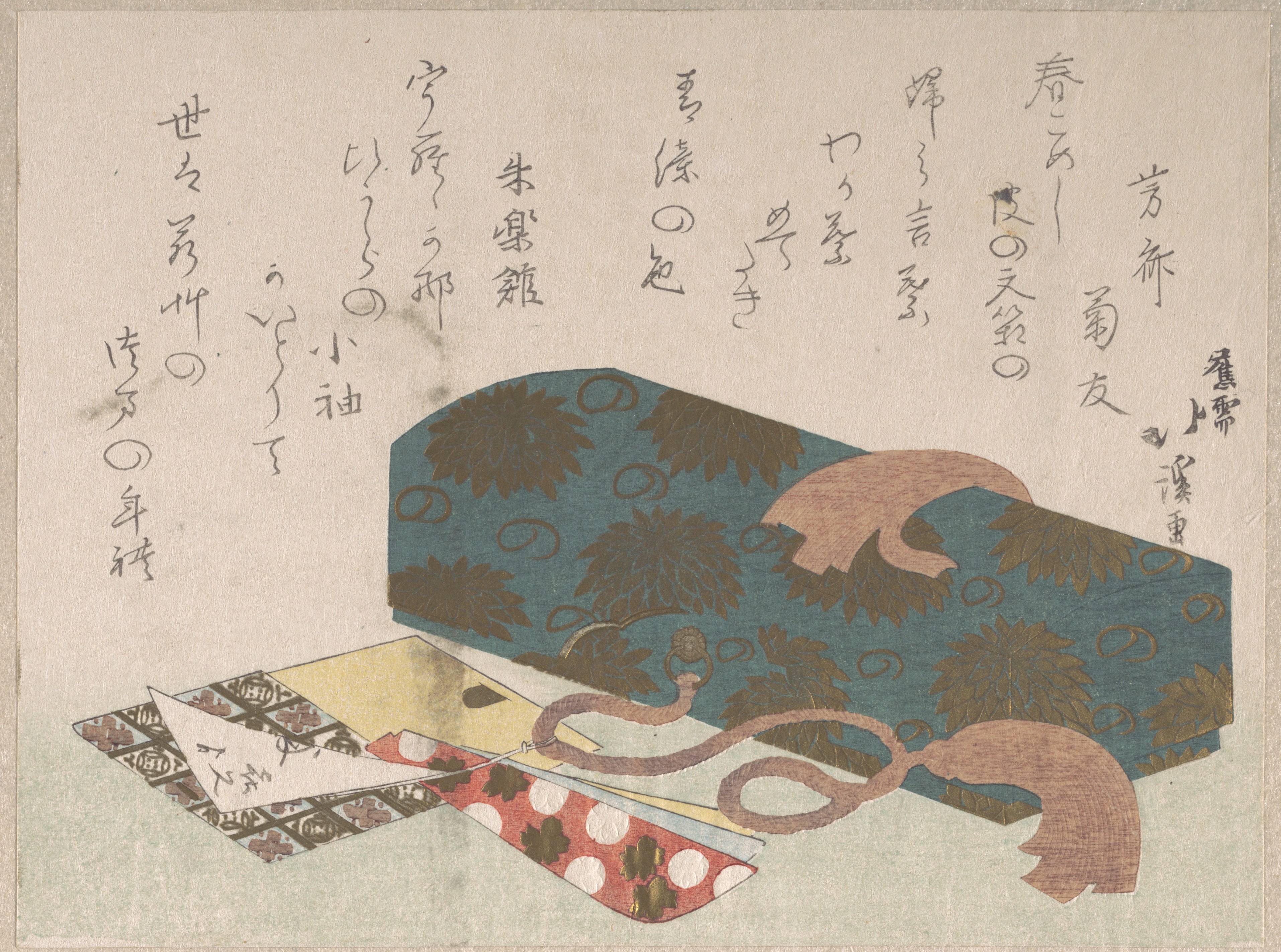
Letter-box and Toothpick Holders
19th century
Part of an album of woodblock prints (surimono); ink and color on paper

Illustration of a Chinese poem, from the series "Picture Book of Chinese Poems (Toshi gafu no uchi)"
c. 1830/44
Color woodblock print; chuban

Kyōka Verse Anthology of Elegant Friends (Kyōka gayū shū) 狂歌雅友集
1826 (Bunsei 9)
Woodblock printed book; ink and color on paper
Frequently Asked Questions
Minamoto no Yoshitsune (Ushiwaka Maru) Playing a Flute was created by Totoya Hokkei (魚屋北渓) in early 19th century.