
Monkey performing Sanbaso dance
- Date:
- 1824
- Medium:
- Color woodblock print; shikishiban, surimono
- Source:
- Art Institute of Chicago
Description
This 1824 surimono by Totoya Hokkei, recorded in the Art Institute of Chicago, depicts a monkey performing the Sanbaso dance, a celebratory ritual derived from the Noh play Okina that was widely performed at the New Year and other auspicious occasions. Trained monkeys were a familiar feature of Edo street life, and their performances of Sanbaso turned the solemn ritual of the stage into a playful, accessible spectacle for urban audiences. Edo kyoka-e clubs particularly liked subjects that combined seasonal auspiciousness with witty observation, and a Sanbaso monkey neatly satisfied both requirements. Hokkei, a leading pupil of the Hokusai school, was practiced at such intimate observational subjects, drawing on Katsushika Hokusai's broad interest in Edo life. The surimono format encouraged deluxe printing techniques — graded color, embossing on the dancer's costume, mica or metallic pigments for ornaments and bells — that lifted what might have been a humble street scene to the refined level of a kyoka-e commission. Inscribed kyoka verses by club members would have elaborated the New Year associations of the dance. The Art Institute of Chicago's impression locates the design within a major institutional collection of Edo surimono, where it can be studied as evidence of how Totoya Hokkei and the Hokusai school turned the familiar entertainments of the city into objects of literary and material connoisseurship.
More Prints by Totoya Hokkei

Potted Plant (Ueki), from the series "Eighteen Illustrations of the Ladder of Ancient Words (Kogentei juhachiban tsuzuki)"
1831
Color woodblock print; shikishiban, surimono
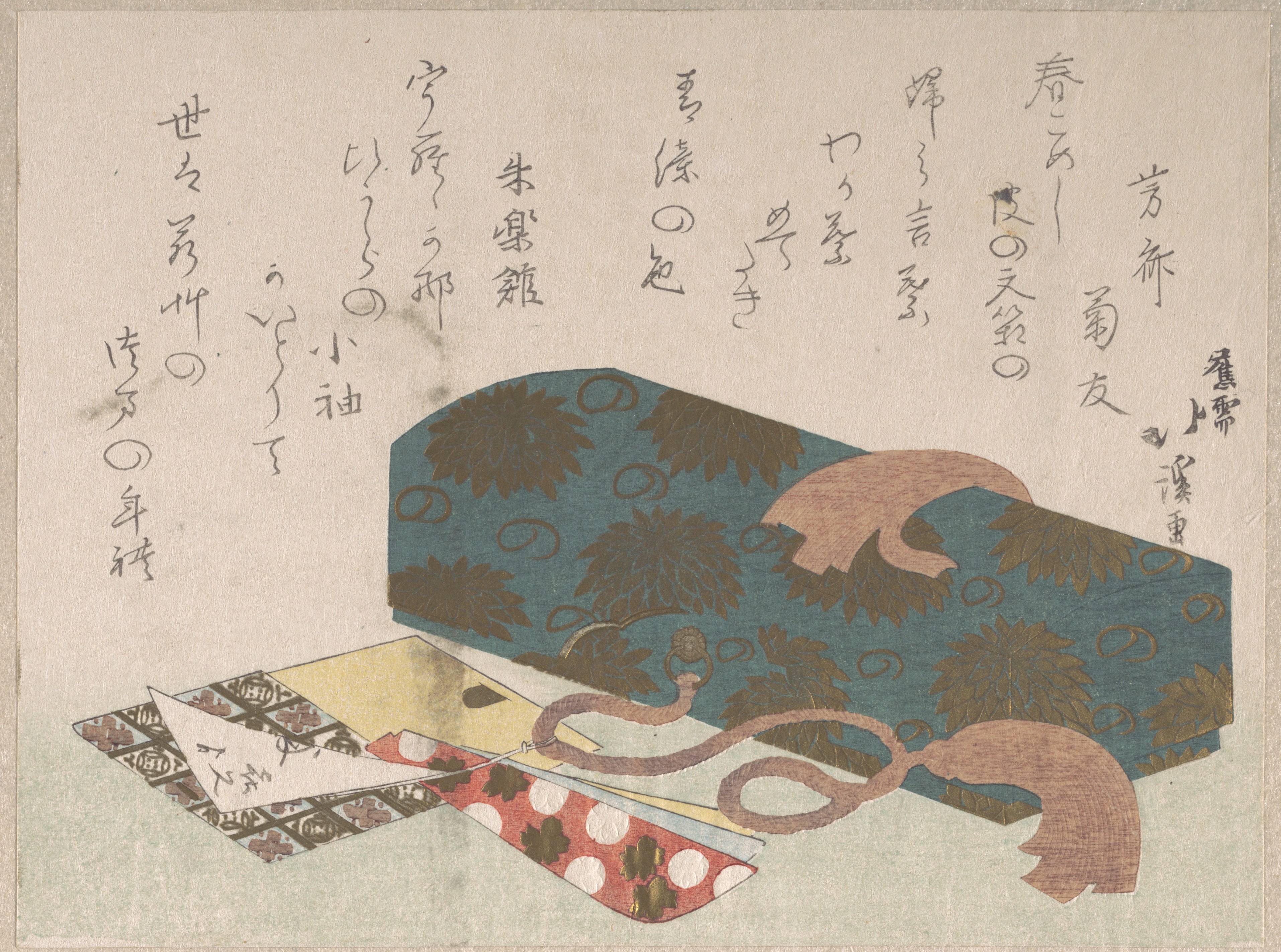
Letter-box and Toothpick Holders
19th century
Part of an album of woodblock prints (surimono); ink and color on paper

Illustration of a Chinese poem, from the series "Picture Book of Chinese Poems (Toshi gafu no uchi)"
c. 1830/44
Color woodblock print; chuban

Kyōka Verse Anthology of Elegant Friends (Kyōka gayū shū) 狂歌雅友集
1826 (Bunsei 9)
Woodblock printed book; ink and color on paper
Frequently Asked Questions
Monkey performing Sanbaso dance was created by Totoya Hokkei (魚屋北渓) in 1824.