
Morning Worship of Shinto Ceremony
- Date:
- 19th century
- Medium:
- Color woodblock print; surimono
- Source:
- Art Institute of Chicago
Description
This Art Institute of Chicago surimono depicts the morning worship of a Shinto ceremony - the early-day ritual observances that defined Japanese religious practice at home, at neighborhood shrines, and on celebratory occasions. The subject's combination of ritual specificity, atmospheric setting (typically dawn light, fresh air, the quiet before the day begins), and cultural-religious weight made it a fitting subject for the surimono format, where the privately commissioned context allowed designers to engage Shinto themes with refined seriousness. Hokkei would have rendered the scene with attention to ceremonial detail - the worshippers' postures, the offerings, the shrine architecture - and to the atmospheric quality of dawn that the subject demanded. Inscribed kyoka verses would have engaged the ceremony's specific cultural and religious context, perhaps connecting it to a particular festival, a household occasion, or the classical Shinto poetic tradition. The Art Institute's impression preserves the refined printing characteristic of Hokkei's privately commissioned ceremonial subjects, in which the seriousness of religious observance was matched by the technical care of the surimono printing standards.
More Prints by Totoya Hokkei

Potted Plant (Ueki), from the series "Eighteen Illustrations of the Ladder of Ancient Words (Kogentei juhachiban tsuzuki)"
1831
Color woodblock print; shikishiban, surimono
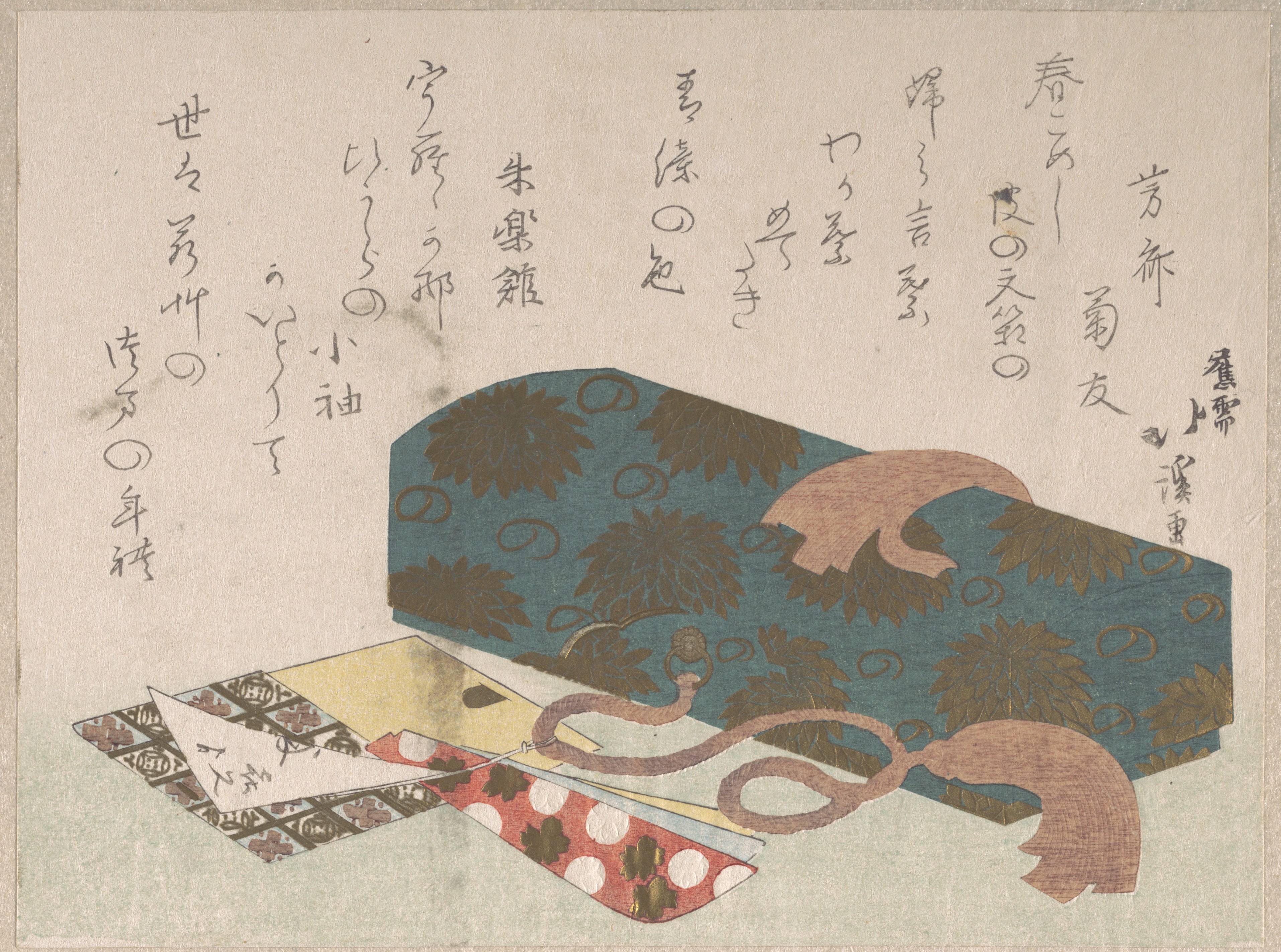
Letter-box and Toothpick Holders
19th century
Part of an album of woodblock prints (surimono); ink and color on paper

Illustration of a Chinese poem, from the series "Picture Book of Chinese Poems (Toshi gafu no uchi)"
c. 1830/44
Color woodblock print; chuban

Kyōka Verse Anthology of Elegant Friends (Kyōka gayū shū) 狂歌雅友集
1826 (Bunsei 9)
Woodblock printed book; ink and color on paper
Frequently Asked Questions
Morning Worship of Shinto Ceremony was created by Totoya Hokkei (魚屋北渓) in 19th century.