
Ono no Tofu, from the series "A Gathering of the Elders of Poetry (Shoshikai bantsuzuki)"
- Date:
- c. 1820
- Medium:
- Color woodblock print; shikishiban, surimono
- Source:
- Art Institute of Chicago
Description
This Totoya Hokkei surimono from the series A Gathering of the Elders of Poetry (Shoshikai bantsuzuki) takes as its subject Ono no Tōfū, the celebrated tenth-century Heian calligrapher. He was traditionally credited with mastering Japanese-style brushwork after watching a frog repeatedly leap toward a willow branch — an emblem of perseverance that became a staple of educational imagery in Edo Japan. The Shoshikai bantsuzuki series was a kyōka group's homage to literary forebears, lining up classical poets and cultural heroes for treatment in surimono format. By representing Tōfū, Hokkei links the kyōka group's contemporary verse practice to the lineage of Japanese poetry and calligraphy, the kind of literary genealogy that Edo kyoka-e enjoyed making visible. As a leading Hokusai school designer of surimono, Hokkei was used to handling the figural and architectural detail this kind of subject demanded, and the print is a model of disciplined drawing and careful color. The Art Institute of Chicago holds the impression within its strong group of Shoshikai bantsuzuki sheets, and the series stands as one of the most thoroughly documented examples of how kyōka circles used surimono to position themselves within Japan's longer literary history. Image courtesy of the Art Institute of Chicago.
More Prints by Totoya Hokkei

Potted Plant (Ueki), from the series "Eighteen Illustrations of the Ladder of Ancient Words (Kogentei juhachiban tsuzuki)"
1831
Color woodblock print; shikishiban, surimono
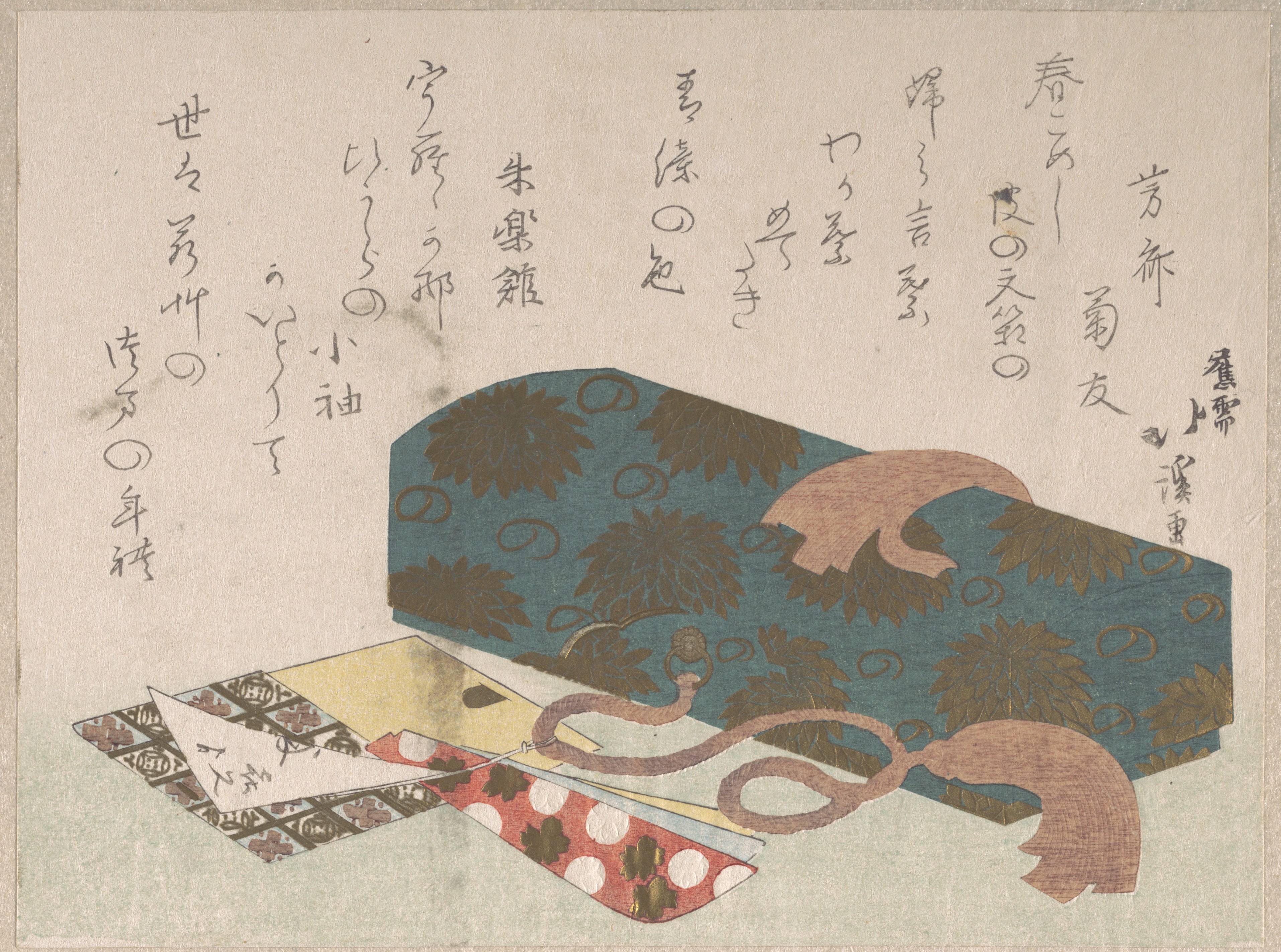
Letter-box and Toothpick Holders
19th century
Part of an album of woodblock prints (surimono); ink and color on paper

Illustration of a Chinese poem, from the series "Picture Book of Chinese Poems (Toshi gafu no uchi)"
c. 1830/44
Color woodblock print; chuban

Kyōka Verse Anthology of Elegant Friends (Kyōka gayū shū) 狂歌雅友集
1826 (Bunsei 9)
Woodblock printed book; ink and color on paper
Frequently Asked Questions
Ono no Tofu, from the series "A Gathering of the Elders of Poetry (Shoshikai bantsuzuki)" was created by Totoya Hokkei (魚屋北渓) in c. 1820.