
Raiko (Minamoto no Yorimitsu) and the demon kite
- Date:
- c. 1825
- Medium:
- Color woodblock print; shikishiban surimono
- Source:
- Art Institute of Chicago
Description
Totoya Hokkei's 1820 print of Raiko (Minamoto no Yorimitsu) and the demon kite belongs to the world of privately commissioned surimono, the deluxe small-format prints that flourished in Edo kyoka-e circles during the early nineteenth century. Hokkei trained under Katsushika Hokusai and stood among the most accomplished pupils of the Hokusai school, applying his master's narrative imagination to the intimate scale of poetry-club commissions. The subject reaches into medieval legend: Minamoto no Yorimitsu, known popularly as Raiko, was the Heian-period warrior celebrated for vanquishing supernatural enemies, including the demon transformed into a kite. By 1820, the kyoka clubs of Edo had embraced classical and legendary heroes as vehicles for witty kyoka verse, and Hokkei's design would have shared its surface with poems composed by the print's patrons. Surimono of this period were produced in small editions on thick hosho paper, often with metallic pigments, embossing (karazuri) and graded color, lavish techniques reserved for private circulation rather than the commercial market. The Art Institute of Chicago holds the impression catalogued here, anchoring the work in a museum collection where its association with Hokkei and his Edo kyoka-e patrons can be securely traced. As a Hokusai-school treatment of a venerated warrior legend, the sheet exemplifies how surimono compressed history painting, calligraphy and decorative virtuosity into a single luxurious page intended for connoisseurs.
More Prints by Totoya Hokkei

Potted Plant (Ueki), from the series "Eighteen Illustrations of the Ladder of Ancient Words (Kogentei juhachiban tsuzuki)"
1831
Color woodblock print; shikishiban, surimono
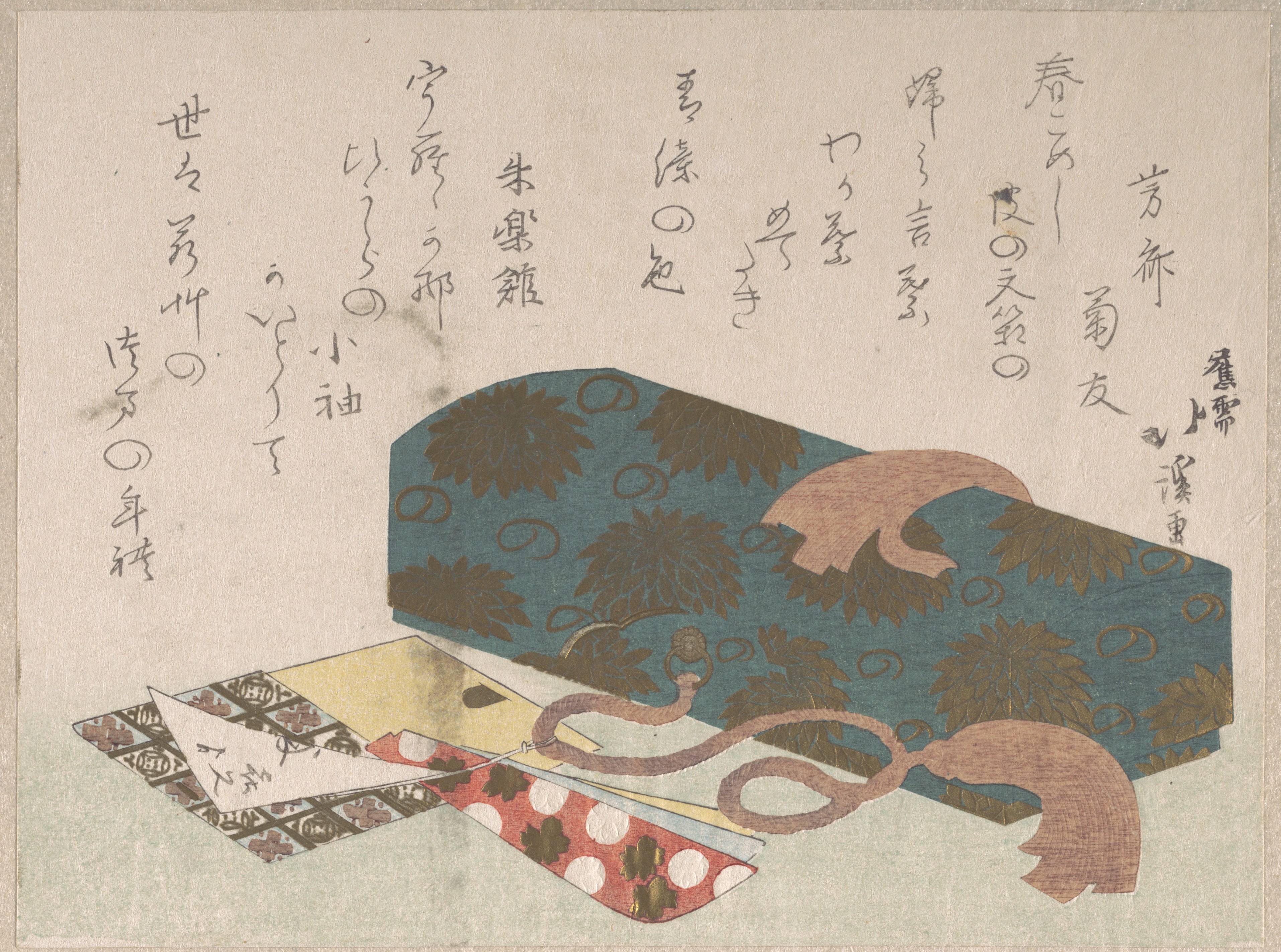
Letter-box and Toothpick Holders
19th century
Part of an album of woodblock prints (surimono); ink and color on paper

Illustration of a Chinese poem, from the series "Picture Book of Chinese Poems (Toshi gafu no uchi)"
c. 1830/44
Color woodblock print; chuban

Kyōka Verse Anthology of Elegant Friends (Kyōka gayū shū) 狂歌雅友集
1826 (Bunsei 9)
Woodblock printed book; ink and color on paper
Frequently Asked Questions
Raiko (Minamoto no Yorimitsu) and the demon kite was created by Totoya Hokkei (魚屋北渓) in c. 1825.