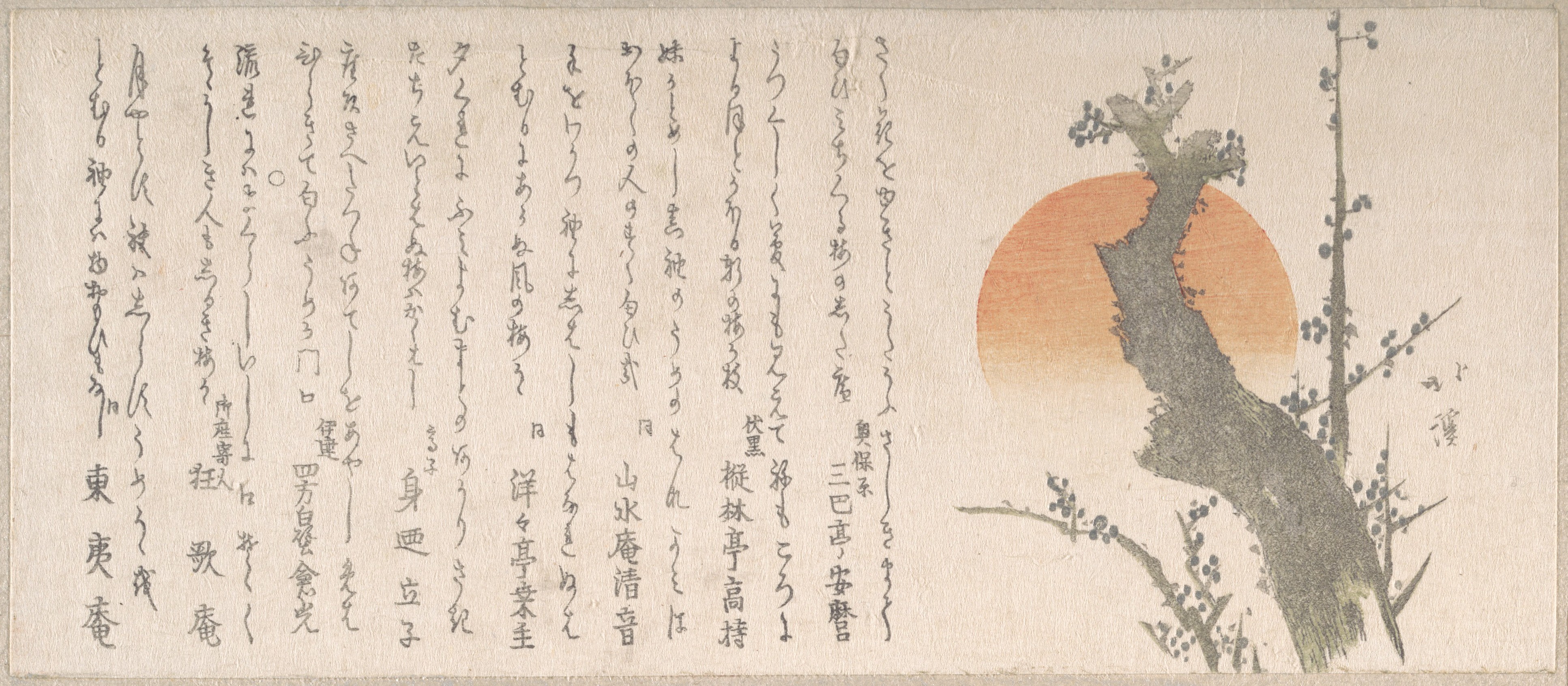
Rising Sun and Plum Tree
- Date:
- 19th century
- Medium:
- Part of an album of woodblock prints (surimono); ink and color on paper
- Source:
- Metropolitan Museum of Art
Description
Rising Sun and Plum Tree, associated with Totoya Hokkei and preserved in the Metropolitan Museum of Art under accession entry 54153, brings together two of the most familiar auspicious motifs in Japanese visual culture. The rising sun is a long-standing emblem of beginnings and renewal, and the plum tree, often the first flowering tree of the year, conveys ideas of endurance and early spring. Together they form a quintessential New Year subject, ideally suited to a surimono commission whose audience expected images and verses to mark seasonal and personal occasions with refined elegance. The Met records a circa 1800 date for the sheet, a chronological frame that aligns with Hokkei's early career as a Hokusai pupil; close stylistic attribution should remain provisional in such cases, and the museum record itself provides the most secure anchor for further discussion. Within the Hokusai school manner he developed under Katsushika Hokusai, Hokkei was capable of treating such auspicious themes with the disciplined drawing and balanced composition that defined his work, and the deluxe printing techniques of the surimono format would have heightened the visual impact of sun and blossoms. As one of the most committed surimono specialists in early-nineteenth-century Edo, Totoya Hokkei produced many New Year prints in which the kyoka verses inscribed alongside the image converted auspicious symbolism into refined literary celebration. The presence of Rising Sun and Plum Tree in the Met collection provides one further example of how Hokkei's name has been associated with the New Year repertoire that anchored so much surimono production.
More Prints by Totoya Hokkei

Potted Plant (Ueki), from the series "Eighteen Illustrations of the Ladder of Ancient Words (Kogentei juhachiban tsuzuki)"
1831
Color woodblock print; shikishiban, surimono
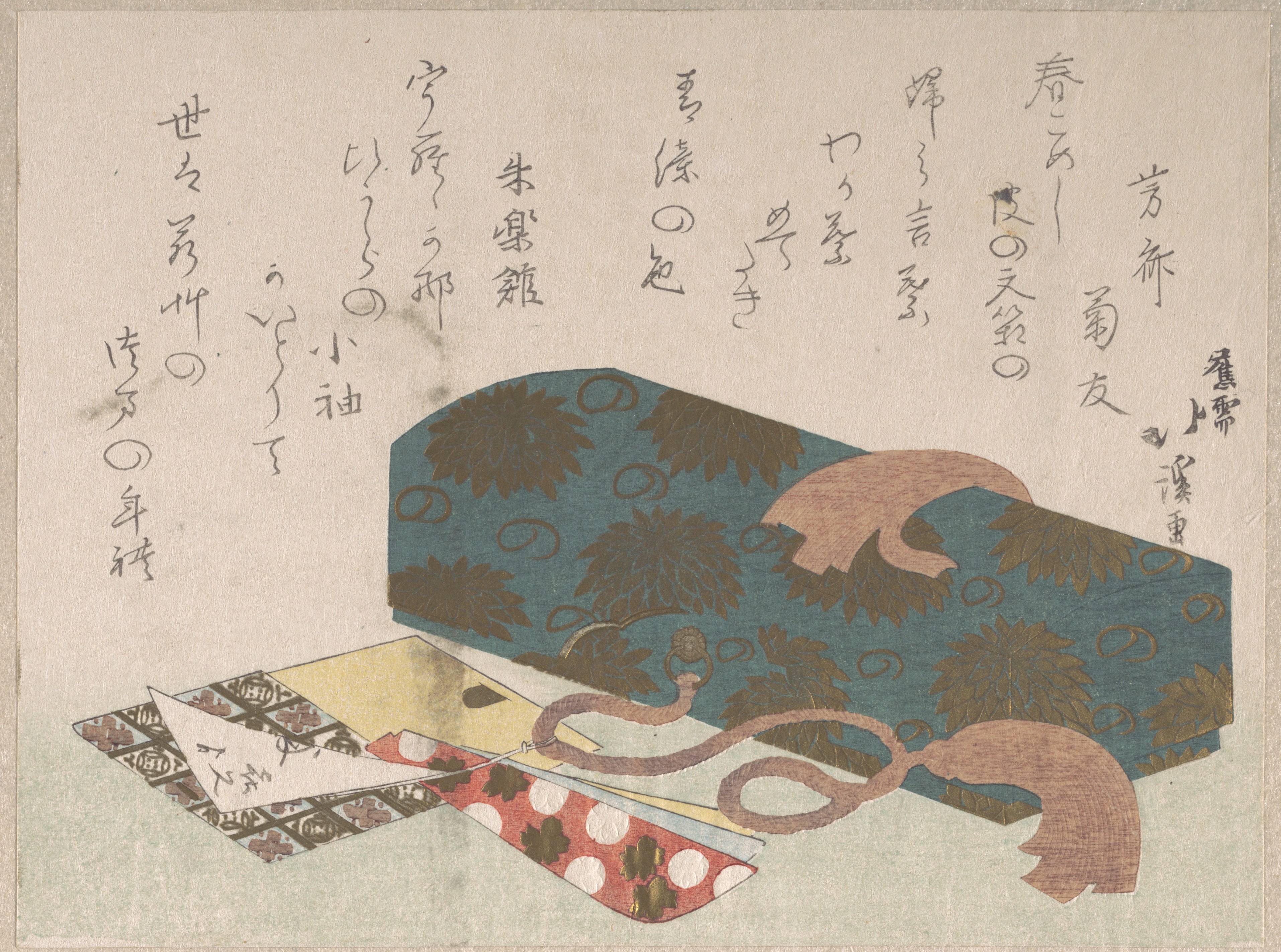
Letter-box and Toothpick Holders
19th century
Part of an album of woodblock prints (surimono); ink and color on paper

Illustration of a Chinese poem, from the series "Picture Book of Chinese Poems (Toshi gafu no uchi)"
c. 1830/44
Color woodblock print; chuban

Kyōka Verse Anthology of Elegant Friends (Kyōka gayū shū) 狂歌雅友集
1826 (Bunsei 9)
Woodblock printed book; ink and color on paper
Frequently Asked Questions
Rising Sun and Plum Tree was created by Totoya Hokkei (魚屋北渓) in 19th century.