
Sake cup and fan
- Date:
- Early 19th century
- Medium:
- Color woodblock print; surimono
- Source:
- Art Institute of Chicago
Description
This 1820 surimono by Totoya Hokkei, catalogued by the Art Institute of Chicago, isolates a lacquer sake cup and a folding fan against the empty ground typical of small-format still lifes in the surimono medium. Such pared-down arrangements were a particular delight of Edo kyoka-e clubs, where the verses inscribed alongside the image relied on the viewer recognizing each object and the dense web of association around it. A sake cup speaks at once of celebration, hospitality and the New Year toast, while a folding fan can evoke the theater, the dance and the cooling pleasures of summer; juxtaposed, the two objects gather a wide range of poetic possibilities that kyoka writers were expected to exploit. As a leading pupil of Katsushika Hokusai and a major figure of the Hokusai school, Hokkei was among the artists most often called upon to design such still-life surimono for poetry clubs and individual patrons. The format of the print encouraged refined material effects: graded ink, embossing on the lacquer surface and metallic pigments to suggest gold or silver decoration on the cup and fan ribs. The Art Institute of Chicago's example anchors the design within an institutional collection, where it can be studied as a representative miniature of the technical and literary luxuries that defined Edo surimono.
More Prints by Totoya Hokkei

Potted Plant (Ueki), from the series "Eighteen Illustrations of the Ladder of Ancient Words (Kogentei juhachiban tsuzuki)"
1831
Color woodblock print; shikishiban, surimono
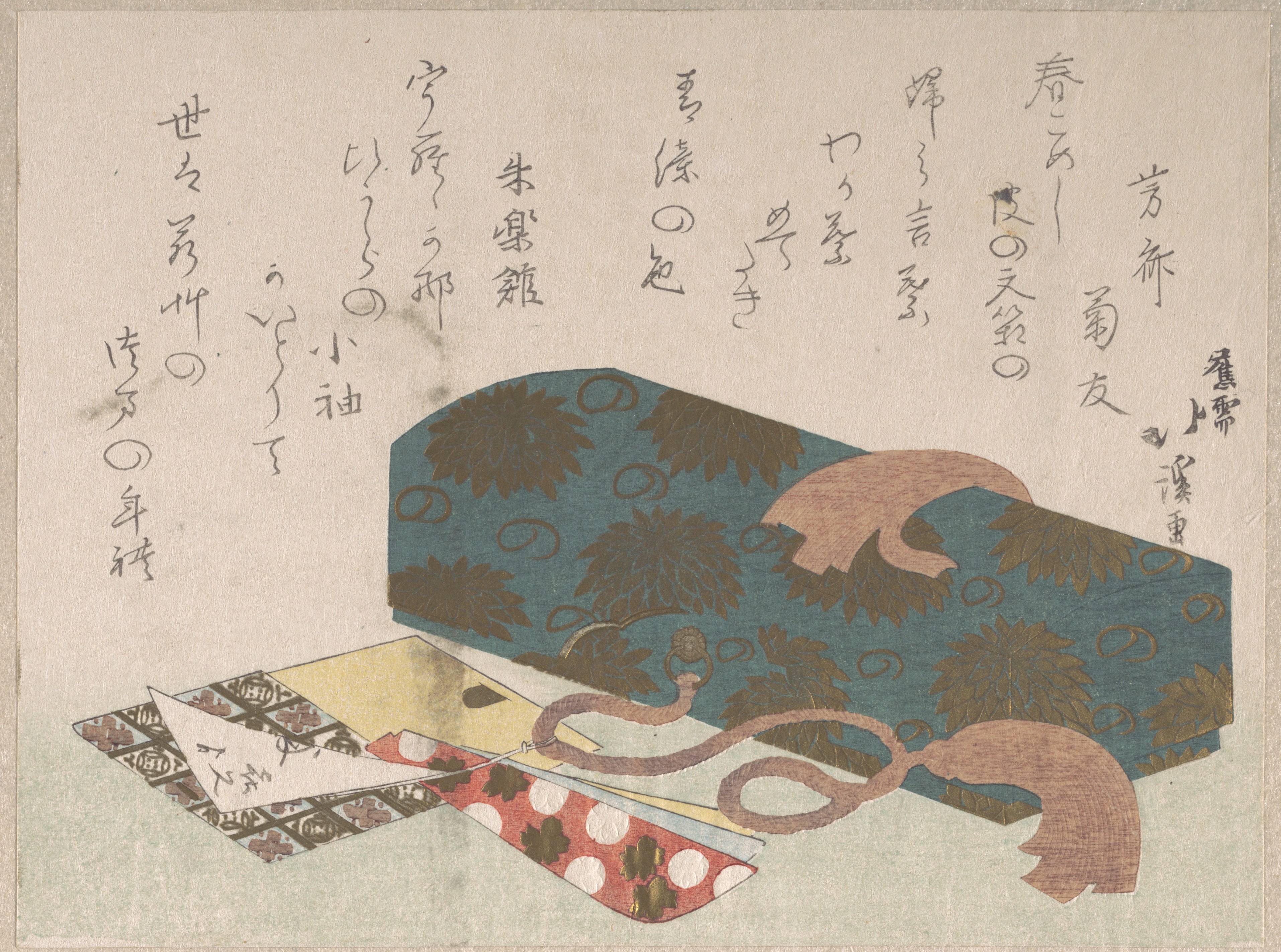
Letter-box and Toothpick Holders
19th century
Part of an album of woodblock prints (surimono); ink and color on paper

Illustration of a Chinese poem, from the series "Picture Book of Chinese Poems (Toshi gafu no uchi)"
c. 1830/44
Color woodblock print; chuban

Kyōka Verse Anthology of Elegant Friends (Kyōka gayū shū) 狂歌雅友集
1826 (Bunsei 9)
Woodblock printed book; ink and color on paper
Frequently Asked Questions
Sake cup and fan was created by Totoya Hokkei (魚屋北渓) in Early 19th century.