
Still-Life with Monkey Mask
- Date:
- 1824
- Medium:
- Color woodblock print with metallic pigments; surimono shikishiban
- Source:
- Art Institute of Chicago
Description
Still-Life with Monkey Mask exemplifies Totoya Hokkei's gift for compact emblem-like compositions designed to function as visual puzzles for kyōka poets. A monkey mask, the kind used in folk performances and New Year sarumawashi entertainments, is paired with a small arrangement of seasonal objects, each of them carrying associations that an Edo kyoka-e audience would have read with ease. The monkey was the zodiac animal for selected years and was widely associated with protection, good fortune, and warding off illness; combined with auspicious props it formed a perfect surimono subject for a poetry group's New Year exchange. Hokkei trained under Hokusai after his earlier work with the Kanō school, and that hybrid background shaped his particular still-life manner: disciplined drawing of objects, attention to texture, and an almost tactile sense of placement. The Art Institute of Chicago holds the sheet within its broad early-nineteenth-century surimono collection, where Hokkei's still lifes appear repeatedly as examples of how Hokusai school designers used small object arrangements to compress reference and humor. The print also speaks to the wider history of surimono itself, in which still life — a relatively minor mode in commercial ukiyo-e — became a central genre because of its suitability for visual punning and quiet luxury production. Image courtesy of the Art Institute of Chicago.
More Prints by Totoya Hokkei

Potted Plant (Ueki), from the series "Eighteen Illustrations of the Ladder of Ancient Words (Kogentei juhachiban tsuzuki)"
1831
Color woodblock print; shikishiban, surimono
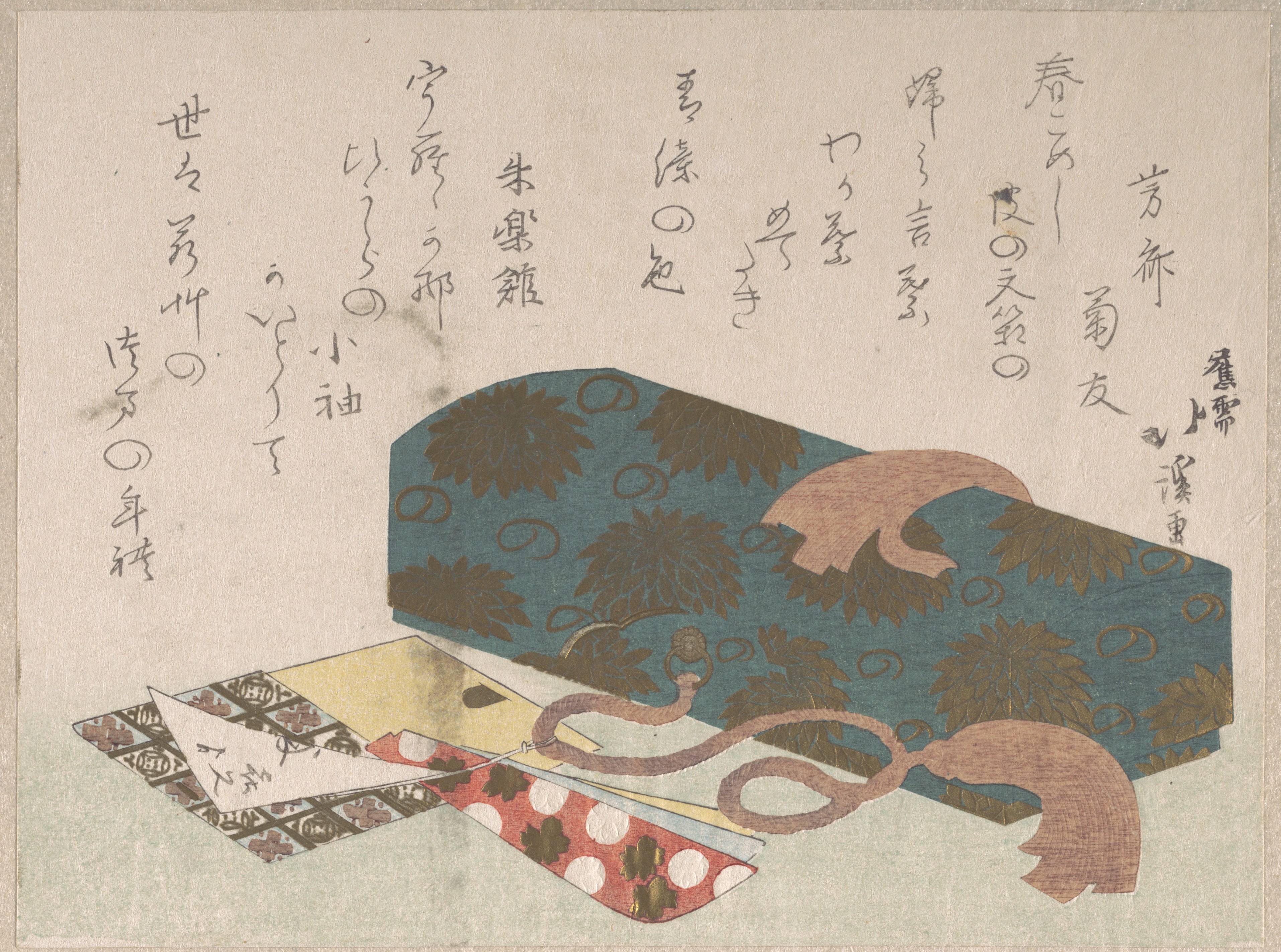
Letter-box and Toothpick Holders
19th century
Part of an album of woodblock prints (surimono); ink and color on paper

Illustration of a Chinese poem, from the series "Picture Book of Chinese Poems (Toshi gafu no uchi)"
c. 1830/44
Color woodblock print; chuban

Kyōka Verse Anthology of Elegant Friends (Kyōka gayū shū) 狂歌雅友集
1826 (Bunsei 9)
Woodblock printed book; ink and color on paper
Frequently Asked Questions
Still-Life with Monkey Mask was created by Totoya Hokkei (魚屋北渓) in 1824.