
Strong man at pillar
- Date:
- n.d.
- Medium:
- Color woodblock print; shikishiban, surimono
- Source:
- Art Institute of Chicago
Description
This Art Institute of Chicago shikishiban surimono presents a feat of physical prowess as the central conceit: a strongman testing his strength against, or perhaps lifting, an enormous architectural pillar. The subject draws on the long Japanese tradition of celebrating chikara-mochi (strongmen), figures whose exploits were popular topics for kabuki, sumo, and broadside prints. In the intimate surimono format, the gesture takes on additional layers - the absurdly outsized pillar may carry literary or mitate associations, perhaps alluding to a classical hero or a popular kabuki scene. Hokkei's composition concentrates muscular energy in the figure's torso and grasping hands while leaving room above for the kyoka verses that would have decoded the image's specific reference. The privately commissioned nature of the print, and the surimono format's typical association with refined New Year exchanges, suggests the strongman may have been the auspicious emblem of a particular poetry group's anniversary or of a year sign that called for an image of strength and stability. The Art Institute's impression shows the meticulous printing and saturated coloration that distinguish Hokkei's surimono from contemporary commercial prints.
More Prints by Totoya Hokkei

Potted Plant (Ueki), from the series "Eighteen Illustrations of the Ladder of Ancient Words (Kogentei juhachiban tsuzuki)"
1831
Color woodblock print; shikishiban, surimono
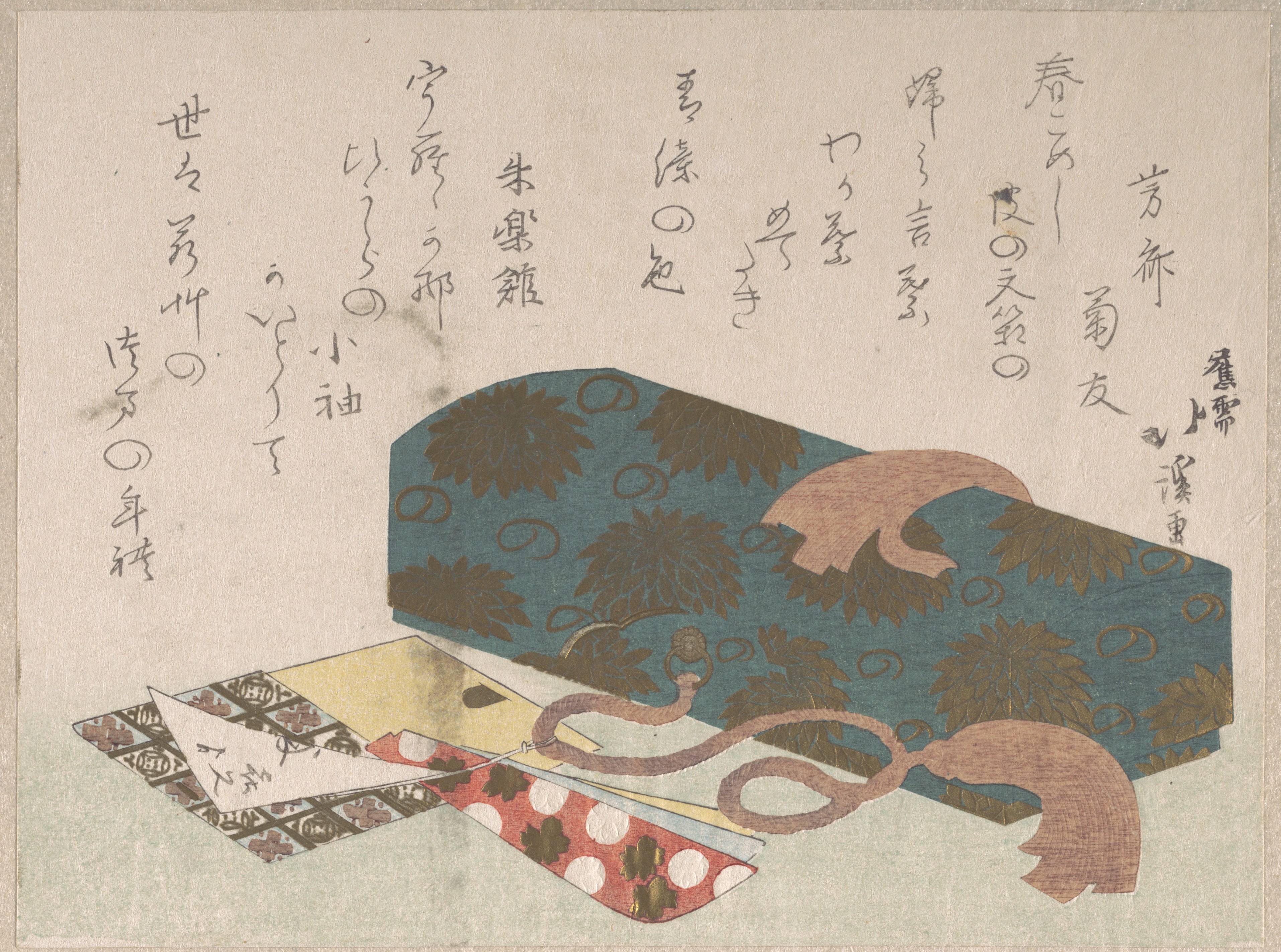
Letter-box and Toothpick Holders
19th century
Part of an album of woodblock prints (surimono); ink and color on paper

Illustration of a Chinese poem, from the series "Picture Book of Chinese Poems (Toshi gafu no uchi)"
c. 1830/44
Color woodblock print; chuban

Kyōka Verse Anthology of Elegant Friends (Kyōka gayū shū) 狂歌雅友集
1826 (Bunsei 9)
Woodblock printed book; ink and color on paper
Frequently Asked Questions
Strong man at pillar was created by Totoya Hokkei (魚屋北渓) in n.d..