
Tateyama
- Medium:
- Source:
- Victoria and Albert Museum
Description
Tateyama is one of a small group of landscape surimono in which Totoya Hokkei takes up the mountains and famous places of central Japan. The peak named in the title is most often understood as Tateyama, the sacred mountain of Etchū Province, long a pilgrimage site associated with Buddhist cosmology and with one of the "three holy mountains" of Japan. In Hokkei's hand the subject is handled with the restraint typical of his surimono landscapes: a strong horizontal organization, sparing color, and disciplined linework that owes much to the broader Hokusai school approach to mountain scenery. As a print designed for a kyōka group, the sheet would have offered both a recognizable place name and a literary occasion for poets to compose verses on travel, faith, or the natural sublime. Edo kyoka-e regularly recruited landscape imagery in this way, allowing poets to participate at a remove in the geography of pilgrimage and travel that was so important to nineteenth-century Japan. The Victoria and Albert Museum holds the print within a coherent set of Hokkei landscape designs, where it complements his more populated genre and surimono book projects by demonstrating how comfortably he moved between figure work and pure landscape. Image courtesy of the Victoria and Albert Museum.
More Prints by Totoya Hokkei

Potted Plant (Ueki), from the series "Eighteen Illustrations of the Ladder of Ancient Words (Kogentei juhachiban tsuzuki)"
1831
Color woodblock print; shikishiban, surimono
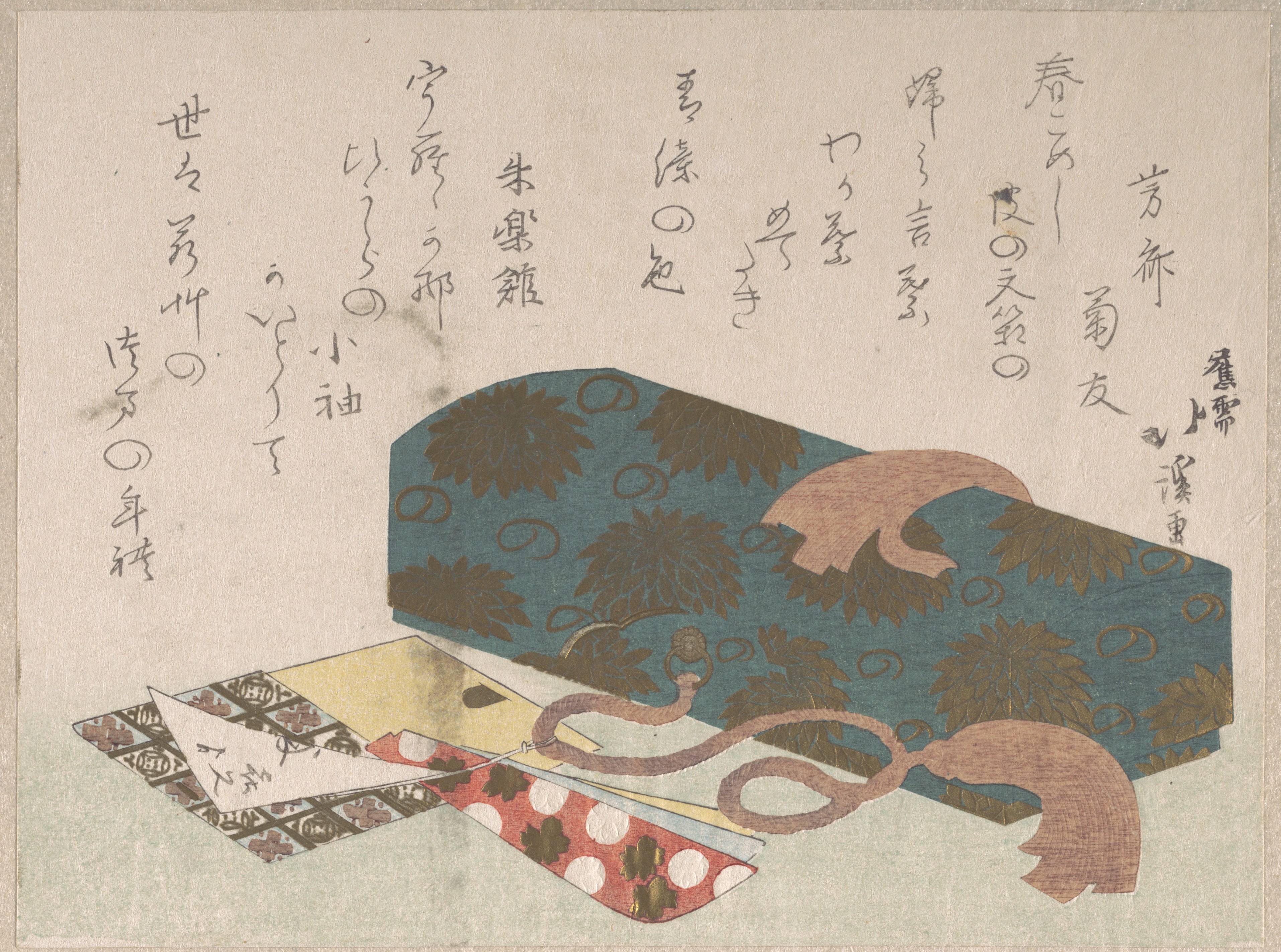
Letter-box and Toothpick Holders
19th century
Part of an album of woodblock prints (surimono); ink and color on paper

Illustration of a Chinese poem, from the series "Picture Book of Chinese Poems (Toshi gafu no uchi)"
c. 1830/44
Color woodblock print; chuban

Kyōka Verse Anthology of Elegant Friends (Kyōka gayū shū) 狂歌雅友集
1826 (Bunsei 9)
Woodblock printed book; ink and color on paper
Frequently Asked Questions
Tateyama was created by Totoya Hokkei (魚屋北渓).