
Tea House and Fishing Farm by the Grand View of Kanto
- Date:
- early 19th century
- Medium:
- Color woodblock print; surimono
- Source:
- Art Institute of Chicago
Description
This Art Institute of Chicago surimono presents a panoramic view from a tea house overlooking a fishing farm and the grand expanse of the Kanto plain. Such meisho landscapes - views of famous places - were a recurring subject in surimono because they allowed designers to engage the long Japanese tradition of meisho-e (famous-place imagery) within the privately commissioned poetry-circle format. The tea house element introduces a layer of leisure and cultivation: it locates the viewer within an Edo-era leisure circuit and invites contemplation of the broader landscape from a place of comfort and refreshment. The fishing farm in the foreground adds a layer of agricultural-economic specificity that grounds the panorama in lived rural geography. Hokkei would have balanced near and far elements within the small shikishiban format, demonstrating the spatial compression skills that distinguish his landscape surimono. Inscribed kyoka verses would have engaged the place's poetic associations and perhaps the specific occasion of the print's commission. The Art Institute's impression preserves the refined printing of the small format.
More Prints by Totoya Hokkei

Potted Plant (Ueki), from the series "Eighteen Illustrations of the Ladder of Ancient Words (Kogentei juhachiban tsuzuki)"
1831
Color woodblock print; shikishiban, surimono
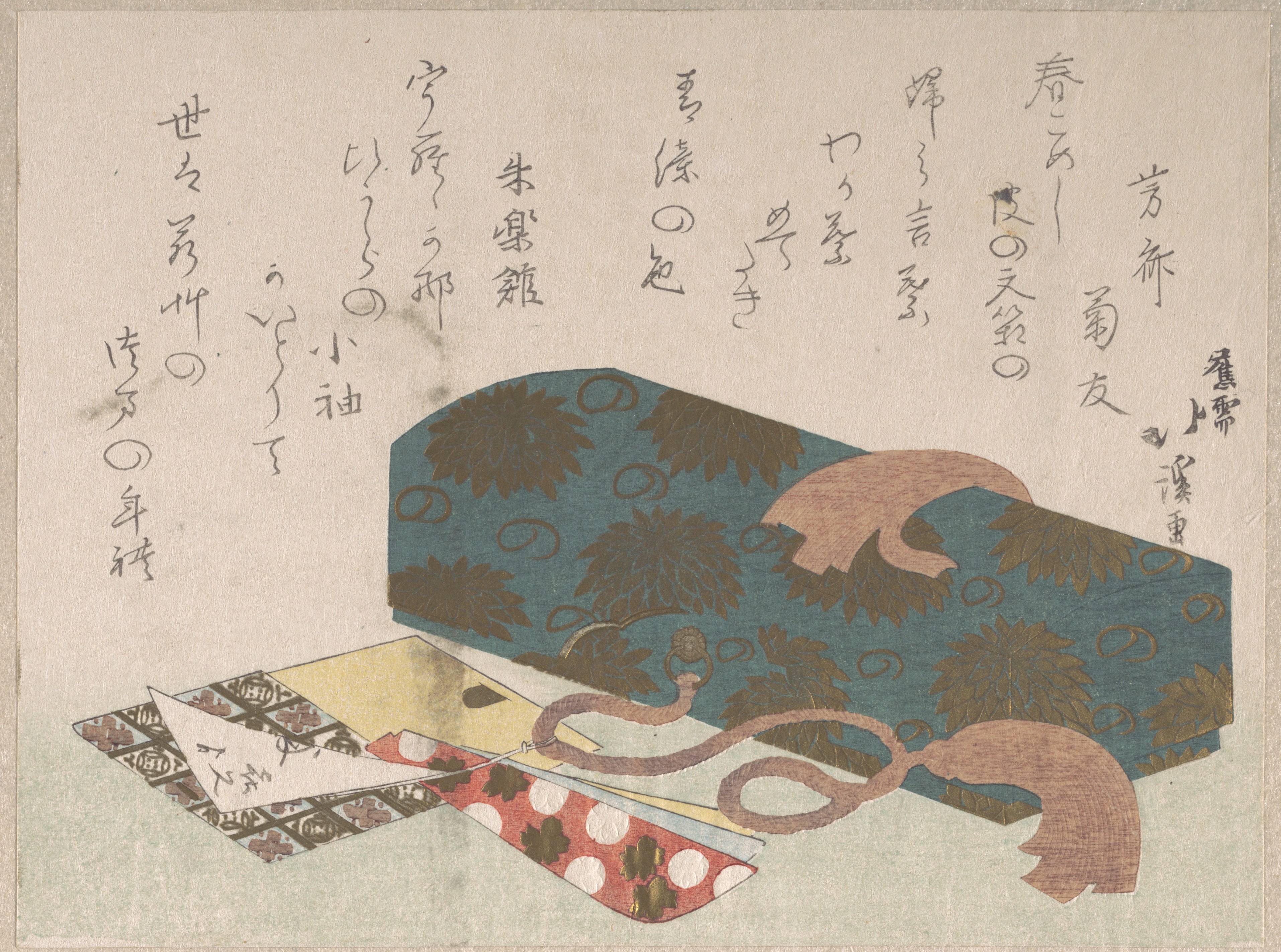
Letter-box and Toothpick Holders
19th century
Part of an album of woodblock prints (surimono); ink and color on paper

Illustration of a Chinese poem, from the series "Picture Book of Chinese Poems (Toshi gafu no uchi)"
c. 1830/44
Color woodblock print; chuban

Kyōka Verse Anthology of Elegant Friends (Kyōka gayū shū) 狂歌雅友集
1826 (Bunsei 9)
Woodblock printed book; ink and color on paper
More Fish Prints


Frequently Asked Questions
Tea House and Fishing Farm by the Grand View of Kanto was created by Totoya Hokkei (魚屋北渓) in early 19th century.
Tea House and Fishing Farm by the Grand View of Kanto depicts fish.