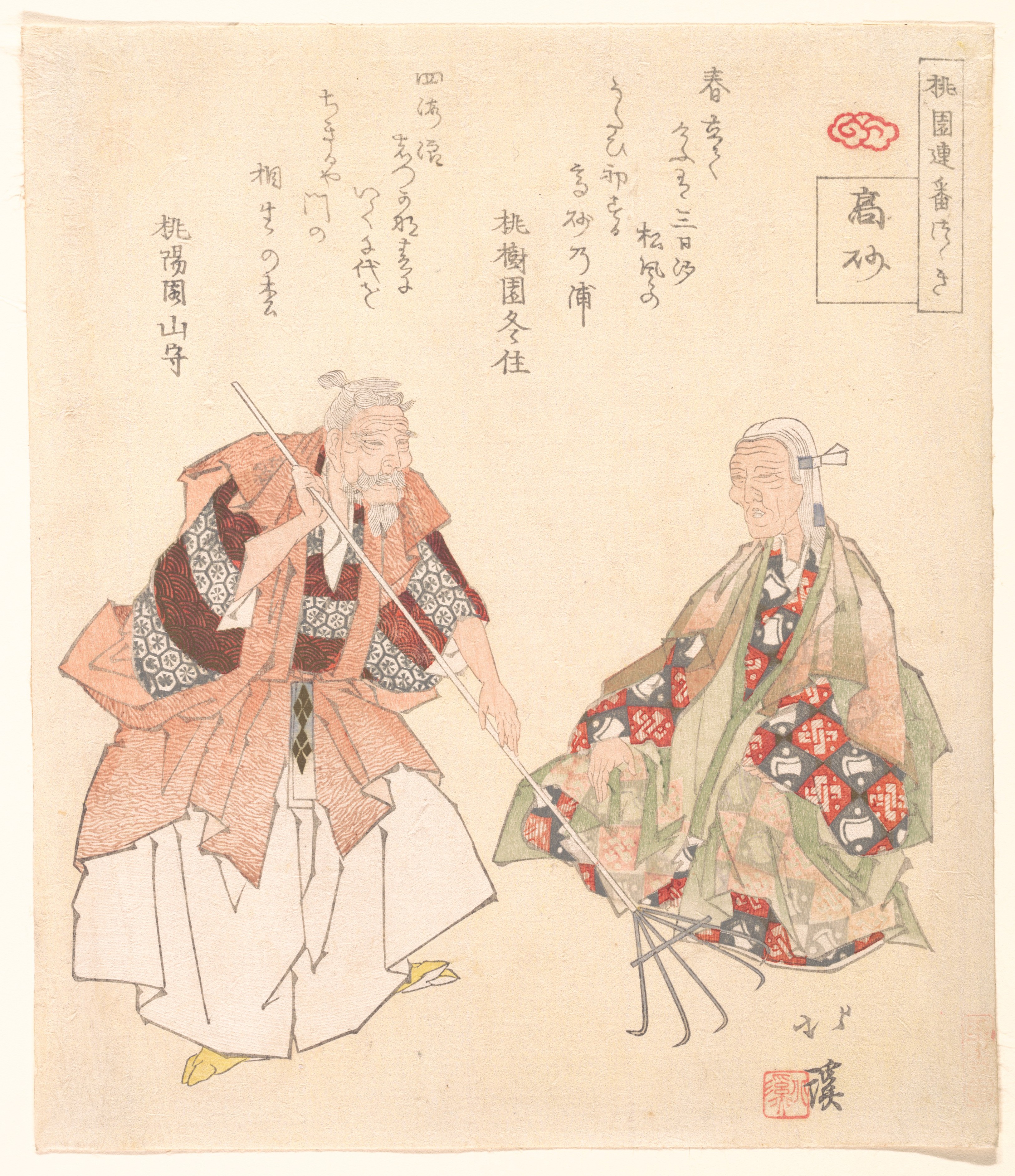
The Noh play, "Takasago"
- Date:
- ca. 1825
- Medium:
- Woodblock print (surimono); ink and color on paper
- Source:
- Metropolitan Museum of Art
Description
The Noh play, Takasago is a surimono by Totoya Hokkei depicting the climactic image of one of the most beloved Noh dramas of the medieval and Edo repertoire. The play centers on the elderly couple Jo and Uba, the spirits of two ancient pine trees standing at the bays of Takasago and Sumiyoshi, whose enduring devotion across distance and time made them the principal emblem of conjugal harmony and shared longevity in Japanese culture. Hokkei depicts the couple with their identifying attributes, Jo holding a rake to gather pine needles and Uba holding a broom, against a setting that may include a pine, a rising sun, or a simple suggestion of shore. The image, like the Noh play itself, was a customary New Year subject, and its inclusion in a surimono signaled congratulations on long marriage, family prosperity, and the orderly turning of the seasons. As a kyoka poetry-club commission the sheet would have circulated in a small private edition, the printed verses inscribed alongside the figures probably turning on themes of fidelity, pines, or the symbolism of the two bays. Hokkei was one of the most accomplished pupils of Katsushika Hokusai and a leading specialist in surimono within the Hokusai school. His figural style here is dignified and restrained, in keeping with the solemn auspiciousness of the subject, and the printing would have used metallic pigments and karazuri blind embossing typical of luxury surimono. The print is preserved in the Metropolitan Museum of Art and shows the Hokusai school's continued engagement with Noh imagery within the refined gift-print culture of nineteenth-century Edo.
More Prints by Totoya Hokkei

Potted Plant (Ueki), from the series "Eighteen Illustrations of the Ladder of Ancient Words (Kogentei juhachiban tsuzuki)"
1831
Color woodblock print; shikishiban, surimono
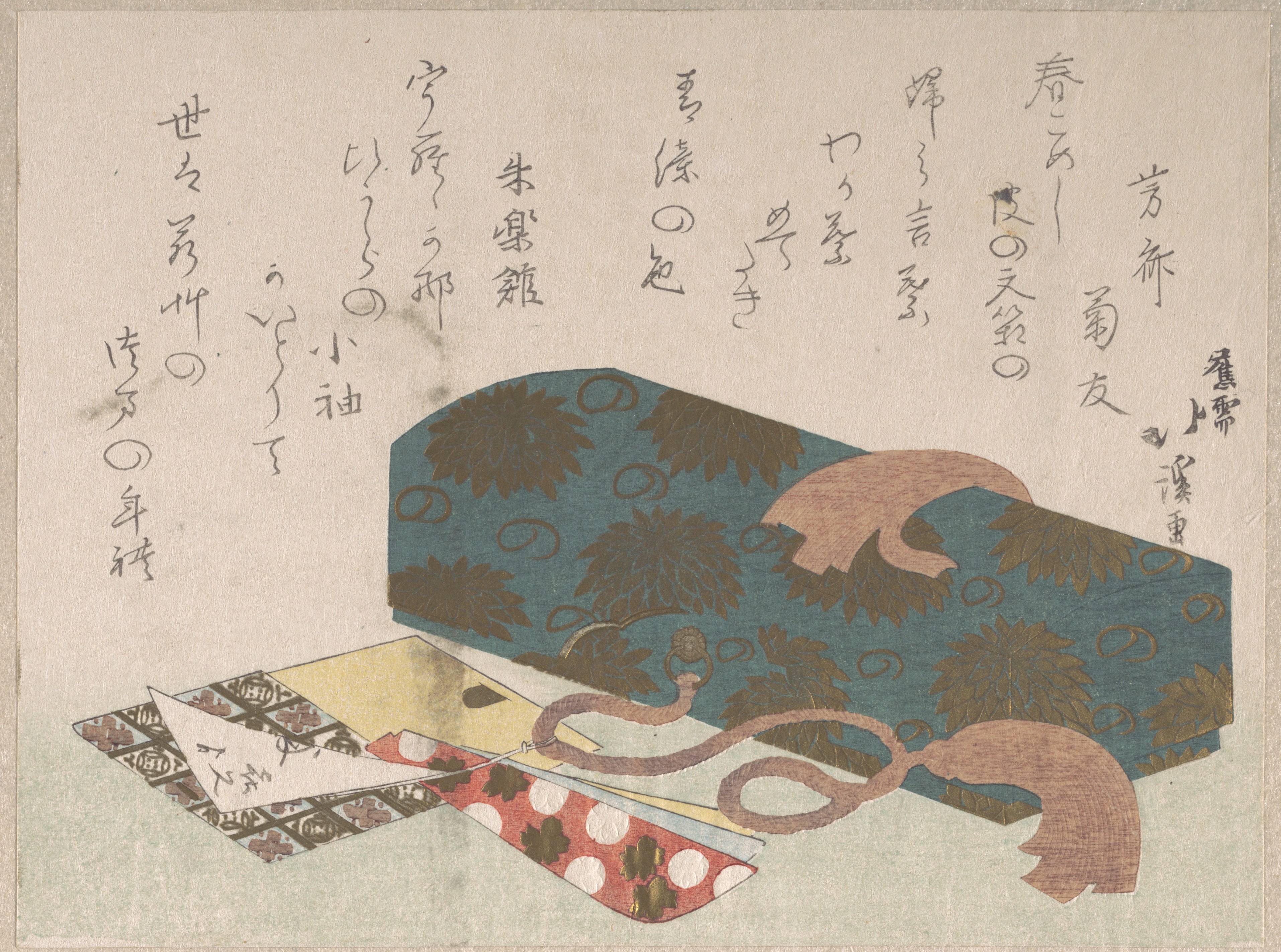
Letter-box and Toothpick Holders
19th century
Part of an album of woodblock prints (surimono); ink and color on paper

Illustration of a Chinese poem, from the series "Picture Book of Chinese Poems (Toshi gafu no uchi)"
c. 1830/44
Color woodblock print; chuban

Kyōka Verse Anthology of Elegant Friends (Kyōka gayū shū) 狂歌雅友集
1826 (Bunsei 9)
Woodblock printed book; ink and color on paper
Frequently Asked Questions
The Noh play, "Takasago" was created by Totoya Hokkei (魚屋北渓) in ca. 1825.