
The Palace of Longevity
- Date:
- 1831
- Medium:
- Color woodblock print; otanzaku, surimono
- Source:
- Art Institute of Chicago
Description
The Palace of Longevity, designed by Totoya Hokkei around 1831, is a surimono produced for a kyoka poetry group celebrating the auspicious theme of long life. The composition draws on Chinese and Japanese visions of paradise-like dwellings, settings populated by Daoist immortals or aristocratic figures whose serene existence stands as a metaphor for the wishes the accompanying poems address to the recipient. Such themes were standard at New Year and other commemorative occasions, when surimono circulated as luxury greetings; the elegance of the imagery was the artist's contribution to a collective expression of goodwill among club members. Stylistically the print reflects Hokkei's adherence to the Hokusai school manner: confident outlines, balanced placement of figures within an architectural setting, and the use of subtle gradations and embossed details that demanded the most skilled block-cutters and printers. Trained under Katsushika Hokusai, Hokkei specialized in surimono more single-mindedly than most of his fellow pupils, building a long career on commissions of this type. Because surimono were privately funded and printed in limited numbers, surviving impressions such as the one preserved at the Art Institute of Chicago, accession entry 81005, are crucial documents of an art form that operated outside the commercial publishing economy of Edo. The Palace of Longevity offers researchers and viewers a clear example of how Totoya Hokkei converted Hokusai school formulas into refined, celebratory imagery for patrons whose own poetry, inscribed alongside the design, completed the gift.
More Prints by Totoya Hokkei

Potted Plant (Ueki), from the series "Eighteen Illustrations of the Ladder of Ancient Words (Kogentei juhachiban tsuzuki)"
1831
Color woodblock print; shikishiban, surimono
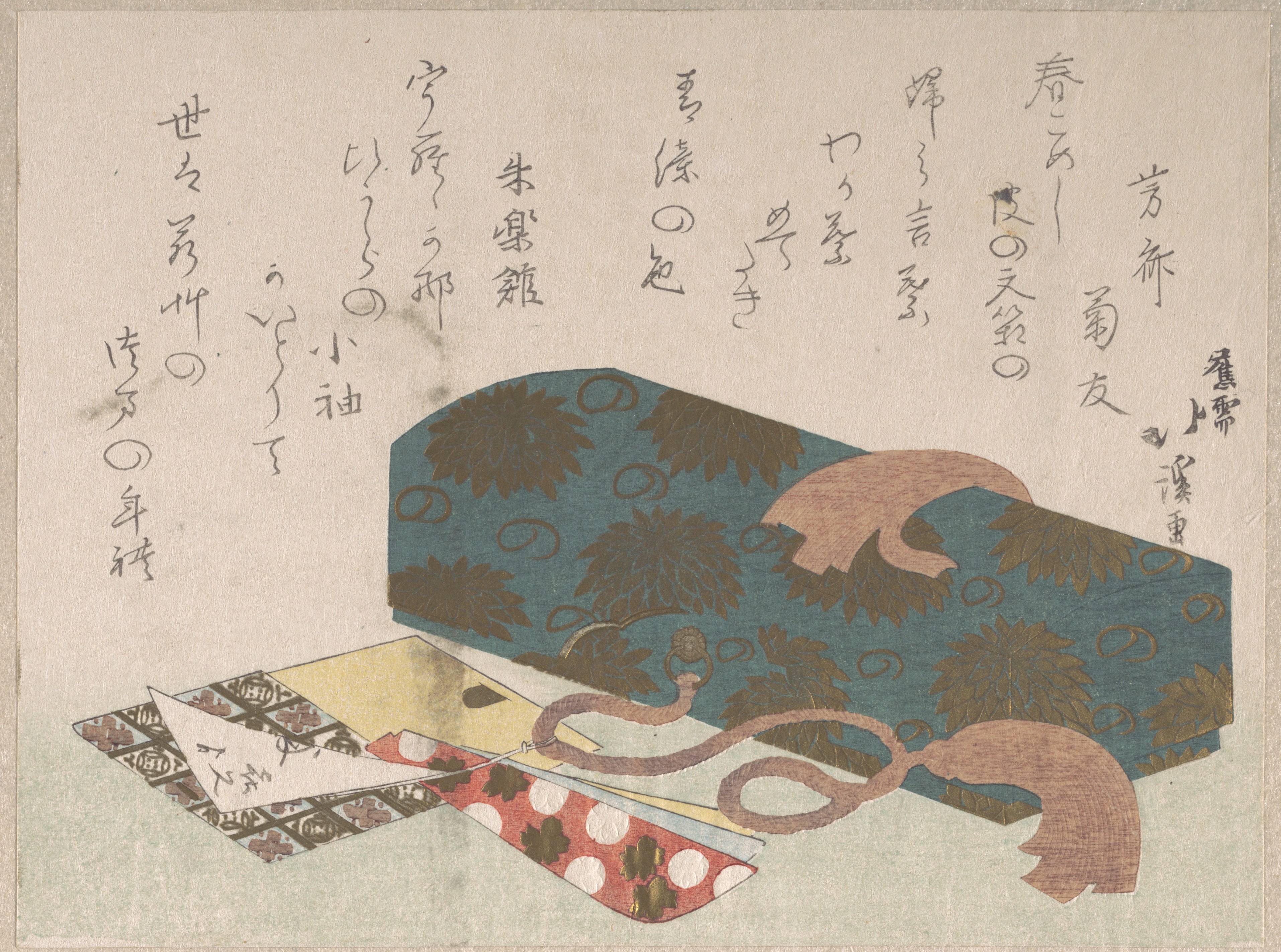
Letter-box and Toothpick Holders
19th century
Part of an album of woodblock prints (surimono); ink and color on paper

Illustration of a Chinese poem, from the series "Picture Book of Chinese Poems (Toshi gafu no uchi)"
c. 1830/44
Color woodblock print; chuban

Kyōka Verse Anthology of Elegant Friends (Kyōka gayū shū) 狂歌雅友集
1826 (Bunsei 9)
Woodblock printed book; ink and color on paper
Frequently Asked Questions
The Palace of Longevity was created by Totoya Hokkei (魚屋北渓) in 1831.