
The Salt Dragon
- Date:
- 1832
- Medium:
- Color woodblock print with metallic pigments; surimono shikishiban
- Source:
- Art Institute of Chicago
Description
The Salt Dragon is one of Totoya Hokkei's mature surimono in which a literary or theatrical allusion is condensed into a single emblematic image. The motif of a dragon associated with salt evokes both legendary tales of dragon kings dwelling in the sea — where salt and water are inseparable — and a long tradition of allegorical kabuki and dance pieces in which sea creatures embody human passions. Hokkei, a senior figure in the Hokusai school of surimono, handles the dragon with the controlled, slightly stylized line that his teacher had popularized for supernatural subjects, while the surimono medium itself supplies the visual richness: heavy paper, careful color, embossing, and metallic pigments. The 1816 date places the print at the height of the Edo kyoka-e surimono boom, when kyōka poetry groups commissioned hundreds of such sheets each year to mark New Year exchanges and other group events. The Art Institute of Chicago holds the impression as part of its outstanding collection of early-nineteenth-century surimono, in which Hokkei is one of the most strongly represented designers. The Salt Dragon stands as a particularly good example of how he used a single dramatic motif, rather than a crowded composition, to anchor a poetic exchange. Image courtesy of the Art Institute of Chicago.
More Prints by Totoya Hokkei

Potted Plant (Ueki), from the series "Eighteen Illustrations of the Ladder of Ancient Words (Kogentei juhachiban tsuzuki)"
1831
Color woodblock print; shikishiban, surimono
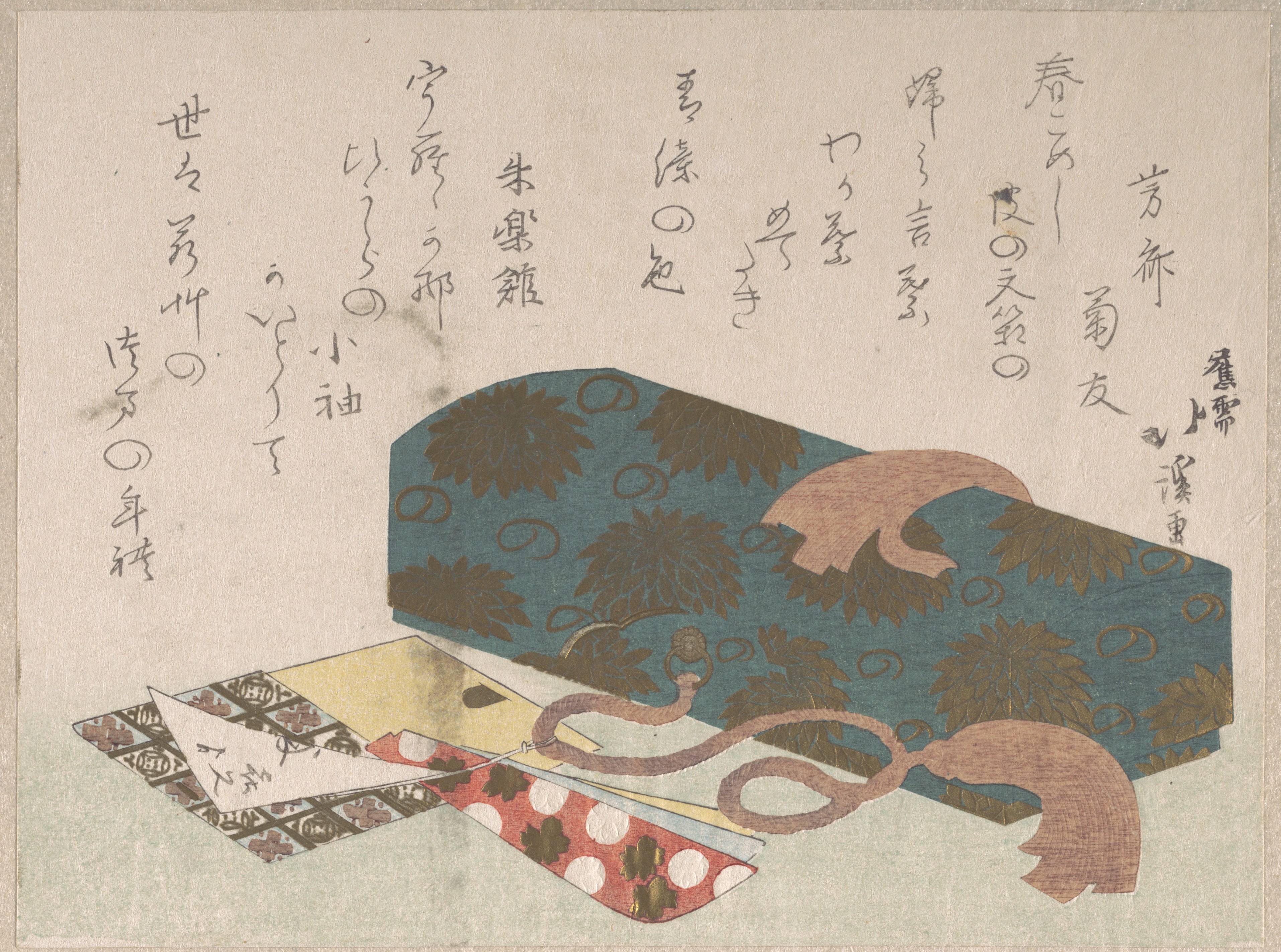
Letter-box and Toothpick Holders
19th century
Part of an album of woodblock prints (surimono); ink and color on paper

Illustration of a Chinese poem, from the series "Picture Book of Chinese Poems (Toshi gafu no uchi)"
c. 1830/44
Color woodblock print; chuban

Kyōka Verse Anthology of Elegant Friends (Kyōka gayū shū) 狂歌雅友集
1826 (Bunsei 9)
Woodblock printed book; ink and color on paper
Frequently Asked Questions
The Salt Dragon was created by Totoya Hokkei (魚屋北渓) in 1832.