
Tsurumi
- Date:
- 1833
- Medium:
- Source:
- Victoria and Albert Museum
Description
Tsurumi, designed by Totoya Hokkei around 1833, depicts a station along the great Tokaido highway between Edo and Kyoto, in the area that today forms part of Yokohama. The choice of this station for a single sheet, or as part of a series of travel views, reflects the wider Edo enthusiasm for landscape prints celebrating famous places and routes, an enthusiasm contemporaneously fueled by Ando Hiroshige's Tokaido prints and by surimono series such as Hokkei's own Enoshima kiko. Hokkei's image of Tsurumi works in the disciplined Hokusai school manner he developed under Katsushika Hokusai, balancing figures along the road with the architectural framework of the station and the surrounding landscape. Because the print belongs to the surimono tradition, it would have been produced as a commission for a kyoka poetry circle, with inscribed verses contributed by club members and deluxe printing techniques applied throughout. Metallic pigments, embossing, and careful registration were among the resources used in such prints, producing impressions that were intended to be enjoyed and exchanged among the members of the commissioning group rather than offered for public sale. Totoya Hokkei was one of the foremost surimono specialists of his generation, and his views of Tokaido and related sites in the early 1830s reveal how the Hokusai school engaged with the period's growing interest in serial landscape. The Victoria and Albert Museum preserves this impression of Tsurumi under collection record O405803, where it stands among Hokkei's mature contributions to the genre of literate travel imagery.
More Prints by Totoya Hokkei

Potted Plant (Ueki), from the series "Eighteen Illustrations of the Ladder of Ancient Words (Kogentei juhachiban tsuzuki)"
1831
Color woodblock print; shikishiban, surimono
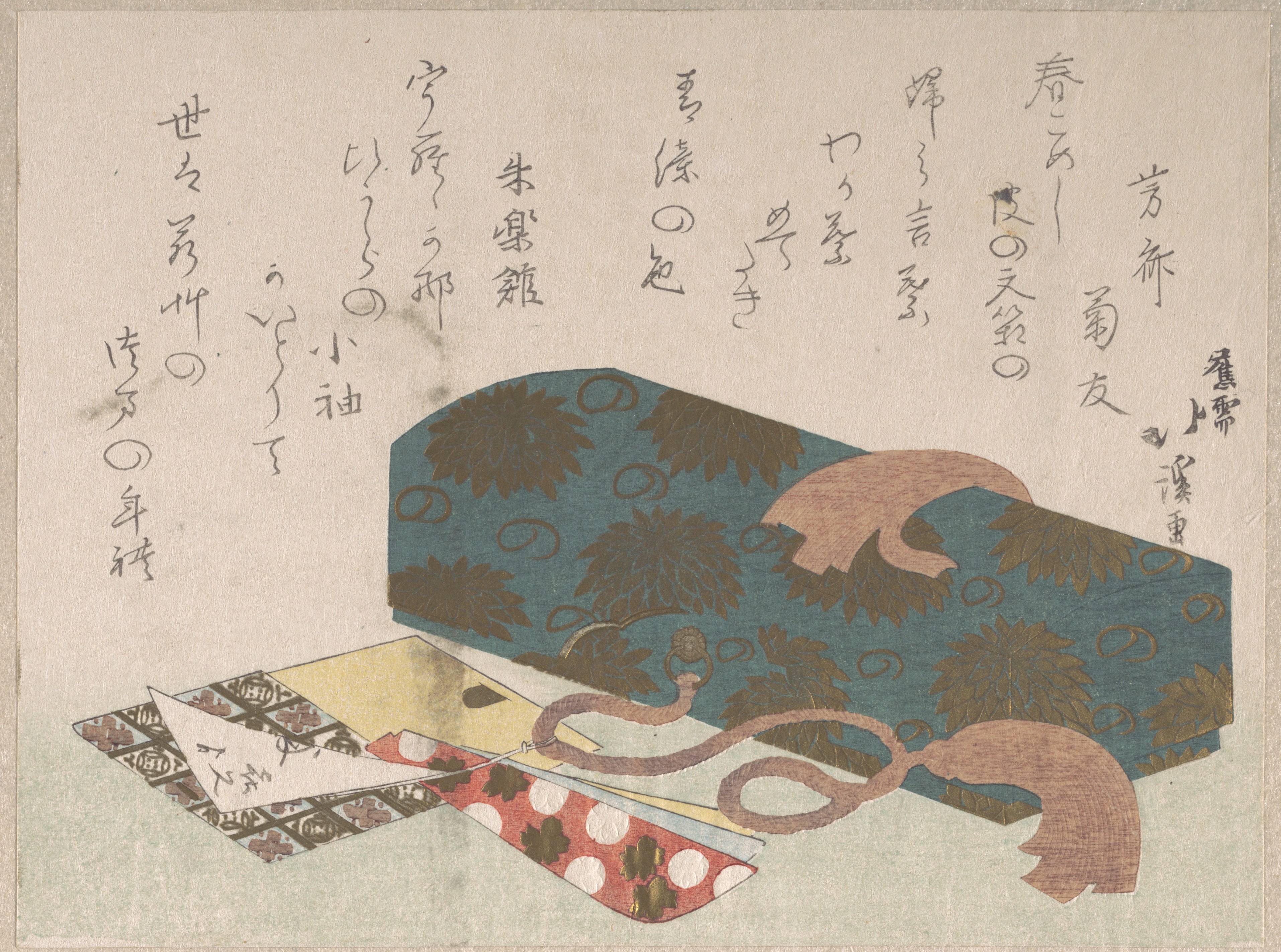
Letter-box and Toothpick Holders
19th century
Part of an album of woodblock prints (surimono); ink and color on paper

Illustration of a Chinese poem, from the series "Picture Book of Chinese Poems (Toshi gafu no uchi)"
c. 1830/44
Color woodblock print; chuban

Kyōka Verse Anthology of Elegant Friends (Kyōka gayū shū) 狂歌雅友集
1826 (Bunsei 9)
Woodblock printed book; ink and color on paper
Frequently Asked Questions
Tsurumi was created by Totoya Hokkei (魚屋北渓) in 1833.