
Two dancing karako, from the series "Happiness and Long Life for the Mimasu Group (Mimasu fukurokuju)"
- Date:
- c. 1823
- Medium:
- Color woodblock print; left sheet of shikishiban diptych, surimono
- Source:
- Art Institute of Chicago
Description
Totoya Hokkei's surimono Two Dancing Karako, from the series Happiness and Long Life for the Mimasu Group (Mimasu fukurokuju), shows two Chinese-style children, karako, mid-dance, their robes and gestures emphasizing youth, festive spirit, and auspicious good fortune. Karako figures were a long-standing motif in Japanese painting and decorative arts, often associated with prosperity and the wish for many children, and they were a natural choice for a kyōka group whose series title explicitly invoked happiness and long life — Fukurokuju being one of the Seven Gods of Good Fortune. The "Mimasu" in the series name refers to the kyōka circle and may also allude to the Mimasu crest of the Ichikawa kabuki house, weaving a layered reference network that Edo kyoka-e audiences enjoyed unpicking. Hokkei, a senior Hokusai school designer of surimono, handles the karako with the lively but disciplined line that was his hallmark, and the surimono format adds embossing, metallic accents, and refined color. The Art Institute of Chicago holds the impression within its strong group of Hokkei series prints, where the Mimasu fukurokuju set stands out as a particularly coherent example of how single kyōka groups commissioned thematically integrated runs of surimono from the leading designers of the day. Image courtesy of the Art Institute of Chicago.
More Prints by Totoya Hokkei

Potted Plant (Ueki), from the series "Eighteen Illustrations of the Ladder of Ancient Words (Kogentei juhachiban tsuzuki)"
1831
Color woodblock print; shikishiban, surimono
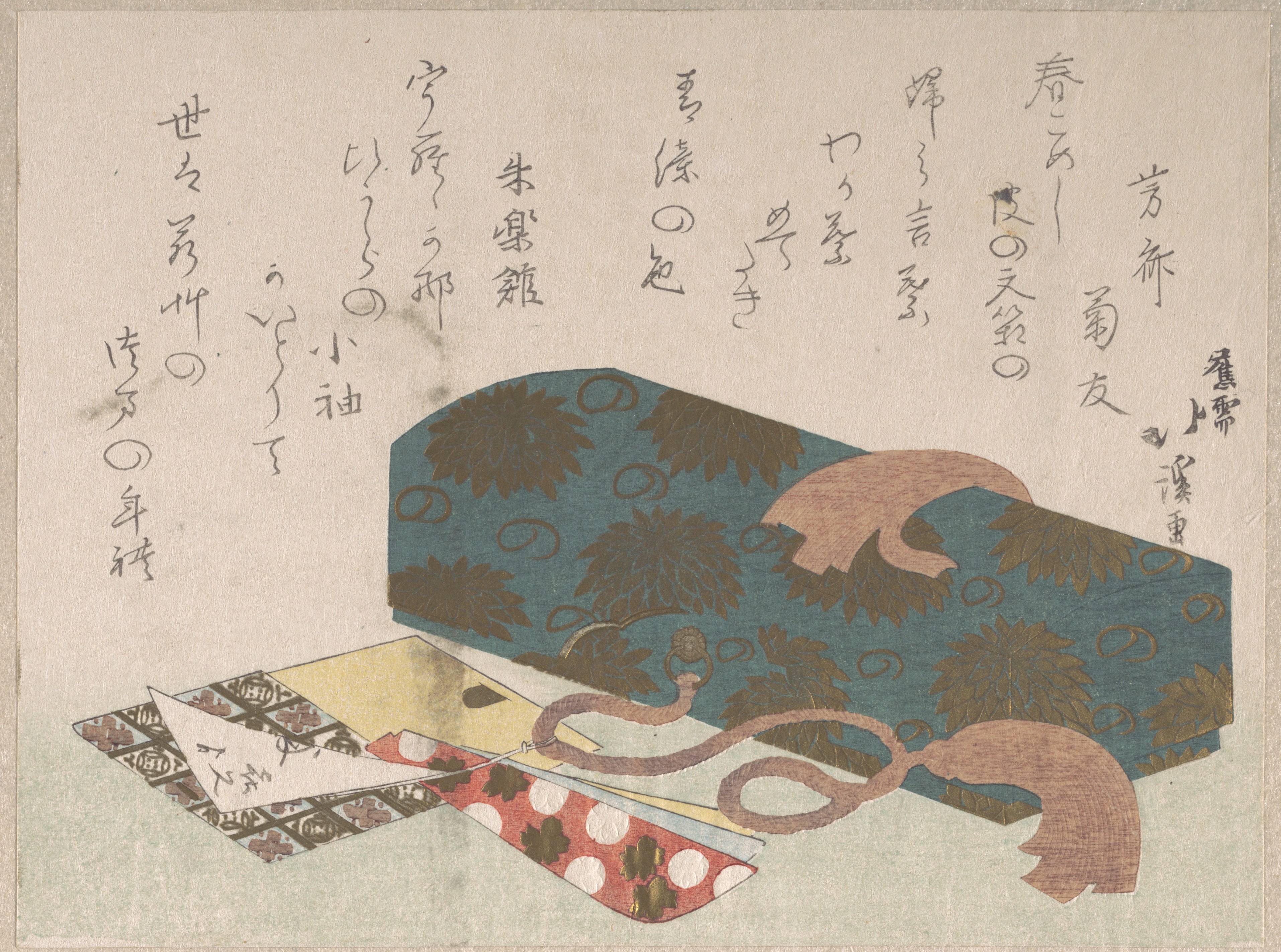
Letter-box and Toothpick Holders
19th century
Part of an album of woodblock prints (surimono); ink and color on paper

Illustration of a Chinese poem, from the series "Picture Book of Chinese Poems (Toshi gafu no uchi)"
c. 1830/44
Color woodblock print; chuban

Kyōka Verse Anthology of Elegant Friends (Kyōka gayū shū) 狂歌雅友集
1826 (Bunsei 9)
Woodblock printed book; ink and color on paper
Frequently Asked Questions
Two dancing karako, from the series "Happiness and Long Life for the Mimasu Group (Mimasu fukurokuju)" was created by Totoya Hokkei (魚屋北渓) in c. 1823.