
Ushiwakamaru (Minamoto no Yoshitsune) defeats Benkei in a game of sugoroku
- Date:
- c. 1825
- Medium:
- Color woodblock print; shikishiban, surimono
- Source:
- Art Institute of Chicago
Description
This 1820 surimono by Totoya Hokkei reimagines the celebrated rivalry between the youthful Minamoto no Yoshitsune, known as Ushiwakamaru, and the warrior-monk Benkei as a polite contest over a sugoroku board. Their legendary encounter on Kyoto's Gojo Bridge was a staple of medieval war tales, and Edo kyoka-e poets delighted in displacing such heroic confrontations into refined domestic settings where the wit lay in the recasting. Hokkei was among the most active surimono designers of his generation and a leading pupil of the Hokusai school, well practiced in producing classical figures with the deluxe finish that private poetry clubs demanded. As recorded by the Art Institute of Chicago, the print is dated to 1820, situating it within the heyday of Edo surimono when shikishiban-format sheets carried kyoka verses alongside elaborate figural designs. The choice of sugoroku, a popular board game in which players raced counters across a printed sheet, would have been understood by viewers as a clever miniaturization of the heroes' famous battle. Hokkei's drawing line, refined surimono color and the typical use of mica, embossing or metallic pigments on such commissioned prints embody the technical luxuries reserved for kyoka-e patrons. Within Totoya Hokkei's body of warrior-legend surimono, the sheet stands as a characteristic example of how Hokusai-school artists translated martial epic into the playful, literary register of nineteenth-century Edo print culture.
More Prints by Totoya Hokkei

Potted Plant (Ueki), from the series "Eighteen Illustrations of the Ladder of Ancient Words (Kogentei juhachiban tsuzuki)"
1831
Color woodblock print; shikishiban, surimono
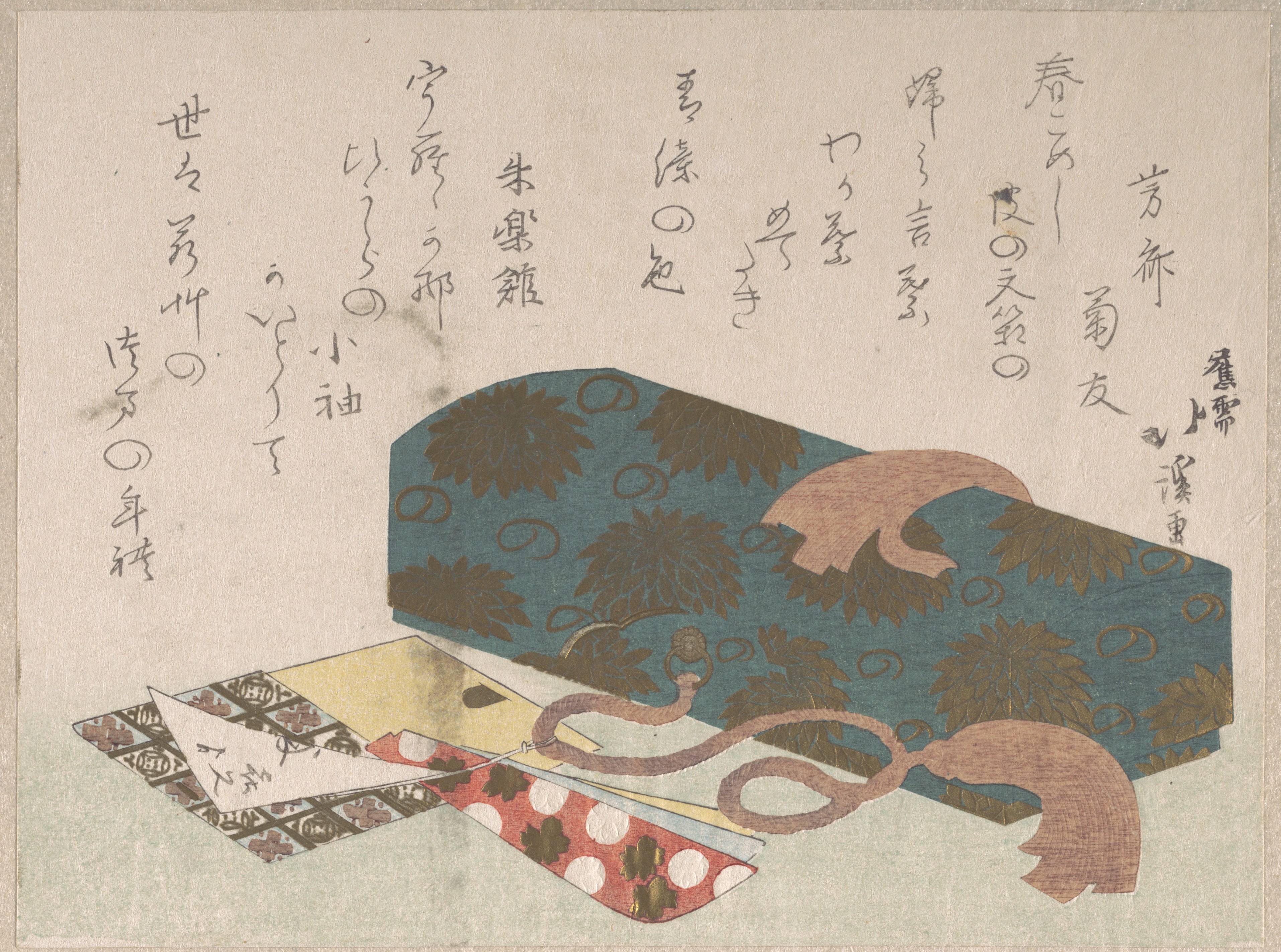
Letter-box and Toothpick Holders
19th century
Part of an album of woodblock prints (surimono); ink and color on paper

Illustration of a Chinese poem, from the series "Picture Book of Chinese Poems (Toshi gafu no uchi)"
c. 1830/44
Color woodblock print; chuban

Kyōka Verse Anthology of Elegant Friends (Kyōka gayū shū) 狂歌雅友集
1826 (Bunsei 9)
Woodblock printed book; ink and color on paper
Frequently Asked Questions
Ushiwakamaru (Minamoto no Yoshitsune) defeats Benkei in a game of sugoroku was created by Totoya Hokkei (魚屋北渓) in c. 1825.