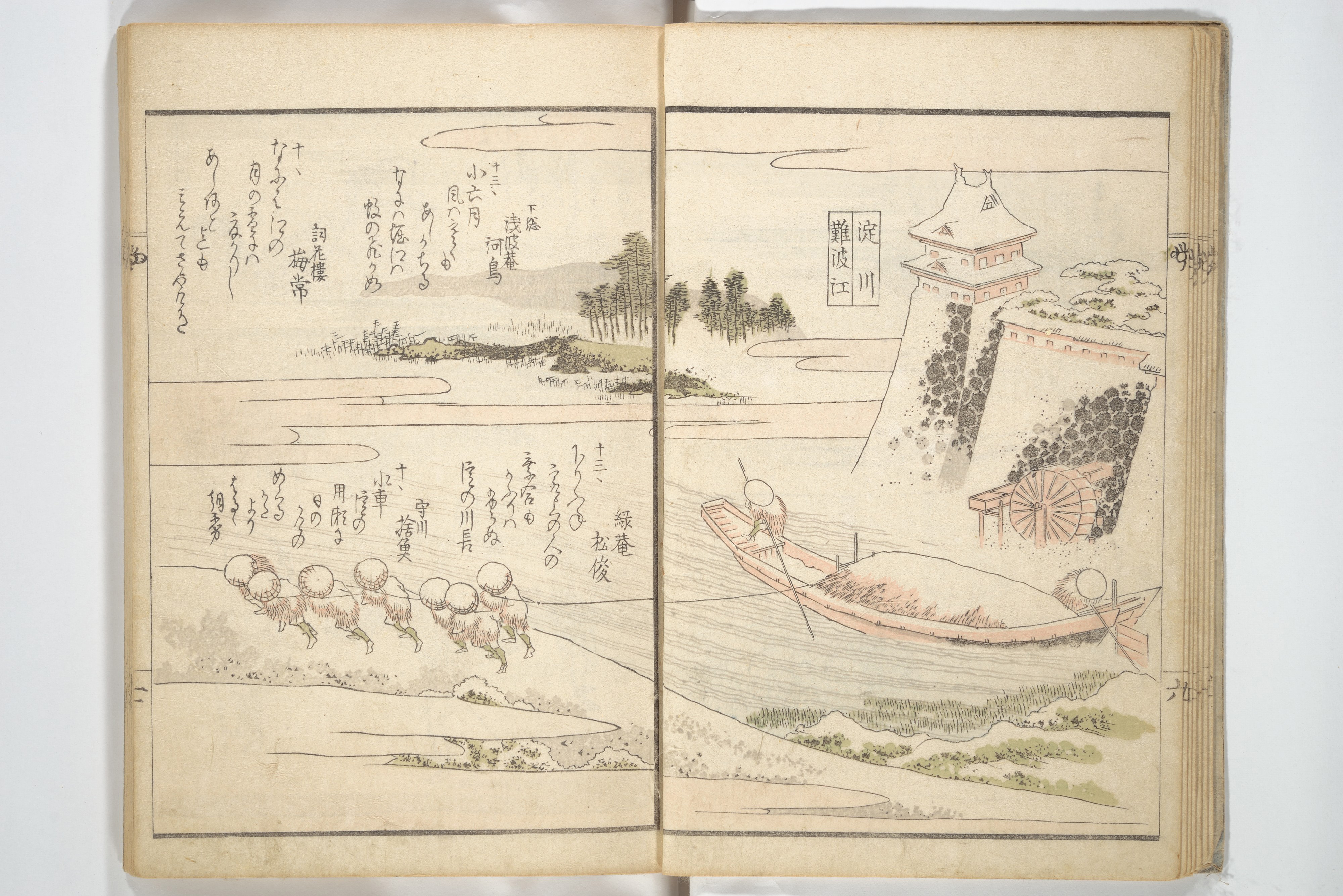
Views of Famous Places in Japan Paired with Kyōka Poems (Kyōka fusō meisho zue) 狂歌扶桑名所図会
- Date:
- 1824 November (Bunsei 7)
- Medium:
- Woodblock printed book; ink and color on paper
- Source:
- Metropolitan Museum of Art
Description
Totoya Hokkei's Views of Famous Places in Japan Paired with Kyoka Poems (Kyoka fuso meisho zue), produced around 1824, exemplifies the close collaboration between image and verse that defined the surimono genre at its height. As one of Katsushika Hokusai's leading pupils, Hokkei worked extensively within the Hokusai school's expanded geography of meisho (famous places) imagery, producing prints commissioned by kyoka poetry clubs whose members composed witty, classically inflected verses to accompany the visual scenes. The series title alludes to Fuso, a poetic name for Japan, framing the project as a literary tour of the realm in which each image becomes the occasion for a poetic exchange among club members. Hokkei's compositions in such series typically isolate a recognizable landmark or a characteristic local activity within a carefully balanced design, prioritizing legible silhouettes, subtle color harmonies, and considered placement of text. The luxury format permitted gauffrage embossing, gradient bokashi printing, and the use of mica, gold leaf, or precious pigments at a level of refinement unattainable in commercial single-sheet prints. Within Edo-period print culture, kyoka surimono served as social currency among educated amateurs, marking seasonal observances, anniversaries, name-takings, and other private occasions. By pairing image and poem on a single sheet, this series captures the integration of visual art and literary play that distinguished the Hokusai school's surimono output. Held by the Metropolitan Museum of Art, Views of Famous Places in Japan Paired with Kyoka Poems is an important example of how Totoya Hokkei used the surimono format to extend his teacher's vision of Japan's geography into the intimate, intellectually sophisticated realm of poetry-circle commissions, where image, text, and material refinement combined into a single layered experience.
More Prints by Totoya Hokkei

Potted Plant (Ueki), from the series "Eighteen Illustrations of the Ladder of Ancient Words (Kogentei juhachiban tsuzuki)"
1831
Color woodblock print; shikishiban, surimono
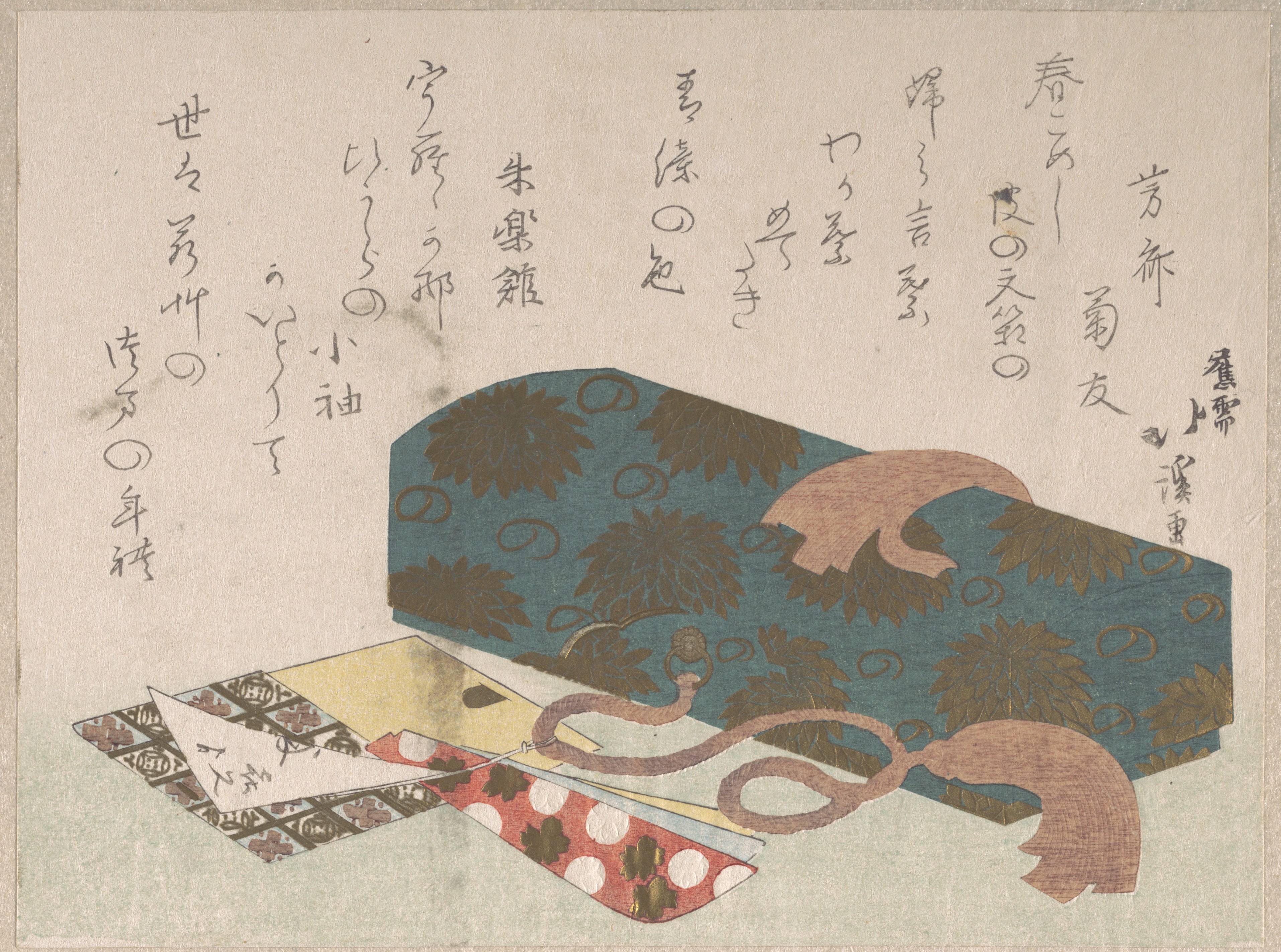
Letter-box and Toothpick Holders
19th century
Part of an album of woodblock prints (surimono); ink and color on paper

Illustration of a Chinese poem, from the series "Picture Book of Chinese Poems (Toshi gafu no uchi)"
c. 1830/44
Color woodblock print; chuban

Kyōka Verse Anthology of Elegant Friends (Kyōka gayū shū) 狂歌雅友集
1826 (Bunsei 9)
Woodblock printed book; ink and color on paper
Frequently Asked Questions
Views of Famous Places in Japan Paired with Kyōka Poems (Kyōka fusō meisho zue) 狂歌扶桑名所図会 was created by Totoya Hokkei (魚屋北渓) in 1824 November (Bunsei 7).