
Visiting the Sanno Shrine
- Date:
- 1824
- Medium:
- Color woodblock print; shikishiban, surimono
- Source:
- Art Institute of Chicago
Description
Totoya Hokkei's 1824 surimono Visiting the Sanno Shrine, held by the Art Institute of Chicago, takes as its subject one of Edo's most prominent tutelary cults, centered on the shrine atop the slope of Akasaka. The Sanno Festival was among the city's major sanctioned processions, and visits to the shrine throughout the year provided a steady current of urban devotion and social display that became a favored subject for ukiyo-e and surimono designers. Edo kyoka-e clubs valued such themes, where civic ritual could be filtered through the literary refinements of kyoka verse. Hokkei, a senior pupil of the Hokusai school, drew on Katsushika Hokusai's example of close attention to Edo's religious and social calendar, and the surimono format allowed him to render shrine architecture, costume and accessory with the deluxe techniques characteristic of private printing: thick hosho paper, mica grounds, metallic pigments and karazuri embossing. Kyoka verses inscribed alongside the image would have personalized the design for its original recipients, marking a particular pilgrimage or seasonal observance. Within Totoya Hokkei's body of surimono, the sheet stands as a measured example of how the Hokusai school engaged with Edo's lived religious landscape, transforming a familiar shrine visit into a literary and pictorial object suitable for connoisseurs and poets alike.
More Prints by Totoya Hokkei

Potted Plant (Ueki), from the series "Eighteen Illustrations of the Ladder of Ancient Words (Kogentei juhachiban tsuzuki)"
1831
Color woodblock print; shikishiban, surimono
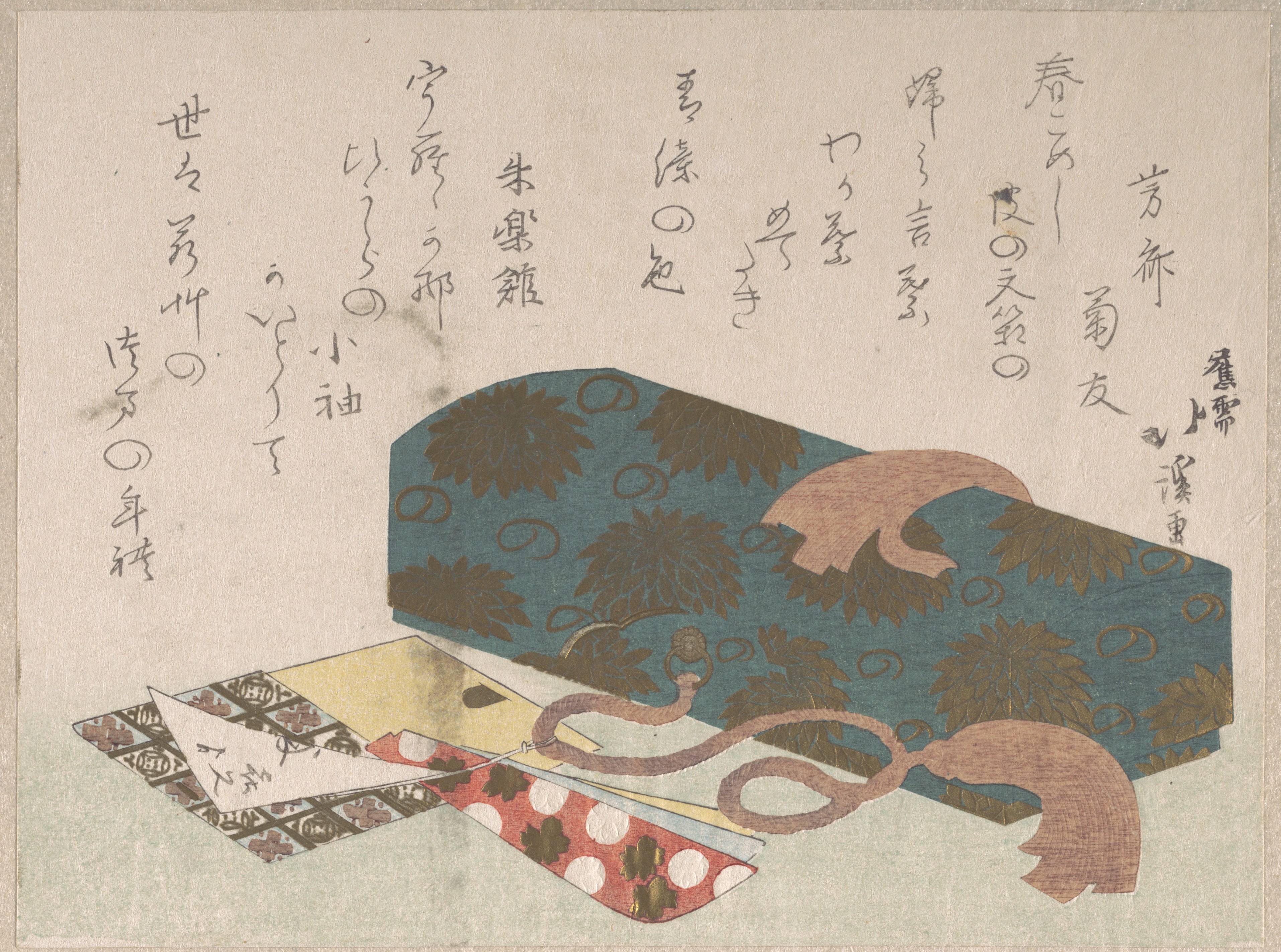
Letter-box and Toothpick Holders
19th century
Part of an album of woodblock prints (surimono); ink and color on paper

Illustration of a Chinese poem, from the series "Picture Book of Chinese Poems (Toshi gafu no uchi)"
c. 1830/44
Color woodblock print; chuban

Kyōka Verse Anthology of Elegant Friends (Kyōka gayū shū) 狂歌雅友集
1826 (Bunsei 9)
Woodblock printed book; ink and color on paper
Frequently Asked Questions
Visiting the Sanno Shrine was created by Totoya Hokkei (魚屋北渓) in 1824.