
Visitors Gathered at the Gate of a Nobelman's House on New Year's Day
- Date:
- c.1825
- Medium:
- Color woodblock print; surimono
- Source:
- Art Institute of Chicago
Description
This 1820 surimono by Totoya Hokkei, recorded in the Art Institute of Chicago, shows visitors gathered at the gate of a nobleman's residence on New Year's Day, capturing one of the most characteristic social rituals of Edo. New Year's calls (nenshi) were a fixed feature of the urban calendar, and surimono — many of them commissioned as season's greetings by kyoka clubs and individuals — frequently took such customs as their subject. The painted gateway, the formally dressed retinue and the ceremonial atmosphere all spoke to the elite associations cultivated in the kyoka-e milieu, where wealthy townspeople and samurai patrons commissioned designs that flattered their literary aspirations. Hokkei, a senior pupil of the Hokusai school, had learned from Katsushika Hokusai how to organize crowded scenes within the small surimono format, distributing figures, architecture and accessories so that each element remained legible. Surimono printing of this era favored thick, finely sized hosho paper and luxurious effects including mica, metallic pigments and embossing, which were especially well suited to depicting the lacquered fittings of an aristocratic gate. The accompanying kyoka verses would have personalized the print for its original recipients, marking the New Year with literary play. As a Hokusai-school treatment of contemporary urban ceremony, the sheet stands among the most documentary of Hokkei's surimono.
More Prints by Totoya Hokkei

Potted Plant (Ueki), from the series "Eighteen Illustrations of the Ladder of Ancient Words (Kogentei juhachiban tsuzuki)"
1831
Color woodblock print; shikishiban, surimono
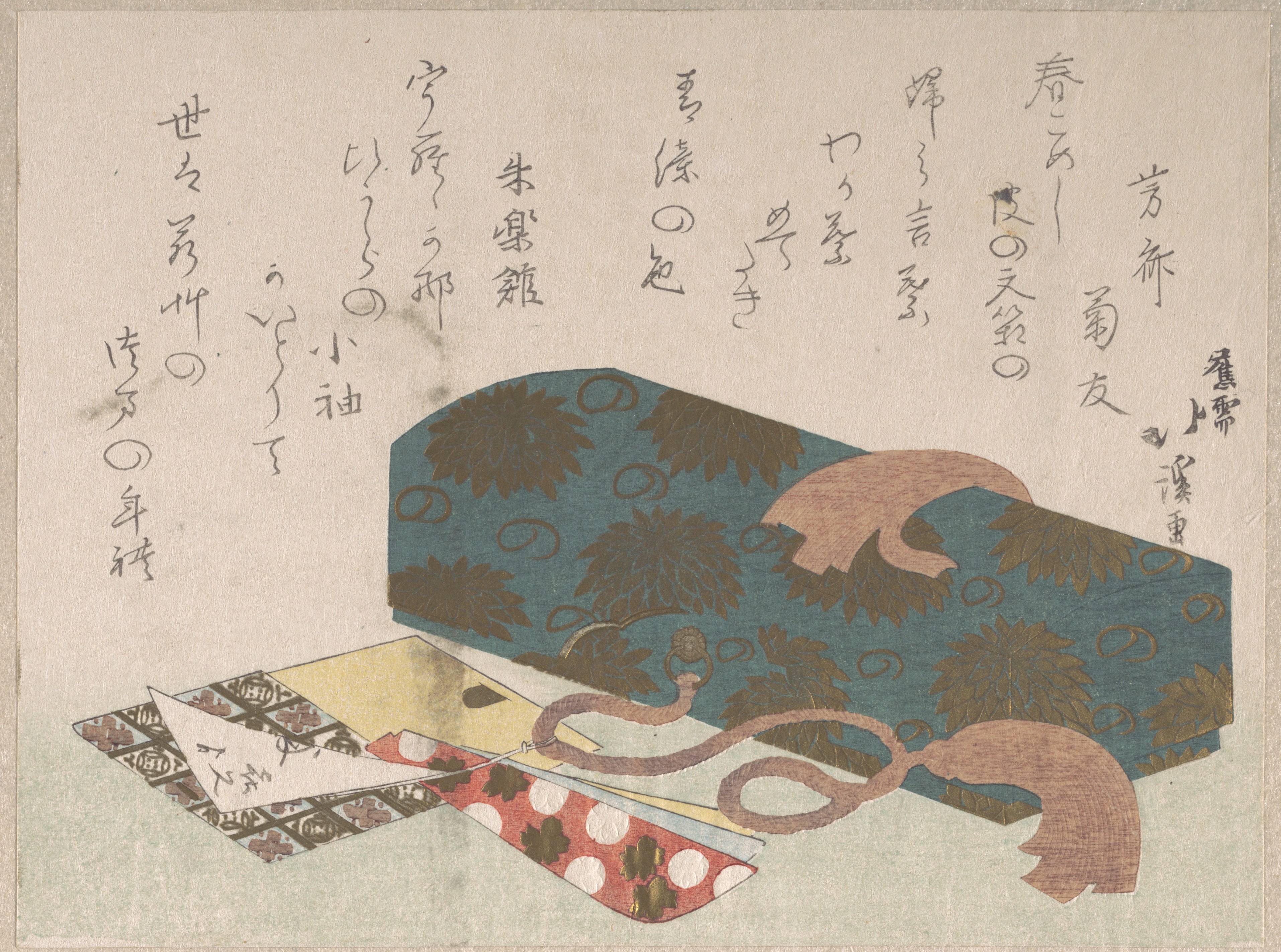
Letter-box and Toothpick Holders
19th century
Part of an album of woodblock prints (surimono); ink and color on paper

Illustration of a Chinese poem, from the series "Picture Book of Chinese Poems (Toshi gafu no uchi)"
c. 1830/44
Color woodblock print; chuban

Kyōka Verse Anthology of Elegant Friends (Kyōka gayū shū) 狂歌雅友集
1826 (Bunsei 9)
Woodblock printed book; ink and color on paper
Frequently Asked Questions
Visitors Gathered at the Gate of a Nobelman's House on New Year's Day was created by Totoya Hokkei (魚屋北渓) in c.1825.