
Wang Xiang (Jp: O Sho), from the series "Twenty-four Paragons of Filial Piety (Nijushiko)"
- Date:
- c. 1825
- Medium:
- Color woodblock print; shikishiban, surimono
- Source:
- Art Institute of Chicago
Description
In this 1820 surimono from his series Twenty-four Paragons of Filial Piety (Nijushiko), Totoya Hokkei portrays Wang Xiang, known in Japan as O Sho, one of the most familiar of the Chinese exemplars of filial devotion. The legend tells that Wang Xiang, whose stepmother craved fresh fish in winter, lay on the frozen surface of a river until the ice melted from his body heat and a pair of carp leapt out, demonstrating that filial sincerity could move heaven and earth. The Art Institute of Chicago's catalogue places the work in 1820, situating it firmly within the most active phase of Edo kyoka-e surimono production. Hokkei was among the most accomplished pupils of the Hokusai school, and the Nijushiko cycle gave him a learned framework on which to deploy that training. Surimono commissioned by poetry clubs typically combined images with kyoka verses, and the moral cycle of the Nijushiko offered an unusually rich field for literary play: poets could turn the gravity of the Chinese exempla into witty Edo commentary, or sustain them as solemn New Year meditations. The deluxe printing techniques of surimono — graded color, mica grounds, karazuri embossing — would have lent texture to Wang Xiang's snowy landscape and the silvery carp, transforming a moral tale into a small, jewel-like object of connoisseurship.
More Prints by Totoya Hokkei

Potted Plant (Ueki), from the series "Eighteen Illustrations of the Ladder of Ancient Words (Kogentei juhachiban tsuzuki)"
1831
Color woodblock print; shikishiban, surimono
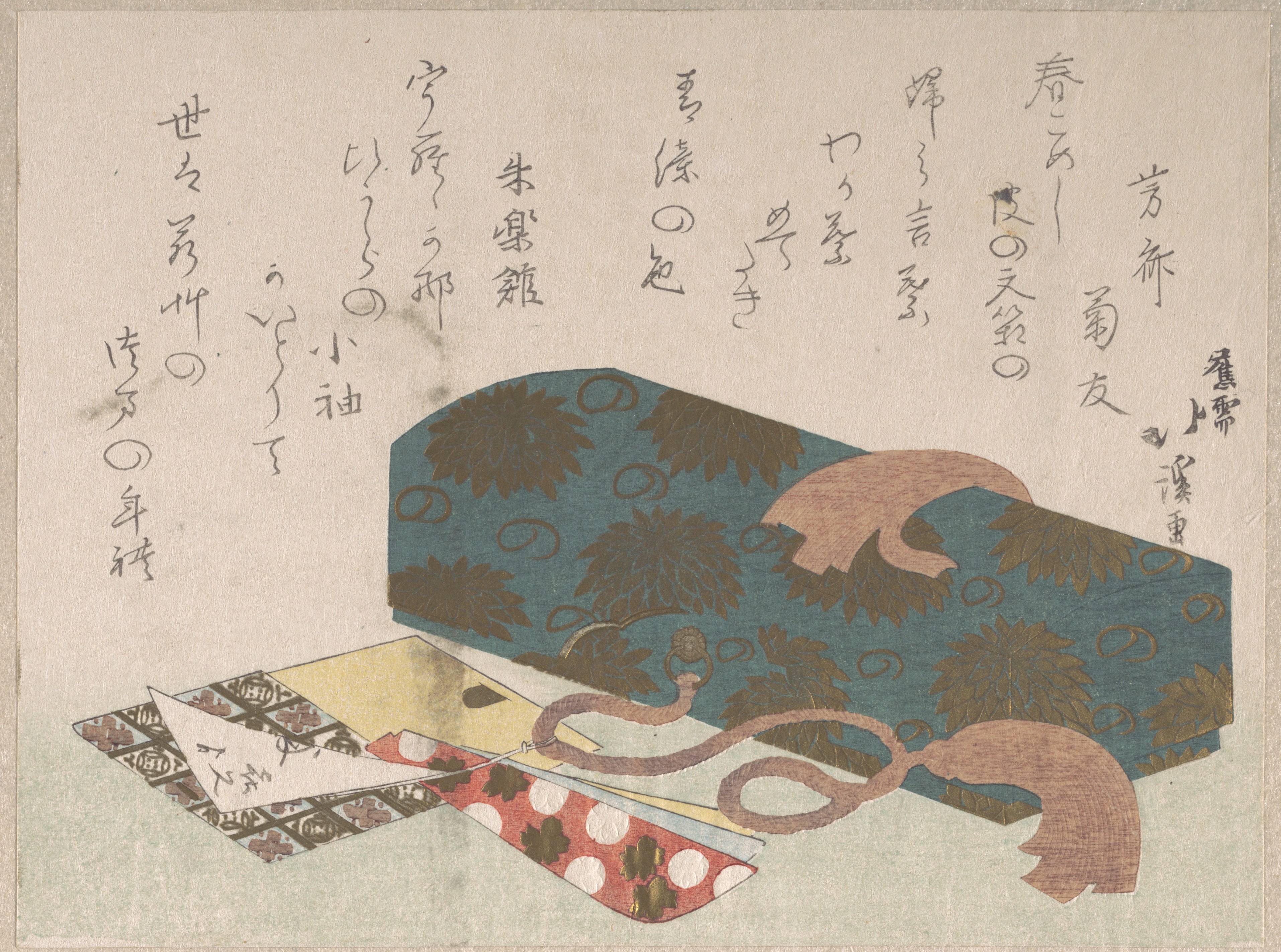
Letter-box and Toothpick Holders
19th century
Part of an album of woodblock prints (surimono); ink and color on paper

Illustration of a Chinese poem, from the series "Picture Book of Chinese Poems (Toshi gafu no uchi)"
c. 1830/44
Color woodblock print; chuban

Kyōka Verse Anthology of Elegant Friends (Kyōka gayū shū) 狂歌雅友集
1826 (Bunsei 9)
Woodblock printed book; ink and color on paper
Frequently Asked Questions
Wang Xiang (Jp: O Sho), from the series "Twenty-four Paragons of Filial Piety (Nijushiko)" was created by Totoya Hokkei (魚屋北渓) in c. 1825.