
Warbler in a cage, from the series "A Series for the Hanazono Group (Hanazono bantsuzuki)"
- Date:
- 1823
- Medium:
- Color woodblock print; shikishiban, surimono
- Source:
- Art Institute of Chicago
Description
From Totoya Hokkei's 1823 surimono series A Series for the Hanazono Group (Hanazono bantsuzuki), recorded in the Art Institute of Chicago, this sheet depicts a warbler in a cage, a subject that combines the keen Japanese interest in songbirds with the intimate, decorative character of the surimono format. The Hanazono (flower garden) was the name of a kyoka club, and series like Hanazono bantsuzuki were commissioned by its members to celebrate their shared literary pursuits. Each impression would have carried kyoka verses by club members composed to accompany the image. The warbler (uguisu), with its song heralding spring, was an especially resonant subject in this context, since many surimono were issued as New Year or early-spring greetings. Hokkei, a leading pupil of the Hokusai school, was adept at such close studies of birds and small creatures, drawing on Katsushika Hokusai's example to produce confident yet refined designs. Surimono printing of the period employed mica, gold and silver pigments, embossing and finely graded color, all of which could be deployed to render the bird's plumage, the cage's lacquer or bamboo, and the suggestion of an interior setting. As part of a sustained series for a single kyoka club, the sheet exemplifies the social and material refinements of Edo kyoka-e at its height.
More Prints by Totoya Hokkei

Potted Plant (Ueki), from the series "Eighteen Illustrations of the Ladder of Ancient Words (Kogentei juhachiban tsuzuki)"
1831
Color woodblock print; shikishiban, surimono
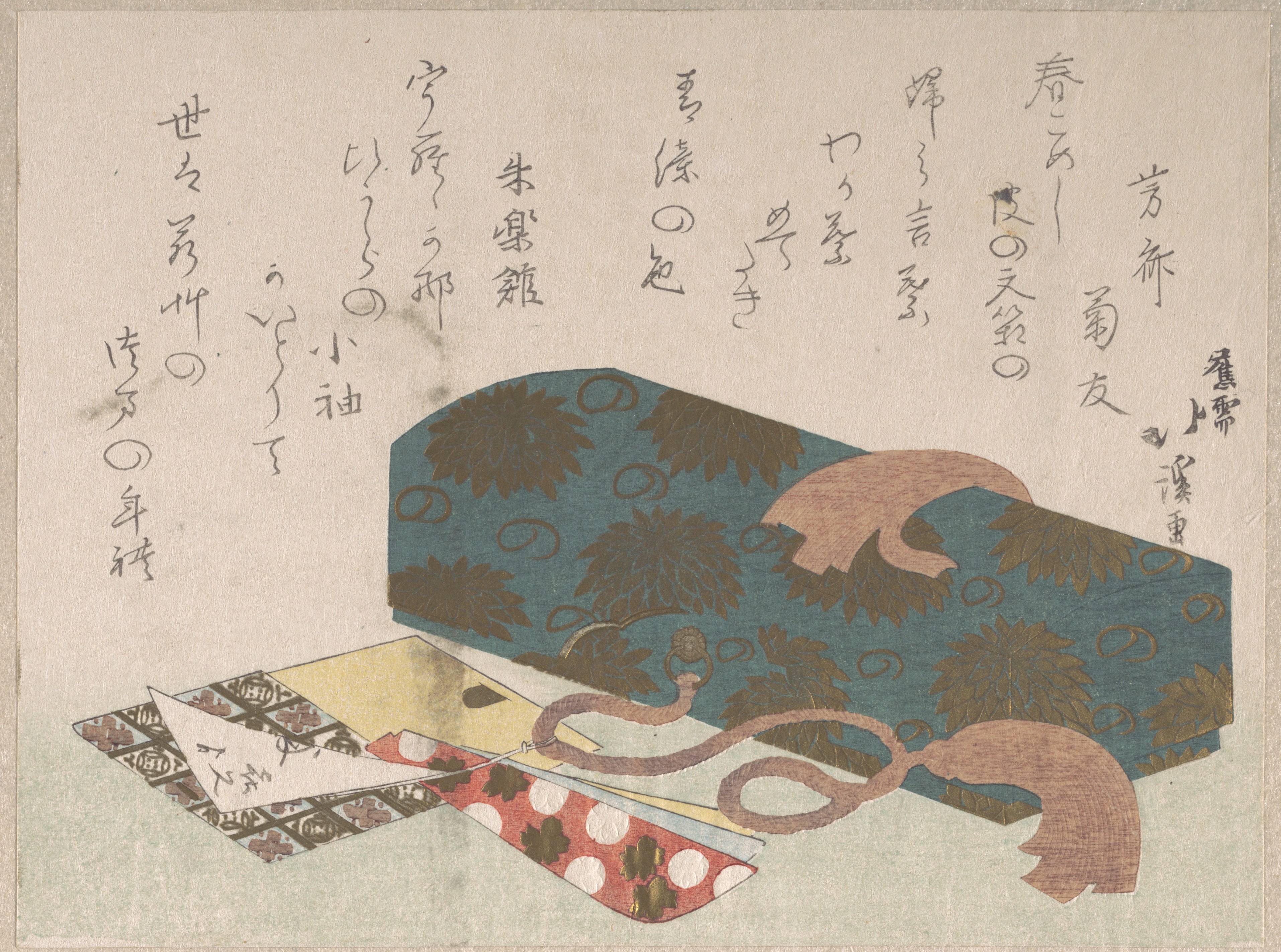
Letter-box and Toothpick Holders
19th century
Part of an album of woodblock prints (surimono); ink and color on paper

Illustration of a Chinese poem, from the series "Picture Book of Chinese Poems (Toshi gafu no uchi)"
c. 1830/44
Color woodblock print; chuban

Kyōka Verse Anthology of Elegant Friends (Kyōka gayū shū) 狂歌雅友集
1826 (Bunsei 9)
Woodblock printed book; ink and color on paper
Frequently Asked Questions
Warbler in a cage, from the series "A Series for the Hanazono Group (Hanazono bantsuzuki)" was created by Totoya Hokkei (魚屋北渓) in 1823.