
Wasabi root with dried bonito and knife on a lacquer tray
- Date:
- early 1820s
- Medium:
- Color woodblock print; shikishiban, surimono
- Source:
- Art Institute of Chicago
Description
Totoya Hokkei's 1820 surimono of wasabi root with dried bonito and a knife on a lacquer tray, held by the Art Institute of Chicago, exemplifies the still-life subjects favored by Edo kyoka-e poetry clubs. Surimono frequently turned to such carefully arranged objects, where each item invited associations that the accompanying kyoka verses could amplify into clever puns and seasonal references. Wasabi and dried bonito (katsuobushi) are foundational ingredients of Japanese cuisine and carried strong associations with prosperity and well-being, particularly at the New Year when many surimono were issued. The lacquer tray on which they rest is itself an object of refinement, and the depiction of its glossy black or red surface would have given the printer an opportunity to display the deluxe printing techniques that distinguish surimono from commercial ukiyo-e: graded color, burnishing and the use of metallic pigments or lacquer-like inks. As a leading pupil of Katsushika Hokusai, Hokkei specialized in just this kind of compressed, jewel-like still life within the Hokusai school's broad repertoire. The sheet's quiet composition and careful object-by-object description belong to a long tradition of Japanese hand-painted hanging scrolls of food and utensils, here translated into the social register of kyoka-e and the technical possibilities of early nineteenth-century woodblock printing.
More Prints by Totoya Hokkei

Potted Plant (Ueki), from the series "Eighteen Illustrations of the Ladder of Ancient Words (Kogentei juhachiban tsuzuki)"
1831
Color woodblock print; shikishiban, surimono
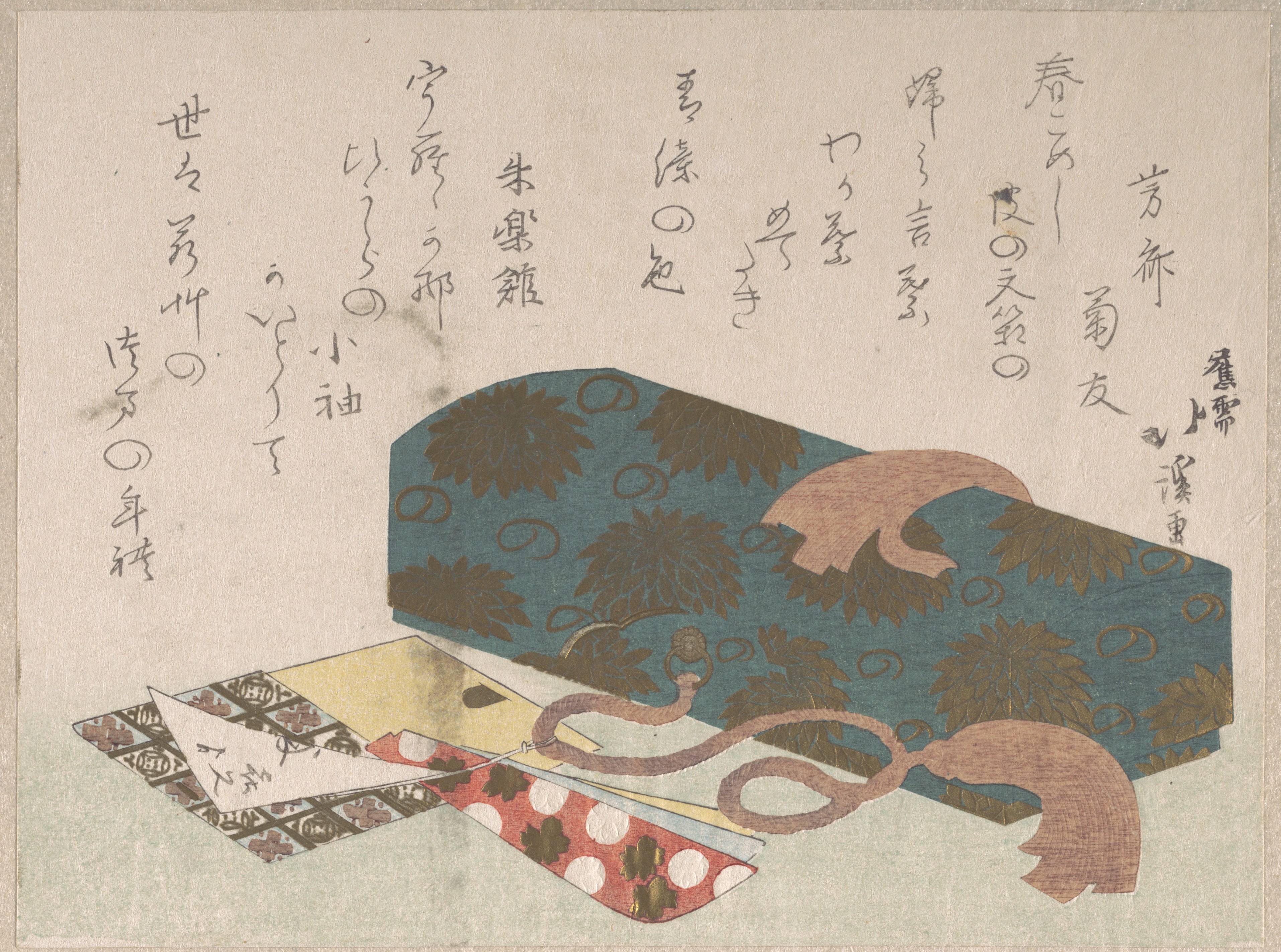
Letter-box and Toothpick Holders
19th century
Part of an album of woodblock prints (surimono); ink and color on paper

Illustration of a Chinese poem, from the series "Picture Book of Chinese Poems (Toshi gafu no uchi)"
c. 1830/44
Color woodblock print; chuban

Kyōka Verse Anthology of Elegant Friends (Kyōka gayū shū) 狂歌雅友集
1826 (Bunsei 9)
Woodblock printed book; ink and color on paper
Frequently Asked Questions
Wasabi root with dried bonito and knife on a lacquer tray was created by Totoya Hokkei (魚屋北渓) in early 1820s.