
Willow Bath (Yanagiyu), from the series "A Series of Willows (Yanagi bantsuzuki)"
- Date:
- c. 1828
- Medium:
- Color woodblock print; shikishiban, surimono
- Source:
- Art Institute of Chicago
Description
This 1823 surimono by Totoya Hokkei, recorded in the Art Institute of Chicago, belongs to the series A Series of Willows (Yanagi bantsuzuki) and depicts Willow Bath (Yanagiyu), one of several Edo establishments or motifs incorporating the willow (yanagi) name. The willow itself, with its sweeping branches and association with the pleasure quarters, was a favored emblem in Edo poetry and visual art, and a kyoka-e series organized around the term offered ample opportunity for puns and learned allusions. As a leading pupil of the Hokusai school, Hokkei worked confidently with both contemporary urban subject matter and the demands of the small surimono format. Surimono commissioned by Edo kyoka clubs were printed in small editions on thick hosho paper, with deluxe techniques such as graded color, mica grounds, metallic pigments and karazuri embossing reserved for these private prints. The Yanagi bantsuzuki cycle would have provided club members with a sequence of related images on which they composed kyoka verses, each sheet contributing to a shared poetic project. Within Totoya Hokkei's broader surimono output, the Yanagi series exemplifies the kind of thematically unified set that characterized the Hokusai school's contribution to nineteenth-century Edo kyoka-e, balancing pictorial wit, literary play and material refinement.
More Prints by Totoya Hokkei

Potted Plant (Ueki), from the series "Eighteen Illustrations of the Ladder of Ancient Words (Kogentei juhachiban tsuzuki)"
1831
Color woodblock print; shikishiban, surimono
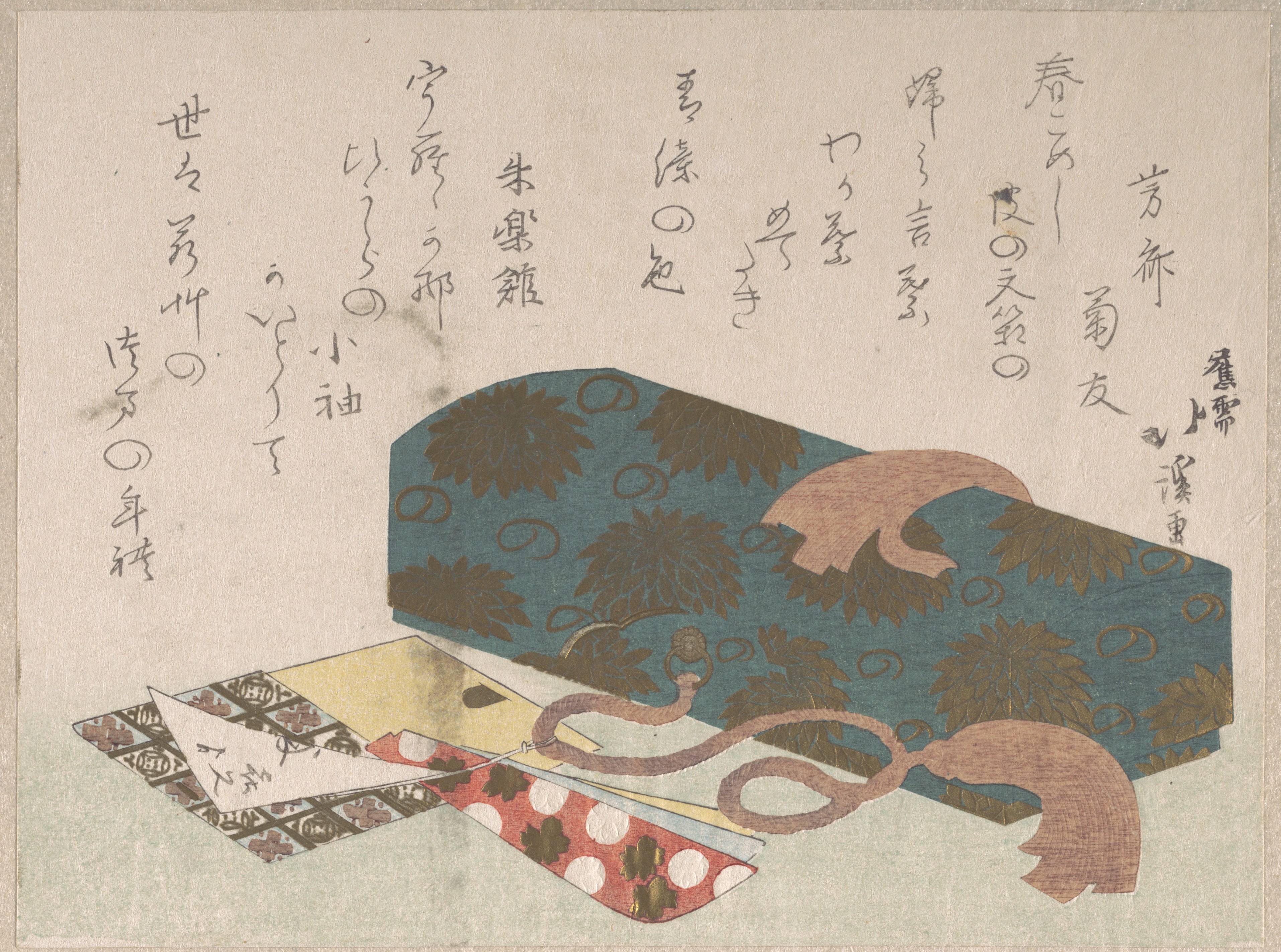
Letter-box and Toothpick Holders
19th century
Part of an album of woodblock prints (surimono); ink and color on paper

Illustration of a Chinese poem, from the series "Picture Book of Chinese Poems (Toshi gafu no uchi)"
c. 1830/44
Color woodblock print; chuban

Kyōka Verse Anthology of Elegant Friends (Kyōka gayū shū) 狂歌雅友集
1826 (Bunsei 9)
Woodblock printed book; ink and color on paper
Frequently Asked Questions
Willow Bath (Yanagiyu), from the series "A Series of Willows (Yanagi bantsuzuki)" was created by Totoya Hokkei (魚屋北渓) in c. 1828.