
Willow Shop (Yanagiya), from the series "A Series of Willows (Yanagi bantsuzuki)"
- Date:
- c. 1828
- Medium:
- Color woodblock print; shikishiban, surimono
- Source:
- Art Institute of Chicago
Description
Totoya Hokkei's 1823 surimono of Willow Shop (Yanagiya), from his series A Series of Willows (Yanagi bantsuzuki) and held by the Art Institute of Chicago, draws on the Edo penchant for incorporating yanagi (willow) into the names of shops, teahouses and brand identities. The series turned this linguistic habit into the structural device of a kyoka-e cycle, providing successive sheets in which a different willow-themed establishment, location or motif anchored a kyoka verse. Hokkei, a senior pupil of the Hokusai school, was practiced at small-format designs that combined careful figural drawing with the deluxe printing effects characteristic of surimono: graded color, embossing on textiles, mica and metallic pigments. Edo kyoka poetry clubs valued such series for the way they sustained a single conceit across multiple commissions, allowing members to display their wit across the full sequence. The Art Institute of Chicago's impression preserves Hokkei's contribution to one of the more conceptually unified surimono series of the 1820s, illustrating how the Hokusai school responded to the kyoka-e enthusiasm for word-play, urban observation and connoisseurial collecting. As part of the Yanagi bantsuzuki cycle, the sheet is most fully appreciated within its sequence, where the recurring willow motif binds image and verse into a sustained literary game.
More Prints by Totoya Hokkei

Potted Plant (Ueki), from the series "Eighteen Illustrations of the Ladder of Ancient Words (Kogentei juhachiban tsuzuki)"
1831
Color woodblock print; shikishiban, surimono
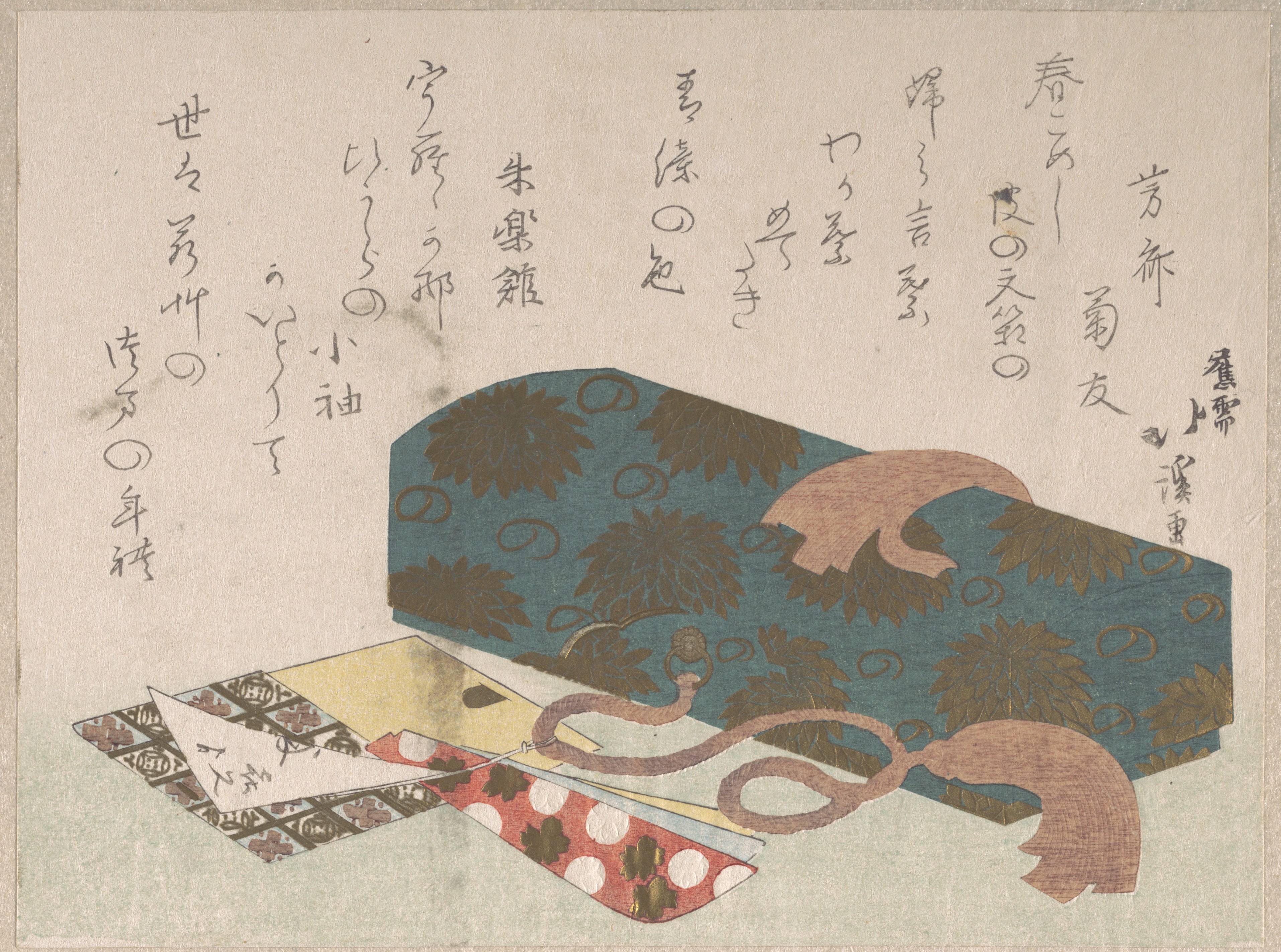
Letter-box and Toothpick Holders
19th century
Part of an album of woodblock prints (surimono); ink and color on paper

Illustration of a Chinese poem, from the series "Picture Book of Chinese Poems (Toshi gafu no uchi)"
c. 1830/44
Color woodblock print; chuban

Kyōka Verse Anthology of Elegant Friends (Kyōka gayū shū) 狂歌雅友集
1826 (Bunsei 9)
Woodblock printed book; ink and color on paper
Frequently Asked Questions
Willow Shop (Yanagiya), from the series "A Series of Willows (Yanagi bantsuzuki)" was created by Totoya Hokkei (魚屋北渓) in c. 1828.