
Woman Cooking Beans in the Store
- Date:
- early 19th century
- Medium:
- Color woodblock print; surimono
- Source:
- Art Institute of Chicago
Description
This Art Institute of Chicago surimono presents a domestic scene of a woman cooking beans in a shop or storefront kitchen - a moment of everyday food preparation captured in the privately commissioned poetry-circle format. The subject combines genre observation with possible mitate dimensions: bean-cooking carried associations with the setsubun festival, with daily commercial food preparation, and potentially with classical or theatrical references that the inscribed kyoka verses would have activated. Hokkei renders the woman with the refined attention to figure and costume characteristic of his bijin-ga style, even when applied to working subjects, and the shop setting with the architectural specificity that gives his genre scenes their grounded sense of place. The composition balances the woman's activity against the architectural setting, leaving space for the kyoka verses that would complete the print's meaning. Such everyday subjects, filtered through the cultivated eye of kyoka poet patrons, formed an important strand of the surimono tradition's interest in the Edo world. The Art Institute's impression preserves the refined printing and saturated coloration characteristic of Hokkei's privately commissioned work.
More Prints by Totoya Hokkei

Potted Plant (Ueki), from the series "Eighteen Illustrations of the Ladder of Ancient Words (Kogentei juhachiban tsuzuki)"
1831
Color woodblock print; shikishiban, surimono
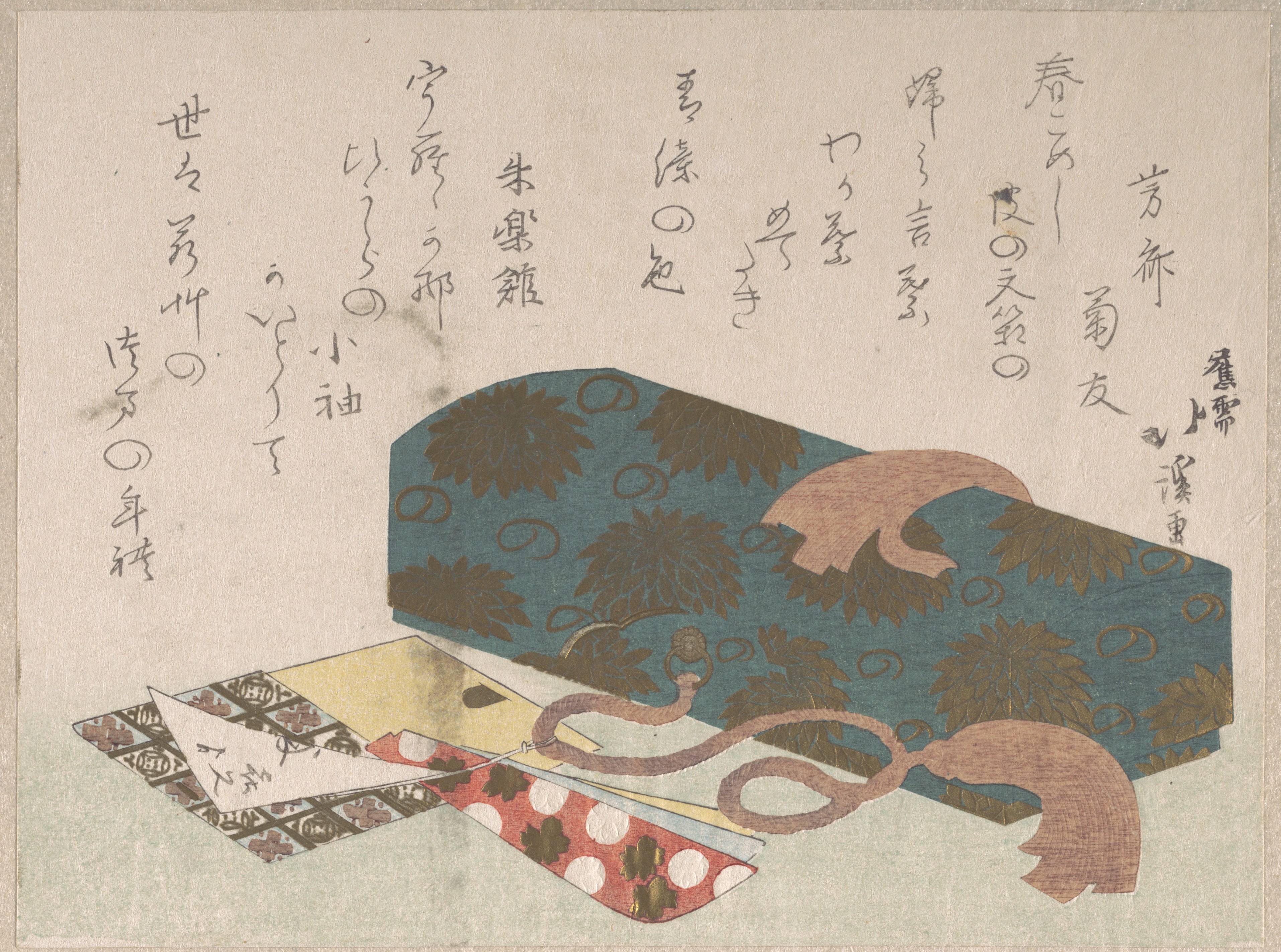
Letter-box and Toothpick Holders
19th century
Part of an album of woodblock prints (surimono); ink and color on paper

Illustration of a Chinese poem, from the series "Picture Book of Chinese Poems (Toshi gafu no uchi)"
c. 1830/44
Color woodblock print; chuban

Kyōka Verse Anthology of Elegant Friends (Kyōka gayū shū) 狂歌雅友集
1826 (Bunsei 9)
Woodblock printed book; ink and color on paper
Frequently Asked Questions
Woman Cooking Beans in the Store was created by Totoya Hokkei (魚屋北渓) in early 19th century.