
Woman Playing with Pekingese Dog, or The Elegance and Freedom of Script (So), from the series "Three Works of Three Aesthetics (San tai san ban shoku)"
- Date:
- about 1830
- Medium:
- Color woodblock print; surimono
- Source:
- Art Institute of Chicago
Description
Totoya Hokkei composed this surimono around 1825 as part of his series "Three Works of Three Aesthetics (San tai san ban shoku)," a conceptual triptych in which each print embodies one mode of the shin-gyo-so aesthetic classification. This sheet, representing "The Elegance and Freedom of Script (So)," depicts a woman playfully engaged with a Pekingese dog. The "so" mode corresponds to cursive script and connotes ease, playfulness, and unconstrained grace, qualities Hokkei captures through the relaxed posture of the woman and the lively energy of the small dog. The shin-gyo-so triad originated in calligraphic theory but was extended in Edo culture to describe broader aesthetic registers across the arts. As a leading pupil of Katsushika Hokusai and a senior figure within the Hokusai school, Totoya Hokkei specialized in surimono, the privately commissioned deluxe prints used by kyoka poetry clubs to mark seasonal occasions. These prints combined a striking image with thirty-one-syllable kyoka verses on heavy paper enriched with metallic pigments and elaborate embossing. The conceptual sophistication of the San tai san ban shoku series exemplifies how Hokkei used the surimono format to demonstrate the intersection of pictorial design, literary culture, and aesthetic theory. The Art Institute of Chicago, which preserves this impression, holds significant strength in early nineteenth-century surimono. The technical refinements visible in the work, the supple line of the woman's robes, the detailed rendering of the Pekingese dog's fur, the embossed patterns, and metallic accents, all attest to the heightened production values that made surimono prized objects among Edo's educated patrons and, later, among Western collectors who came to value Japanese prints as art.
More Prints by Totoya Hokkei

Potted Plant (Ueki), from the series "Eighteen Illustrations of the Ladder of Ancient Words (Kogentei juhachiban tsuzuki)"
1831
Color woodblock print; shikishiban, surimono
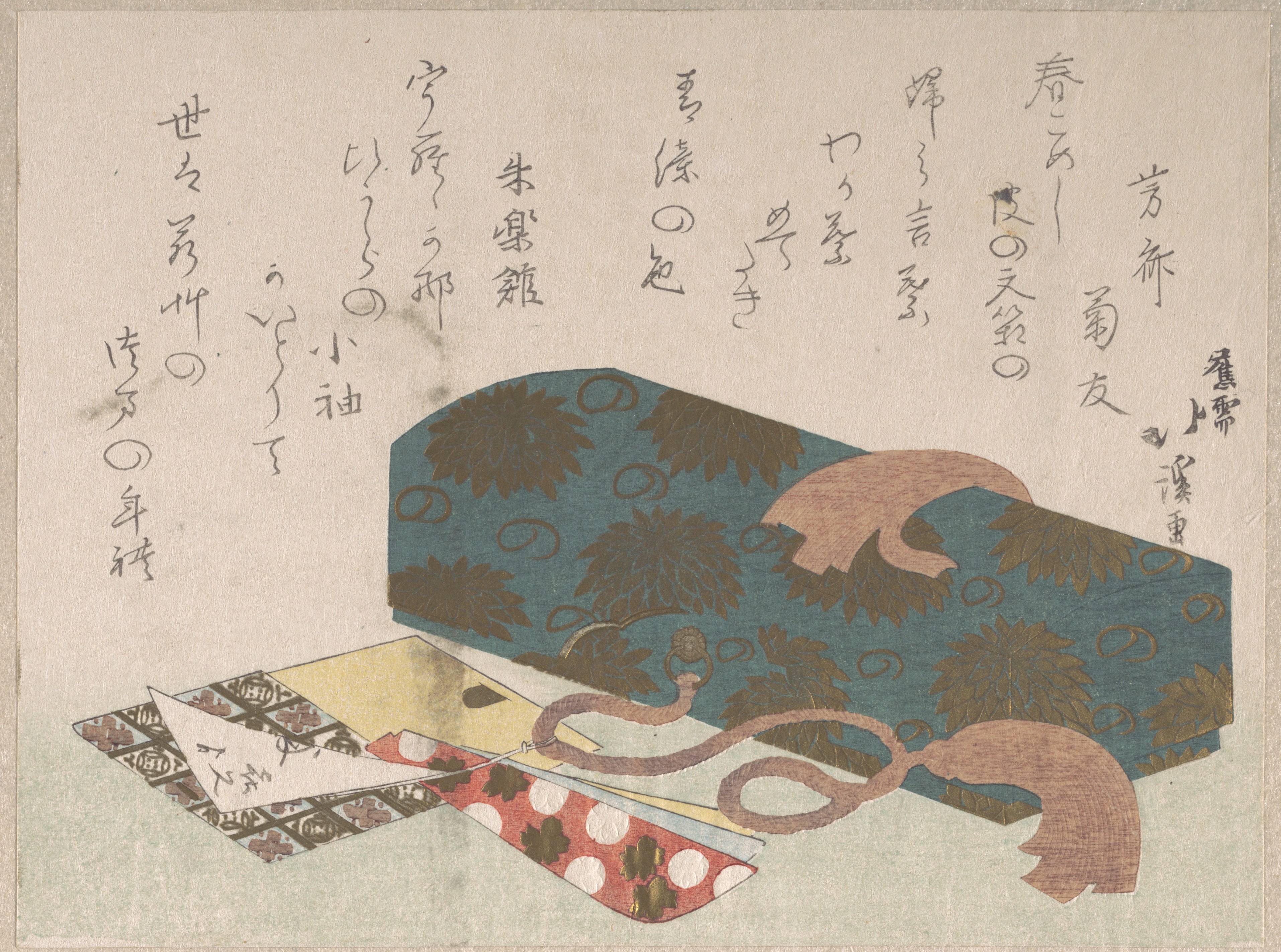
Letter-box and Toothpick Holders
19th century
Part of an album of woodblock prints (surimono); ink and color on paper

Illustration of a Chinese poem, from the series "Picture Book of Chinese Poems (Toshi gafu no uchi)"
c. 1830/44
Color woodblock print; chuban

Kyōka Verse Anthology of Elegant Friends (Kyōka gayū shū) 狂歌雅友集
1826 (Bunsei 9)
Woodblock printed book; ink and color on paper
Frequently Asked Questions
Woman Playing with Pekingese Dog, or The Elegance and Freedom of Script (So), from the series "Three Works of Three Aesthetics (San tai san ban shoku)" was created by Totoya Hokkei (魚屋北渓) in about 1830.