
Xiangru (Jp: Shojo), from the series "Meng Qiu (Jp: Mogyu)"
- Date:
- c. 1821
- Medium:
- Color woodblock print; shikishiban, surimono
- Source:
- Art Institute of Chicago
Description
From the series Meng Qiu (Jp: Mōgyū), Totoya Hokkei contributes a surimono on the figure of Xiangru — read in Japanese as Shōjō — the Chinese poet and statesman Sima Xiangru of the Han dynasty. The Mōgyū was a Tang-era primer of historical and exemplary biographies that Japanese readers used for centuries to absorb Chinese literary and political tradition, and a surimono series built on its episodes is a typical Edo kyoka-e gesture: a kyōka group flattering its own learning by ranging across the classics. As a designer trained in the Hokusai school of surimono, Hokkei was well prepared for this kind of historical portraiture, handling the figure's robes and posture with reference to Chinese pictorial conventions while keeping the print firmly within the polished, intimate surimono idiom. The Art Institute of Chicago holds the impression among its other Hokkei sheets on Chinese literary subjects, and the print is a useful reminder that the Edo surimono world drew not only on contemporary kabuki and pleasure-quarter material but on the deep history of East Asian letters. Image courtesy of the Art Institute of Chicago.
More Prints by Totoya Hokkei

Potted Plant (Ueki), from the series "Eighteen Illustrations of the Ladder of Ancient Words (Kogentei juhachiban tsuzuki)"
1831
Color woodblock print; shikishiban, surimono
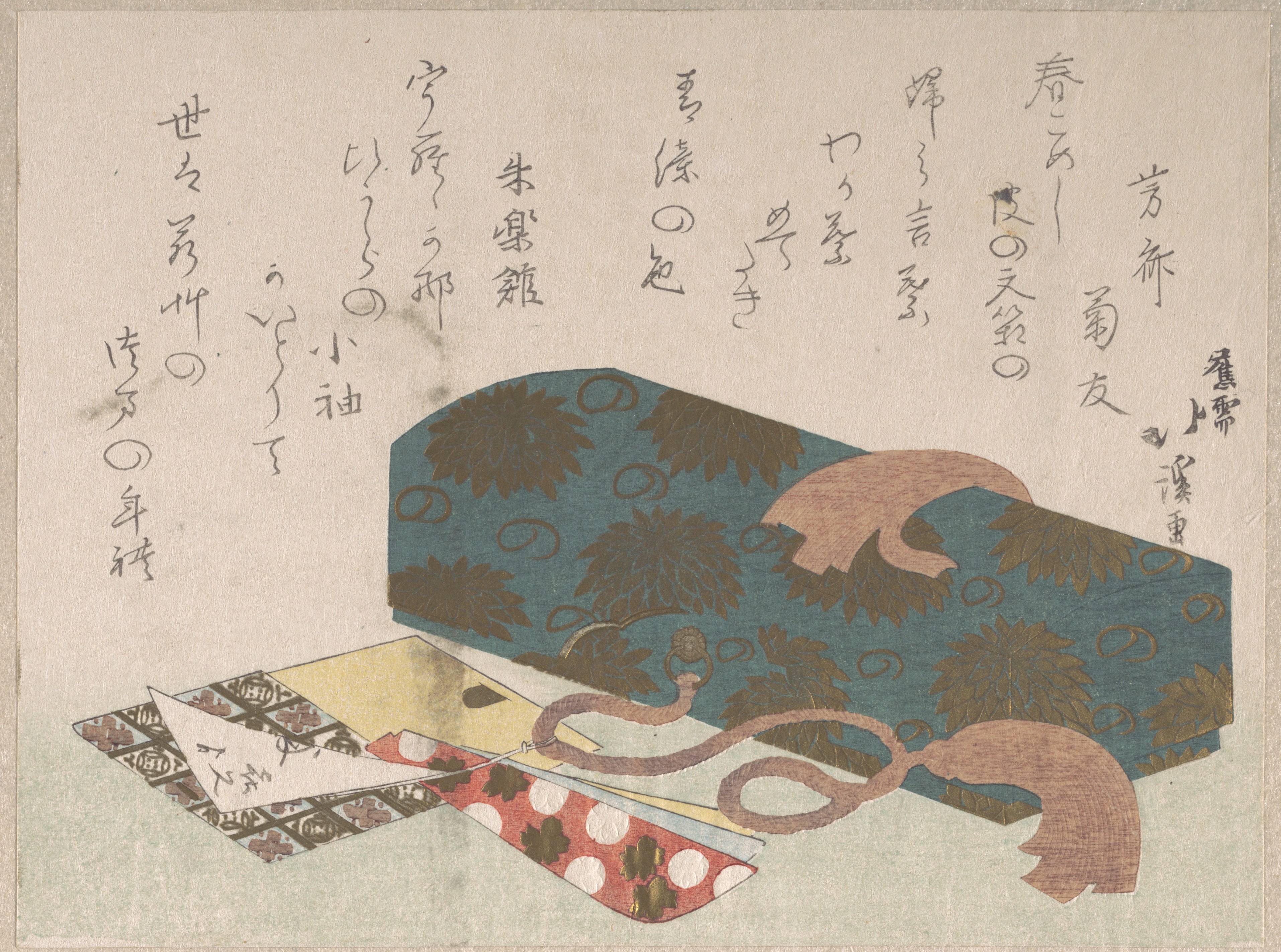
Letter-box and Toothpick Holders
19th century
Part of an album of woodblock prints (surimono); ink and color on paper

Illustration of a Chinese poem, from the series "Picture Book of Chinese Poems (Toshi gafu no uchi)"
c. 1830/44
Color woodblock print; chuban

Kyōka Verse Anthology of Elegant Friends (Kyōka gayū shū) 狂歌雅友集
1826 (Bunsei 9)
Woodblock printed book; ink and color on paper
Frequently Asked Questions
Xiangru (Jp: Shojo), from the series "Meng Qiu (Jp: Mogyu)" was created by Totoya Hokkei (魚屋北渓) in c. 1821.