
Yashima, a Warrior Play, from the series "Noh Songs of Gardens (Hanazono yokyoku bantsuzuki)"
- Date:
- about 1826
- Medium:
- Color woodblock print; surimono
- Source:
- Art Institute of Chicago
Description
This 1821 surimono by Totoya Hokkei, recorded in the Art Institute of Chicago, comes from the series Noh Songs of Gardens (Hanazono yokyoku bantsuzuki) and takes as its subject Yashima, a warrior Noh play set on the famous strait where the Genji defeated the Heike. The play centers on the apparition of the slain general Minamoto no Yoshitsune, who recounts the battle to a traveling priest. Hokkei, a leading pupil of the Hokusai school, designed numerous series in which Noh repertoire provided a learned, archaizing framework for kyoka-e commissions, and Hanazono yokyoku bantsuzuki is one of the most cohesive of these. The series title's reference to a Hanazono (flower garden) group suggests a kyoka club organized under that name, whose members would have inscribed verses on each sheet. Surimono format and printing — heavy hosho paper, deluxe pigments, embossing — allowed Hokkei to render Noh costume and gesture with a precision close to that of the stage. The Art Institute of Chicago's impression places the work within a major institutional collection of Edo surimono, where it can be studied as evidence of how Totoya Hokkei and the Hokusai school adapted the courtly theater of Noh to the literary playfulness of nineteenth-century kyoka-e culture.
More Prints by Totoya Hokkei

Potted Plant (Ueki), from the series "Eighteen Illustrations of the Ladder of Ancient Words (Kogentei juhachiban tsuzuki)"
1831
Color woodblock print; shikishiban, surimono
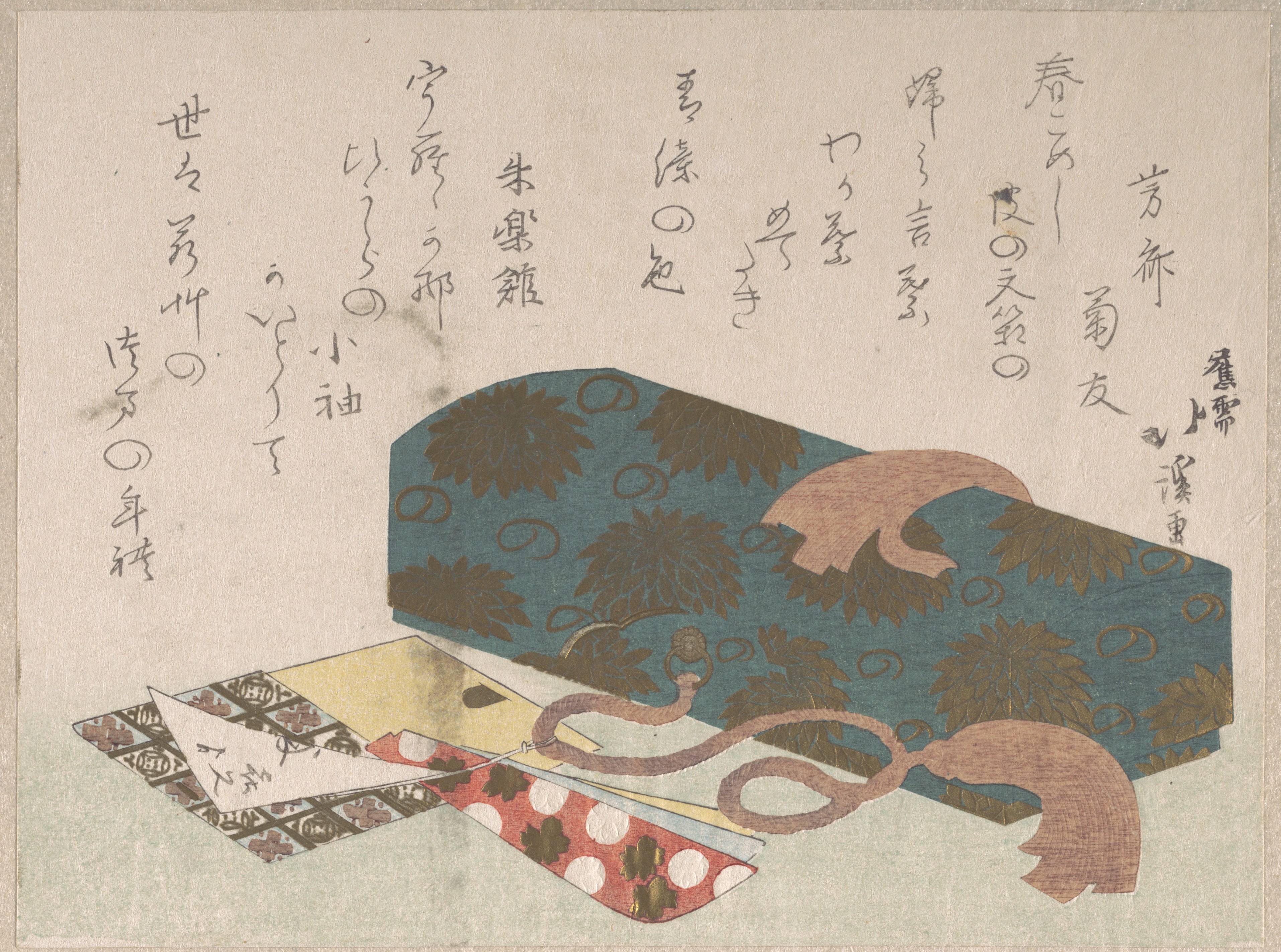
Letter-box and Toothpick Holders
19th century
Part of an album of woodblock prints (surimono); ink and color on paper

Illustration of a Chinese poem, from the series "Picture Book of Chinese Poems (Toshi gafu no uchi)"
c. 1830/44
Color woodblock print; chuban

Kyōka Verse Anthology of Elegant Friends (Kyōka gayū shū) 狂歌雅友集
1826 (Bunsei 9)
Woodblock printed book; ink and color on paper
Frequently Asked Questions
Yashima, a Warrior Play, from the series "Noh Songs of Gardens (Hanazono yokyoku bantsuzuki)" was created by Totoya Hokkei (魚屋北渓) in about 1826.