
Yokihi (Yang Guifei) Playing Koto, from the Series "Noh Songs of Gardens (Hanazono yokyoku bantsuzuki)"
- Date:
- about 1826
- Medium:
- Color woodblock print; surimono
- Source:
- Art Institute of Chicago
Description
Totoya Hokkei's 1821 surimono of Yokihi (Yang Guifei) playing the koto, from his series Noh Songs of Gardens (Hanazono yokyoku bantsuzuki) and held by the Art Institute of Chicago, draws on the famous Noh play in which the spirit of the Tang dynasty consort appears to a Daoist priest sent by the bereaved emperor Xuanzong. As one of the most poignant figures in Sino-Japanese literary tradition, Yang Guifei (Yokihi in Japanese) embodied the convergence of beauty, music and political tragedy that Edo kyoka poets prized. Hokkei was among the most active surimono designers of his generation and a leading pupil of the Hokusai school, equally comfortable with native and continental subjects. As part of the Hanazono yokyoku bantsuzuki series, the sheet would have been commissioned by a kyoka club organized around the Hanazono name, with kyoka verses inscribed alongside the figure. Surimono printing of this period was distinguished by deluxe techniques unavailable in commercial ukiyo-e: graded color, mica grounds, metallic pigments and karazuri embossing. These finishes would have brought texture to Yokihi's robes, the lacquered body of the koto and the surrounding decorative motifs. Within Hokkei's body of work, the sheet exemplifies the Hokusai school's adaptation of Noh theater to the small, jewel-like format of nineteenth-century Edo kyoka-e.
More Prints by Totoya Hokkei

Potted Plant (Ueki), from the series "Eighteen Illustrations of the Ladder of Ancient Words (Kogentei juhachiban tsuzuki)"
1831
Color woodblock print; shikishiban, surimono
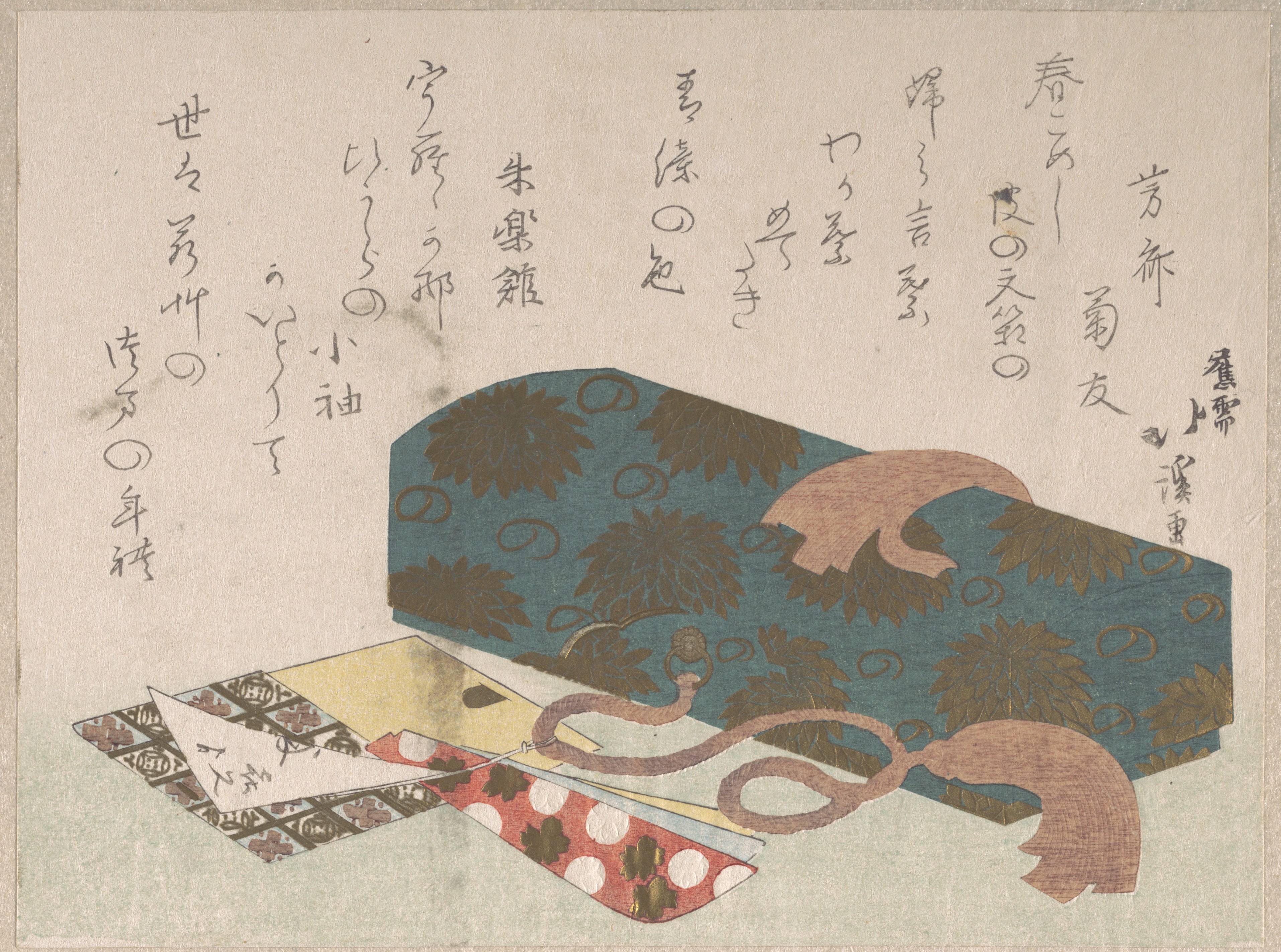
Letter-box and Toothpick Holders
19th century
Part of an album of woodblock prints (surimono); ink and color on paper

Illustration of a Chinese poem, from the series "Picture Book of Chinese Poems (Toshi gafu no uchi)"
c. 1830/44
Color woodblock print; chuban

Kyōka Verse Anthology of Elegant Friends (Kyōka gayū shū) 狂歌雅友集
1826 (Bunsei 9)
Woodblock printed book; ink and color on paper
Frequently Asked Questions
Yokihi (Yang Guifei) Playing Koto, from the Series "Noh Songs of Gardens (Hanazono yokyoku bantsuzuki)" was created by Totoya Hokkei (魚屋北渓) in about 1826.