
Yu Qianlou (Jp: Yu Kinro), from the series "Twenty-four Paragons of Filial Piety (Nijushiko)"
- Date:
- c. 1825
- Medium:
- Color woodblock print; shikishiban, surimono
- Source:
- Art Institute of Chicago
Description
Yu Qianlou (Jp: Yu Kinro) is one of the sheets in Twenty-four Paragons of Filial Piety (Nijushiko), a surimono series Totoya Hokkei designed in 1820 that draws on the famous Chinese collection of moral exemplars depicting children's devotion to their parents. The series gave each paragon a separate image and verses, allowing poetry club members to engage with the long tradition of Confucian filial narratives that were widely circulated in Japan through both books and prints. The story of Yu Qianlou, a Chinese figure remembered for extraordinary devotion to his ailing father, was one of the standard episodes within the Nijushiko canon, and Hokkei's image would have illustrated the key moment of the tale in a form suited to the elevated surimono format. Hokkei's drawing combines disciplined outline, classicizing figure types, and measured spatial design, drawing on the Hokusai school approach to didactic and historical subjects that he had absorbed under Katsushika Hokusai. The deluxe printing methods of the surimono medium, with metallic pigments, embossing, and refined registration, gave the print a presence that matched the moral seriousness of the theme while remaining appropriate for the convivial setting of poetry exchange. The Art Institute of Chicago preserves this impression under accession entry 81103, where it stands among other surviving sheets from the Nijushiko series and illustrates how Totoya Hokkei adapted a venerable Chinese moral tradition to the literary tastes of his Edo patrons.
More Prints by Totoya Hokkei

Potted Plant (Ueki), from the series "Eighteen Illustrations of the Ladder of Ancient Words (Kogentei juhachiban tsuzuki)"
1831
Color woodblock print; shikishiban, surimono
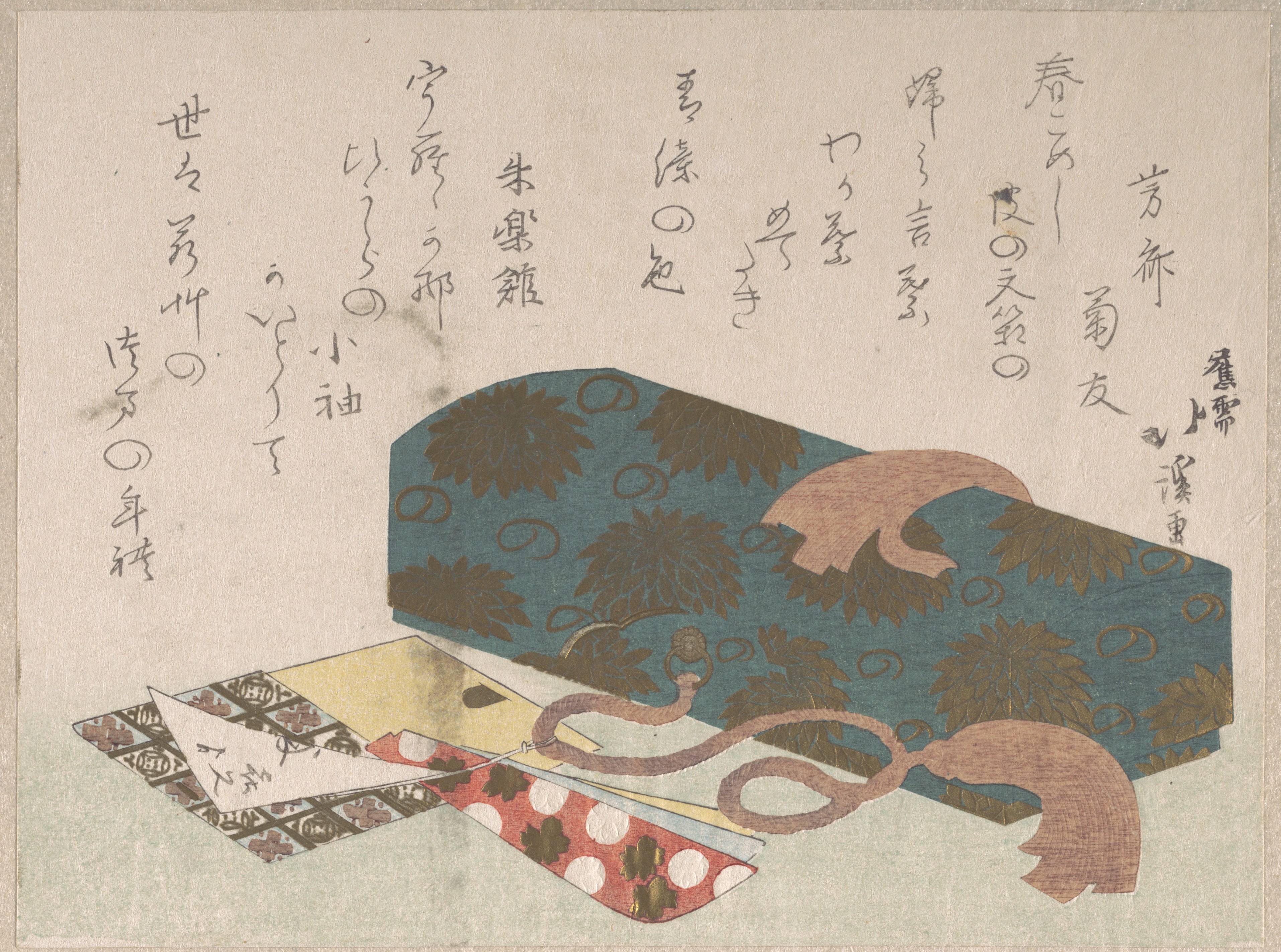
Letter-box and Toothpick Holders
19th century
Part of an album of woodblock prints (surimono); ink and color on paper

Illustration of a Chinese poem, from the series "Picture Book of Chinese Poems (Toshi gafu no uchi)"
c. 1830/44
Color woodblock print; chuban

Kyōka Verse Anthology of Elegant Friends (Kyōka gayū shū) 狂歌雅友集
1826 (Bunsei 9)
Woodblock printed book; ink and color on paper
Frequently Asked Questions
Yu Qianlou (Jp: Yu Kinro), from the series "Twenty-four Paragons of Filial Piety (Nijushiko)" was created by Totoya Hokkei (魚屋北渓) in c. 1825.