
Zeng Shen (Jp: So Shin), from the series "Twenty-four Paragons of Filial Piety (Nijushiko)"
- Date:
- c. 1825
- Medium:
- Color woodblock print; shikishiban, surimono
- Source:
- Art Institute of Chicago
Description
Totoya Hokkei's surimono of Zeng Shen (Jp: So Shin), from his series Twenty-four Paragons of Filial Piety (Nijushiko), is recorded in the Art Institute of Chicago's catalogue with a 1820 date. Zeng Shen, the celebrated disciple of Confucius, embodies one of the most distinctive episodes in the Nijushiko: while gathering firewood in the mountains, he is said to have felt a sudden, intuitive pang corresponding to the moment his mother bit her finger to summon him home, a sign of the deep bond between filial son and parent. The cycle was a favored framework in Edo kyoka-e clubs, who valued the learned Chinese subject matter as a setting for their kyoka verses. Hokkei, one of the most active surimono designers of his generation and a leading pupil of the Hokusai school, was well prepared to translate the moral tale into image: Katsushika Hokusai had himself drawn extensively on Chinese sources, and his pupils inherited a confident, slightly archaizing approach to such material. As with the rest of the series, the sheet would have been issued in a small edition with kyoka verses inscribed alongside the figure, printed on thick paper with the deluxe finishes characteristic of surimono. Within the Hokusai school's wider engagement with Sino-Japanese moral exempla, Hokkei's Zeng Shen stands as a measured, literary contribution to one of the most ambitious surimono series of its era.
More Prints by Totoya Hokkei

Potted Plant (Ueki), from the series "Eighteen Illustrations of the Ladder of Ancient Words (Kogentei juhachiban tsuzuki)"
1831
Color woodblock print; shikishiban, surimono
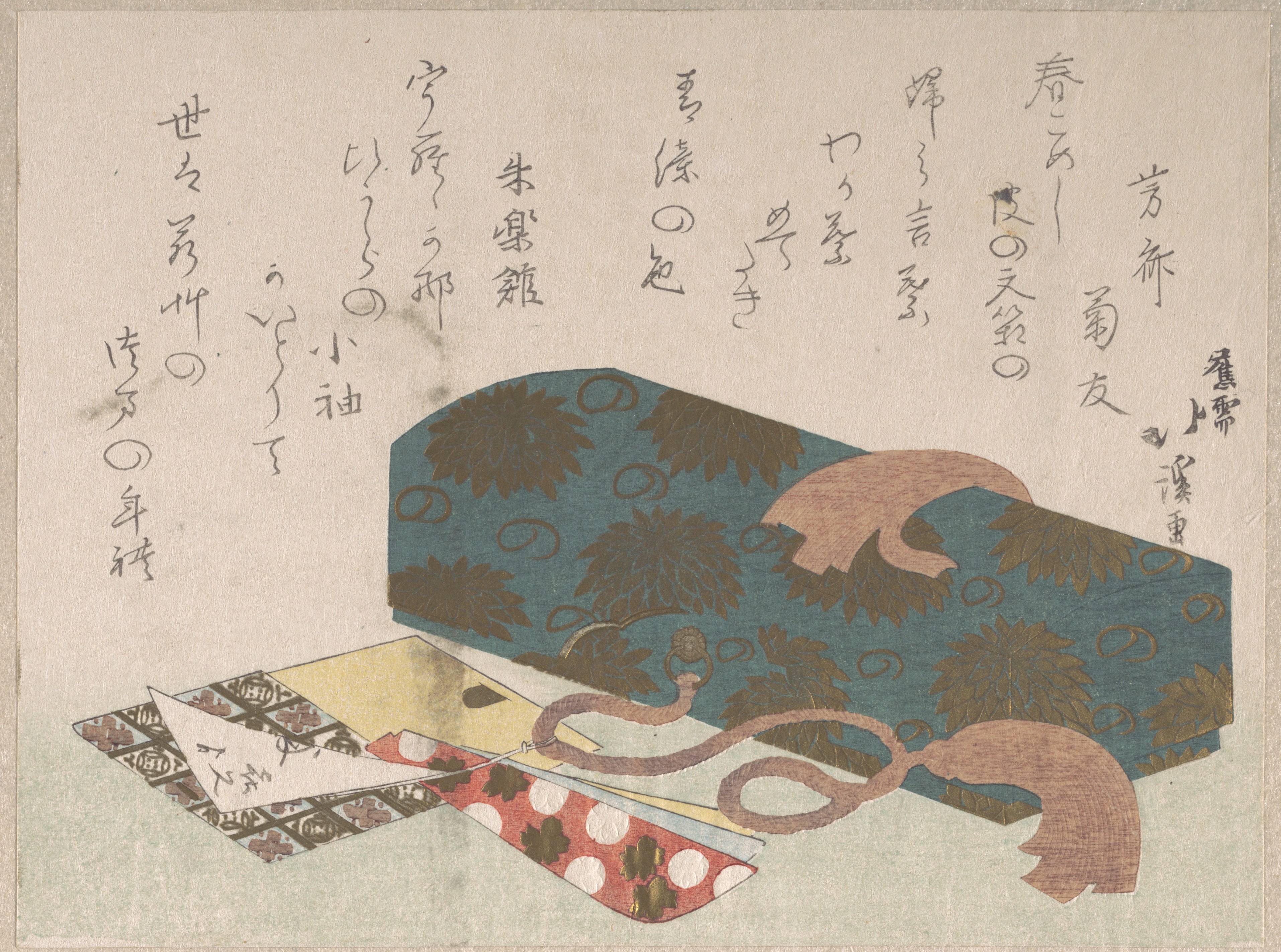
Letter-box and Toothpick Holders
19th century
Part of an album of woodblock prints (surimono); ink and color on paper

Illustration of a Chinese poem, from the series "Picture Book of Chinese Poems (Toshi gafu no uchi)"
c. 1830/44
Color woodblock print; chuban

Kyōka Verse Anthology of Elegant Friends (Kyōka gayū shū) 狂歌雅友集
1826 (Bunsei 9)
Woodblock printed book; ink and color on paper
Frequently Asked Questions
Zeng Shen (Jp: So Shin), from the series "Twenty-four Paragons of Filial Piety (Nijushiko)" was created by Totoya Hokkei (魚屋北渓) in c. 1825.