Great Hit! Said the Children, after Seeing Popular Picture Books, and They Imitate the Subjects for TheirPlay, Calligraphy, and Painting (Yodo iu koitsu wa Nippon, Ezoshi wo mite yori sono gwai wo asobu)
- Source:
- ukiyo-e.org
Description
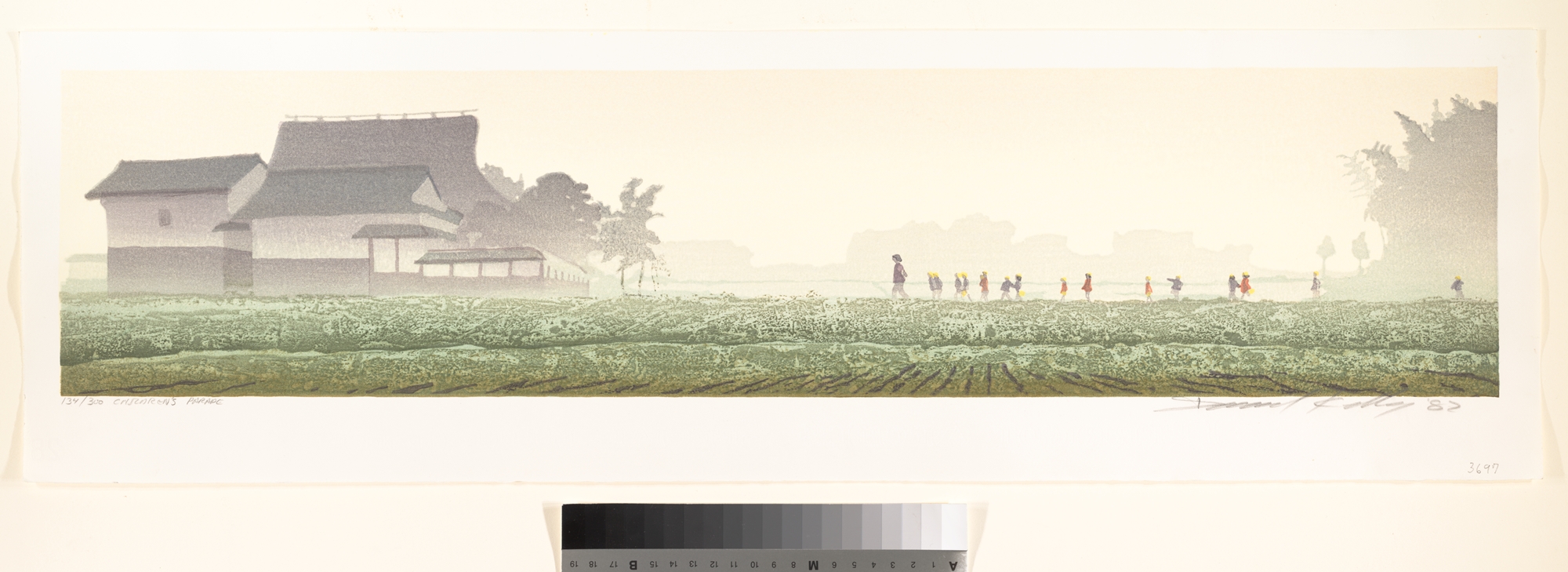
Catalogued by the Art Institute of Chicago and made viewable through ukiyo-e.org, this print bears the elaborate descriptive title 'Great Hit! Said the Children, after Seeing Popular Picture Books, and They Imitate the Subjects for Their Play, Calligraphy, and Painting (Yodo iu koitsu wa Nippon, Ezoshi wo mite yori sono gwai wo asobu).' The verbose phrasing characteristic of Meiji- and Taisho-era satirical and didactic prints frames an imagined commentary on the influence of illustrated picture books (ezoshi) on the imaginative play of Japanese children, a theme that connects the sheet to a broader tradition of woodblock prints concerned with childhood, popular literature, and the formation of national taste. The work is attributed to Tsuchiya Koitsu (1870-1949), best remembered today as a shin-hanga landscape designer whose career flourished after long study under Kobayashi Kiyochika and through his close collaboration with the Doi Hangaten publisher, Doi Sadaichi's Tokyo workshop that produced the majority of his celebrated views of temples, harbors, and seasonal countryside. The shin-hanga movement, organized around the partnership of designer, carver, printer, and publisher, sought to renew the Edo-period collaborative model for twentieth-century audiences. This sheet appears to predate Koitsu's full landscape maturity and reflects the breadth of subjects that Meiji-era print designers, working before the shin-hanga label was widely adopted, addressed for popular markets. No specific date, series identification, or publisher is recorded in the museum metadata available through ukiyo-e.org, and the Art Institute of Chicago's catalog should be consulted directly for further provenance details. As a documented artifact in a major institutional collection, it expands the picture of Koitsu's career beyond his familiar landscape vocabulary.
More Prints by Tsuchiya Koitsu


More Children Prints
Featured in Collections
Curated cross-cuts that include this print.
Frequently Asked Questions
Great Hit! Said the Children, after Seeing Popular Picture Books, and They Imitate the Subjects for TheirPlay, Calligraphy, and Painting (Yodo iu koitsu wa Nippon, Ezoshi wo mite yori sono gwai wo asobu) was created by Tsuchiya Koitsu (土屋光逸).
Great Hit! Said the Children, after Seeing Popular Picture Books, and They Imitate the Subjects for TheirPlay, Calligraphy, and Painting (Yodo iu koitsu wa Nippon, Ezoshi wo mite yori sono gwai wo asobu) depicts children.