
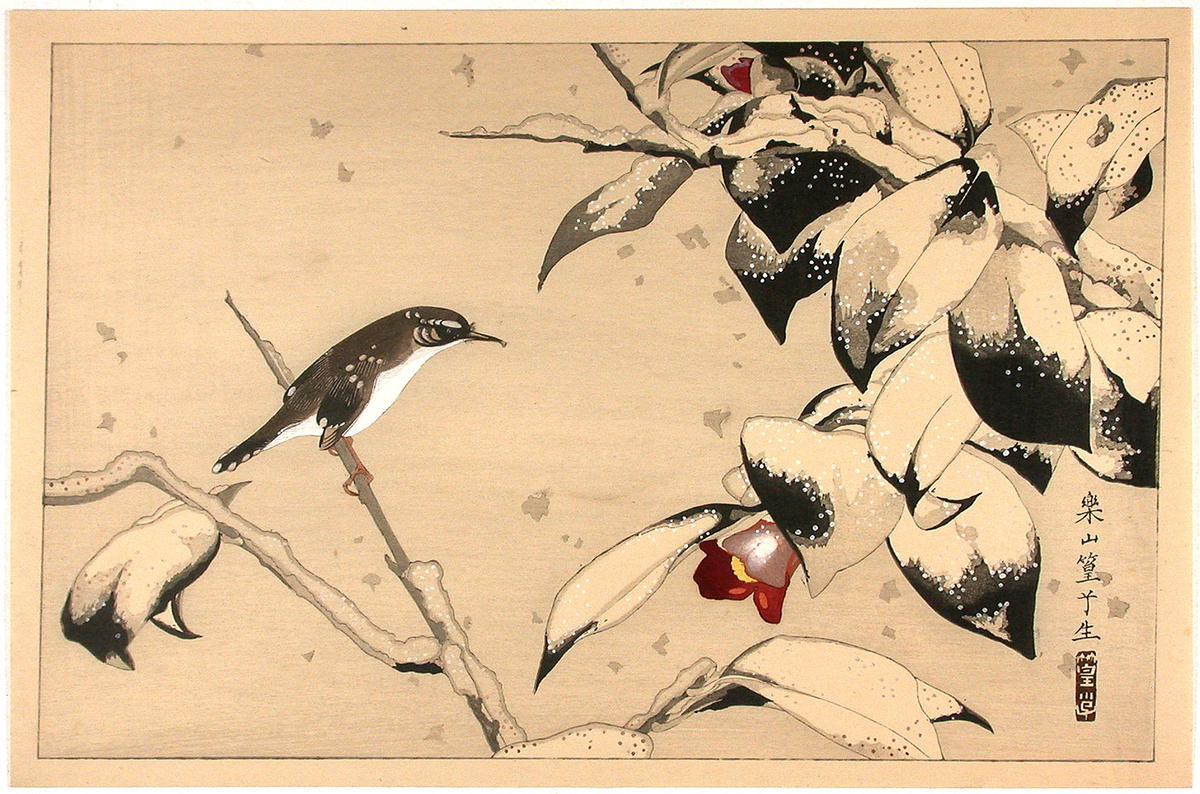
Winter
- Source:
- ukiyo-e.org
Description
Winter is a Japanese woodblock print by Tsuchiya Rakuzan (1896-1976) from his Birds and Flowers of Japan series, a shin-hanga kacho-e project organized around the four seasons. In the winter plate Rakuzan combines a bird with a winter-flowering branch, using a cooled, restrained palette of off-whites, grays, faded greens, and accents of warmer color to register the seasonal change. The composition follows the high-key asymmetry of Kyoto-school nihonga: the branch enters from one edge and arcs across the sheet, the bird is placed where it can hold visual weight against the open paper, and large areas remain unprinted so the eye reads the surface as snowfilled atmosphere rather than depicted landscape. Rakuzan was trained as a painter in Kyoto under Takeuchi Seiho and other nihonga masters before turning seriously to woodblock prints in the 1920s, and the Birds and Flowers of Japan series shows him translating painterly conventions into the multi-block, layered-ink technique of shin-hanga. The winter design depends on careful tonal control: pale washes of gray must register evenly across large areas without becoming muddy, and the bird's feathering must remain crisp where it overlaps the branch. These were exactly the technical strengths of the small Kyoto atelier in which Rakuzan worked with master carvers and printers. Within the broader shin-hanga revival of kacho-e imagery, the winter print plays a specific role: it marks dormancy and resilience, drawing on long Japanese poetic and pictorial associations between winter birds, snow-laden branches, and quiet endurance. The impression is documented through the Japanese Art Open Database aggregated by ukiyo-e.org.
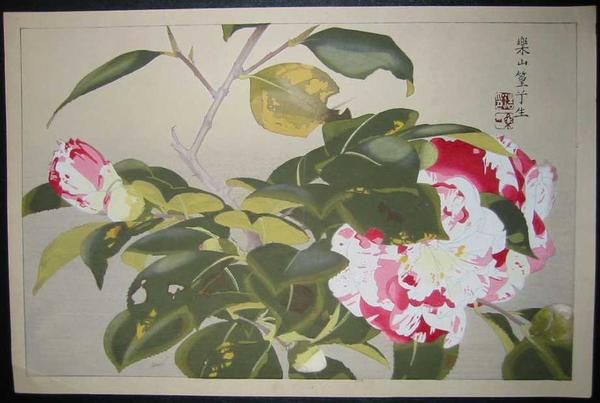
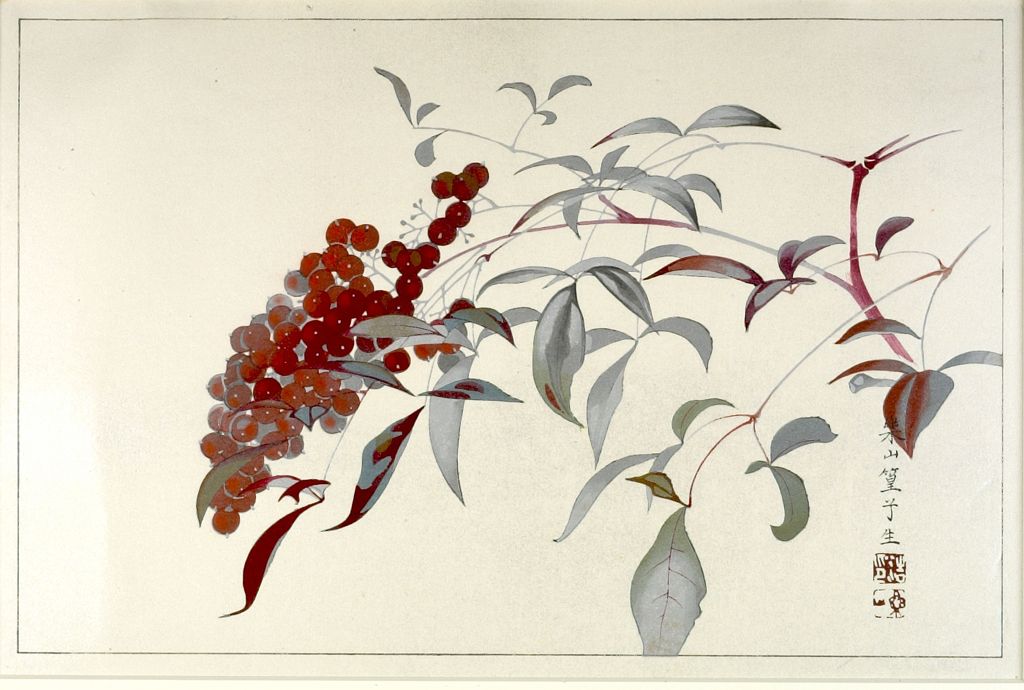
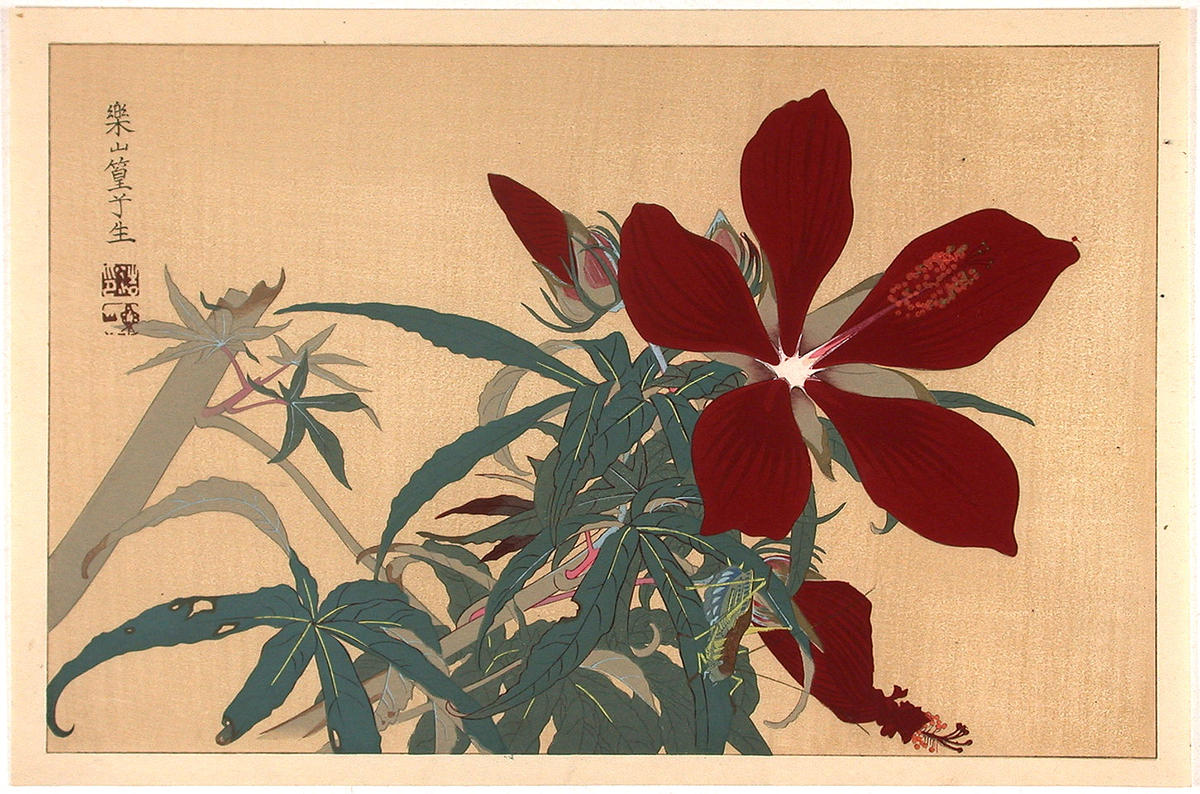
More Prints by Tsuchiya Rakuzan
Featured in Collections
Curated cross-cuts that include this print.
Frequently Asked Questions
Winter was created by Tsuchiya Rakuzan (土屋楽山).