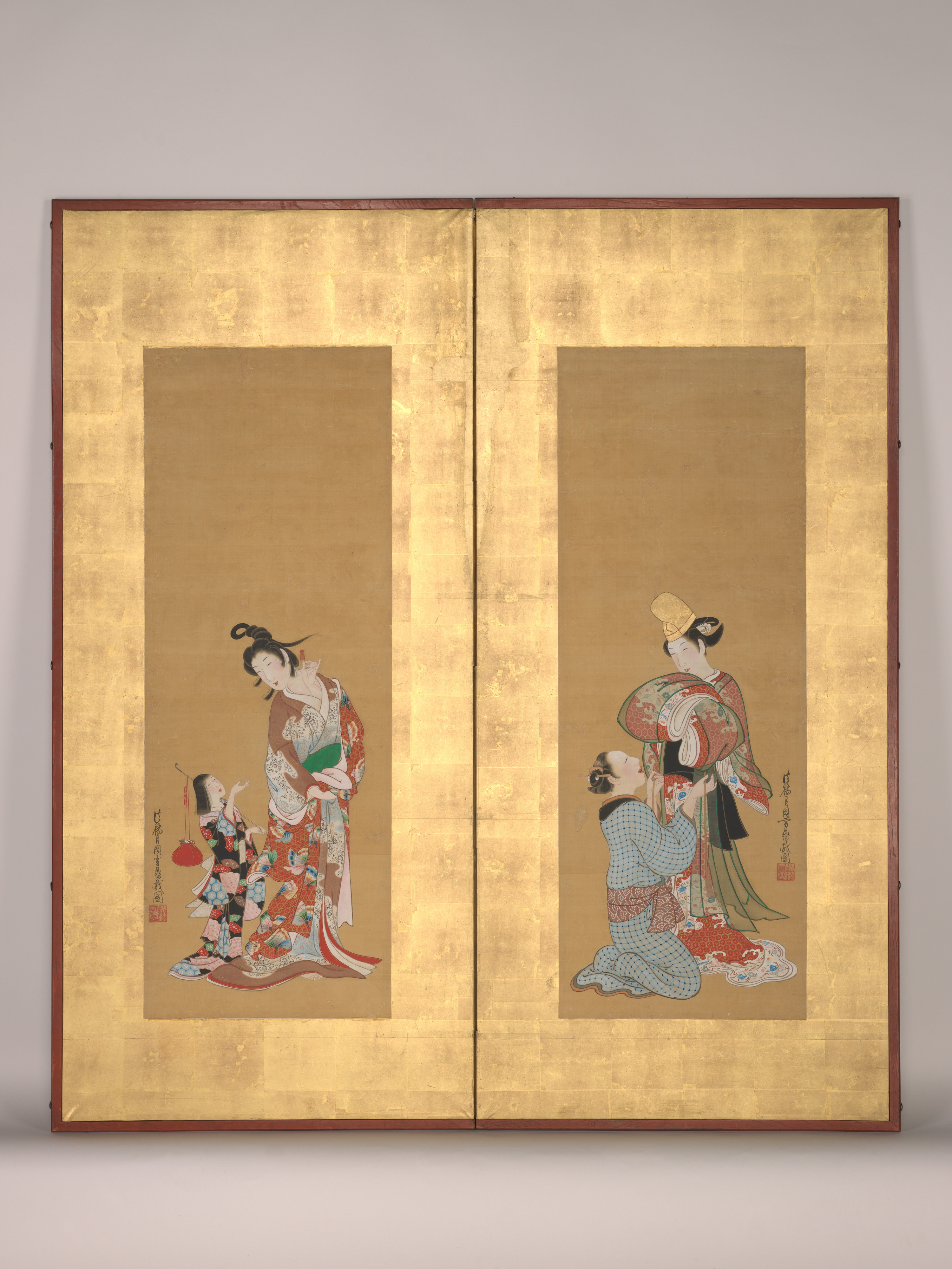
Shirabyōshi Dancer and Female Servant; Courtesan and Girl Attendant
- Date:
- mid-18th century (1734–1766)
- Medium:
- Hanging scroll paintings, remounted as a two-panel folding screen; ink, color, and gold on silk
- Source:
- Metropolitan Museum of Art
Description
Held in the Metropolitan Museum of Art and dated to the mid-eighteenth century, Shirabyōshi Dancer and Female Servant; Courtesan and Girl Attendant is a pair of hanging scroll paintings later remounted as a two-panel folding screen, executed in ink, color, and gold on silk and standing as one of the finest documents of Settei's Kamigata bijin practice in a major American collection. Each panel measures approximately 114.3 by 41.9 centimeters and depicts a pair of female figures in elegant procession, juxtaposing a shirabyōshi (the classical female dancer-entertainer of the medieval Japanese court tradition) with her attendant on one panel, and an Osaka or Kyoto pleasure-quarter courtesan with her young attendant (kamuro) on the other. The pairing situates contemporary Kamigata pleasure-quarter beauty within the deeper historical lineage of refined female entertainment that classical Japanese culture had cultivated since the Heian period, a kind of cultural genealogy of feminine elegance that Settei's Kanō training prepared him to articulate. The painting's confident draftsmanship, lavish use of gold pigments and ground, and meticulous patterning of the kimono fabrics demonstrate the level of finish that Settei's Kanō-school background allowed him to bring to ukiyo-e subjects, producing an Osaka-style bijin painting that operates at the same technical register as the formal Kanō paintings produced for daimyo and samurai-class patrons. The work documents the high end of Kamigata painted bijin production, distinct from the contemporaneous nishiki-e prints being launched in Edo by Suzuki Harunobu in the same decade.
More Children Prints
Frequently Asked Questions
Shirabyōshi Dancer and Female Servant; Courtesan and Girl Attendant was created by Tsukioka Settei (月岡雪鼎) in mid-18th century (1734–1766).
Shirabyōshi Dancer and Female Servant; Courtesan and Girl Attendant depicts children.