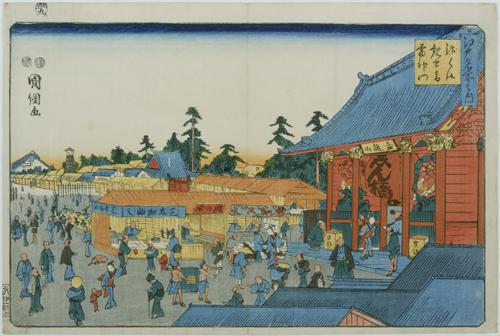
The Kaminarimon at the Kanseon Temple in Asakusa, from the series Famous Places in Edo (Edo meisho)
江戸名所之内 浅草観世音雷門
- Date:
- 9/1853
- Medium:
- Color woodblock print (nishiki-e), ōban
- Source:
- Chazen Museum of Art
Description
This ōban color woodblock print by Utagawa Kunitsuna I, dated to the ninth month of 1853 and held by the Chazen Museum of Art (accession number OBJ8780), depicts the Kaminarimon — the celebrated 'Thunder Gate' — at the Sensōji temple (here referred to by its Buddhist designation as the Kanseon Temple, after Kannon Bosatsu, the bodhisattva of compassion to whom the temple is dedicated) at Asakusa, from the series Edo meisho (Famous Places in Edo). The Kaminarimon and its enormous red paper lantern are among the most recognizable urban monuments in Japanese visual culture, marking the southern entrance to the long Nakamise approach that leads to the main hall of Sensōji.
The gate was originally built in the tenth century and rebuilt repeatedly through the Edo period; the structure Kunitsuna depicted would have been the eighteenth-century rebuild that stood until its destruction by fire in 1865 and the famous Meiji-era reconstruction. Two protective deities — the wind god Fūjin and the thunder god Raijin, from whom the gate derives its name — guard the structure from niches on either side of the central opening. Kunitsuna's view emphasizes the gate's role as a threshold and a stage for the urban crowds streaming between the Asakusa entertainment district and the temple precincts beyond.
The paired Chazen prints (Hachiman Shrine and Kaminarimon, both dated 9/1853) demonstrate the conventional Edo meisho-e program of pairing sacred and entertainment-adjacent destinations within a single series, treating the geography of the city as a single cultural fabric. Kunitsuna's compositions sit within a broader 1850s flowering of the meisho-e genre that culminated in Hiroshige's One Hundred Famous Views of Edo (1856-1858) and continued into the Bakumatsu and early Meiji decades.
More Prints by Utagawa Kunitsuna

Phoenix in Flight over a Paulownia Tree (Hō kiri ni mau)
ca. 1830–1860
Color woodblock print (kachō-ga)
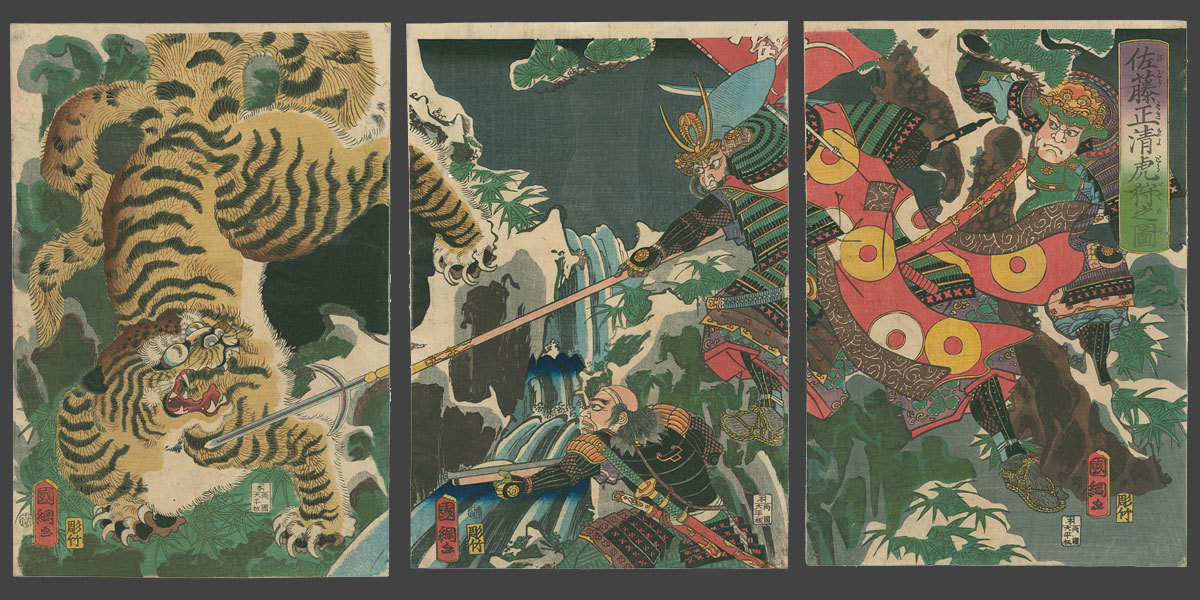
Satō Masakiyo Hunting the Magic Two-Tailed Tiger (Satō Masakiyo no tora-gari no zu)
1860
Color woodblock print (nishiki-e), ōban triptych

Banzuiin Chōbei Meeting His End at the Residence of Terasai Kanshin (Banzuiin Chōbei Terasai Kanshin no yashiki ni oite saigo gōyū no zu)
幡随院長兵衛寺西閑心の屋敷において最後がうゆうの図
1856
Color woodblock print (nishiki-e), ōban
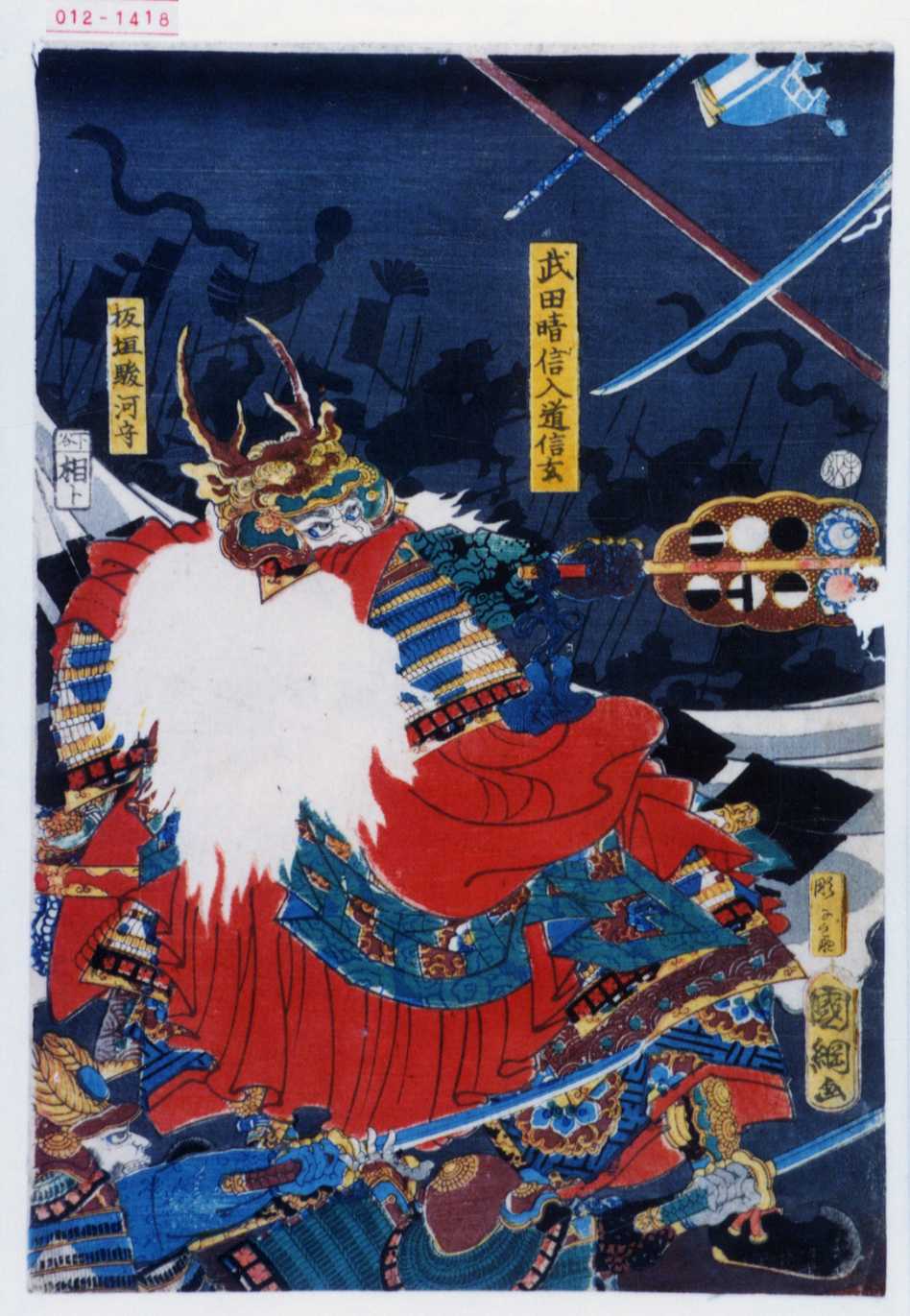
Takeda Harunobu Nyūdō Shingen and Itagaki Suruga-no-kami, from the series A Complete Picture of the Great Battle of Kawanakajima between Two Generals of Kō and Etsu
甲越両将川中島大戦全 武田晴信入道信玄 板垣駿河守
ca. 1858–1864
Color woodblock print (nishiki-e), ōban
Frequently Asked Questions
The Kaminarimon at the Kanseon Temple in Asakusa, from the series Famous Places in Edo (Edo meisho) (江戸名所之内 浅草観世音雷門) was created by Utagawa Kunitsuna (歌川国綱) in 9/1853.