Biography
Utagawa Kunitsuna (歌川国綱, 1805–1868), often referred to in modern scholarship as Kunitsuna I to distinguish him from a later artist who used the same name, was an Edo print designer of the late ukiyo-e period. He worked across the full breadth of the nineteenth-century commercial print repertoire — actor portraits (yakusha-e), warrior prints (musha-e), bird-and-flower prints (kachō-ga), Edo and Tōkaidō views (meisho-e), and sumo prints (sumō-e). His name places him within the Utagawa school: the "Kuni-" element that designers such as Kunisada (later Toyokuni III) and Kuniyoshi shared derives from Utagawa Toyokuni I, whose studio dominated early nineteenth-century Edo printmaking and trained the generation that defined the visual language of mid-century ukiyo-e.
Kunitsuna occupies a second-tier position among the Utagawa designers, working in the era dominated by Kunisada's ubiquitous actor prints but at a more modest scale of output and reputation. Prints by Kunitsuna I are held across several genres by the British Museum, Waseda University, the Chazen Museum of Art at the University of Wisconsin, the Fine Arts Museums of San Francisco, the Edo-Tokyo Museum, and the Ritsumeikan Art Research Center, providing a documentary record of his work during the final decades of the Edo period. His dated impressions concentrate in the 1850s and early 1860s, the years of his most productive activity.
Across this corpus Kunitsuna ranged widely in subject. His warrior prints include a composition of Satō Masakiyo — the ukiyo-e alias for the general Katō Kiyomasa — confronting a magical two-tailed tiger, and scenes of the celebrated sixteenth-century Battle of Kawanakajima between Uesugi Kenshin and Takeda Shingen, musha-e in the heroic vein that Kuniyoshi had popularized across the Utagawa school. He designed meisho-e of famous places in Edo and along the Tōkaidō, as well as legendary subjects such as Minamoto no Yoshitsune. In the bird-and-flower genre he produced compositions such as Phoenix and Paulownia (Hō to kiri), examples of which are held by the Fine Arts Museums of San Francisco and the British Museum; the paulownia tree and the mythical phoenix together carry classical symbolism associated with imperial authority and the auspicious appearance of sage rulers. His sumo prints document the wrestlers and ring ceremonies of the late-Edo sumo world.
Kunitsuna I has occupied a peripheral position in twentieth-century ukiyo-e scholarship and appears in standard reference works on the Utagawa school. His name has historically been confused with that of a later Utagawa artist associated with Kuniteru II (歌川国輝, c. 1830–1874), who also used the name Kunitsuna — a shared signature that muddled attributions in earlier dealer literature and museum catalogues. Modern scholarship has largely resolved the distinction: Kunitsuna I produced his signed work chiefly in the 1850s and 1860s in Edo, while the artist later known as Kuniteru II belongs to a subsequent generation that worked on into the Meiji period.
Kunitsuna's death in 1868 — the year of the Meiji Restoration — placed his career at the close of the Edo ukiyo-e tradition. He did not live to take part in the Meiji-era transformation of the print industry, when artists such as Yoshitoshi, Chikanobu, and Kuniteru II adapted their work to a Japan reshaped by imperial restoration and Western influence. For collectors and students of late Edo ukiyo-e, Kunitsuna I is a representative secondary Utagawa master whose surviving impressions document the variety of subjects, techniques, and commercial conventions of the Edo print industry in its final productive decades.
Key Facts
- Active Period
- 1805–1868
- Nationality
- 🇯🇵Japan
- Movement
- Ukiyo-e
- Works Indexed
- 10
Frequently Asked Questions
Utagawa Kunitsuna (歌川国綱, 1805–1868), often referred to in modern scholarship as Kunitsuna I to distinguish him from a later artist who used the same name, was an Edo print designer of the late ukiyo-e period. He worked across the full breadth of the nineteenth-century commercial print repertoire — actor portraits (yakusha-e), warrior prints (musha-e), bird-and-flower prints (kachō-ga), Edo and Tōkaidō views (meisho-e), and sumo prints (sumō-e). His name places him within the Utagawa school: the "Kuni-" element that designers such as Kunisada (later Toyokuni III) and Kuniyoshi shared derives from Utagawa Toyokuni I, whose studio dominated early nineteenth-century Edo printmaking and trained the generation that defined the visual language of mid-century ukiyo-e.
Utagawa Kunitsuna was active from 1805 to 1868. They were associated with the Ukiyo-e movement.
Utagawa Kunitsuna's work was shaped by the Ukiyo-e tradition in Japanese woodblock printmaking. Ukiyo-e: ## What is ukiyo-e? Ukiyo-e ([浮世絵](/glossary/ukiyo-e)) — literally "pictures of the floating world" — is the Edo-period Japanese print and painting tradition that flourished from roughly 1660 to 1868, depicting the pleasures of urban life in Edo (modern Tokyo): courtesans, kabuki actors, sumo wrestlers, famous landscapes, and seasonal beauties.
Original prints by Utagawa Kunitsuna can be found in collections including British Museum, Art of Japan, Waseda University Library, Japanese Art Open Database (JAODB).
Woodblock Prints by Utagawa Kunitsuna (10)
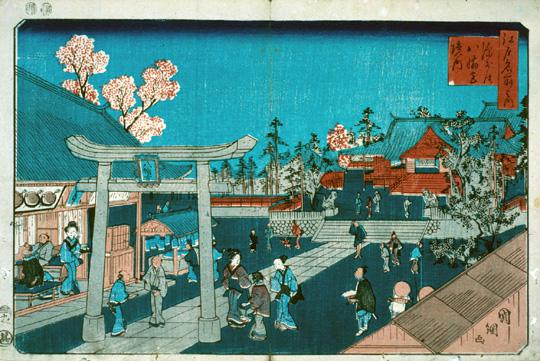
Precincts of the Hachiman Shrine at Fukagawa, from the series Famous Places in Edo (Edo meisho)
江戸名所之内 深川八幡境内
9/1853
Color woodblock print (nishiki-e), ōban
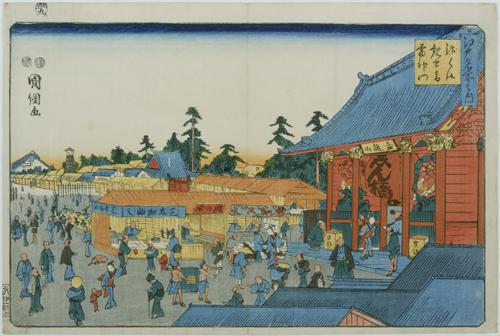
The Kaminarimon at the Kanseon Temple in Asakusa, from the series Famous Places in Edo (Edo meisho)
江戸名所之内 浅草観世音雷門
9/1853
Color woodblock print (nishiki-e), ōban

Banzuiin Chōbei Meeting His End at the Residence of Terasai Kanshin (Banzuiin Chōbei Terasai Kanshin no yashiki ni oite saigo gōyū no zu)
幡随院長兵衛寺西閑心の屋敷において最後がうゆうの図
1856
Color woodblock print (nishiki-e), ōban
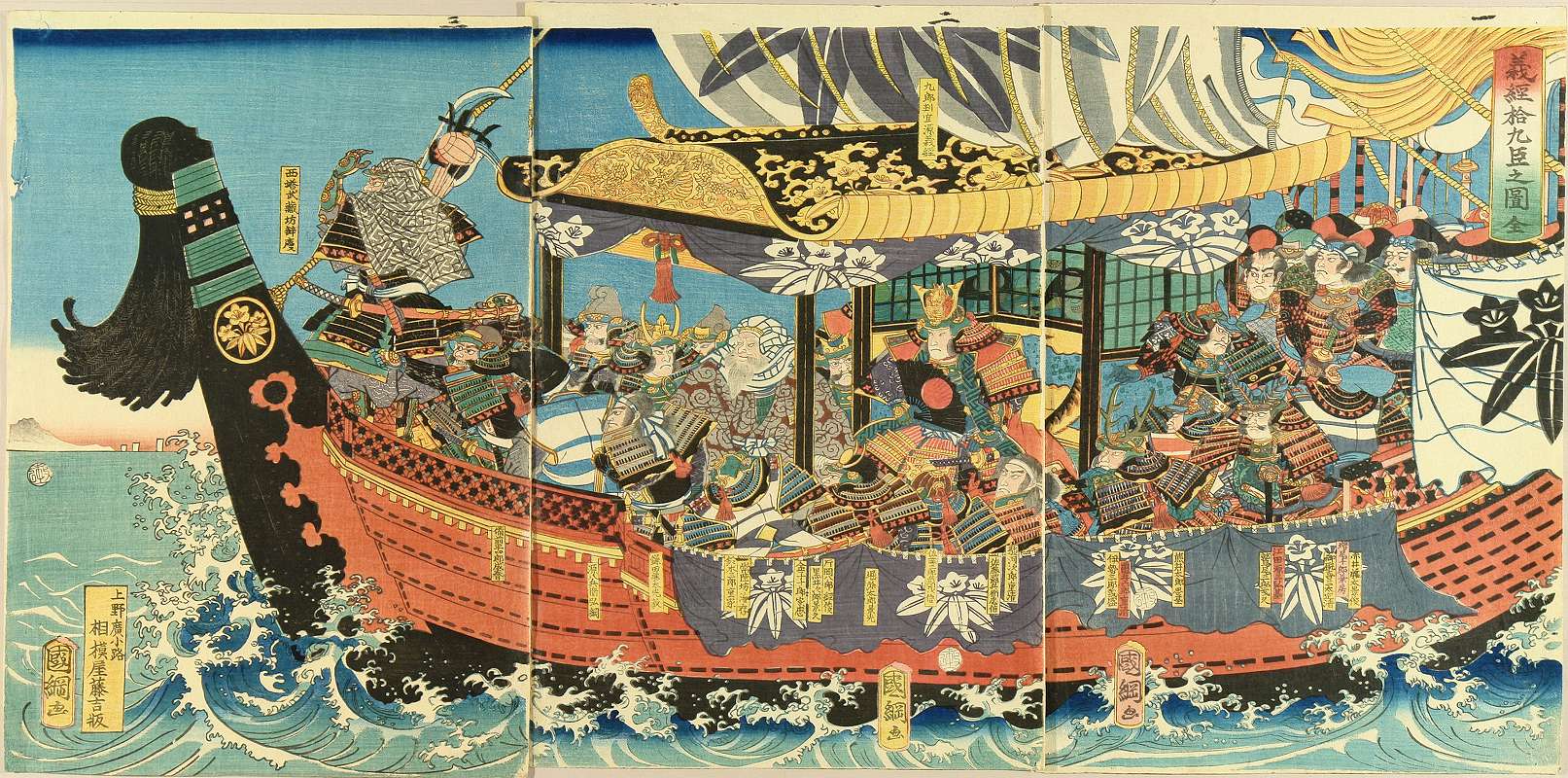
Minamoto no Yoshitsune and His Nineteen Retainers on a Boat (Yoshitsune jūkyū-nin no jū-shi)
1859
Color woodblock print (nishiki-e), ōban triptych
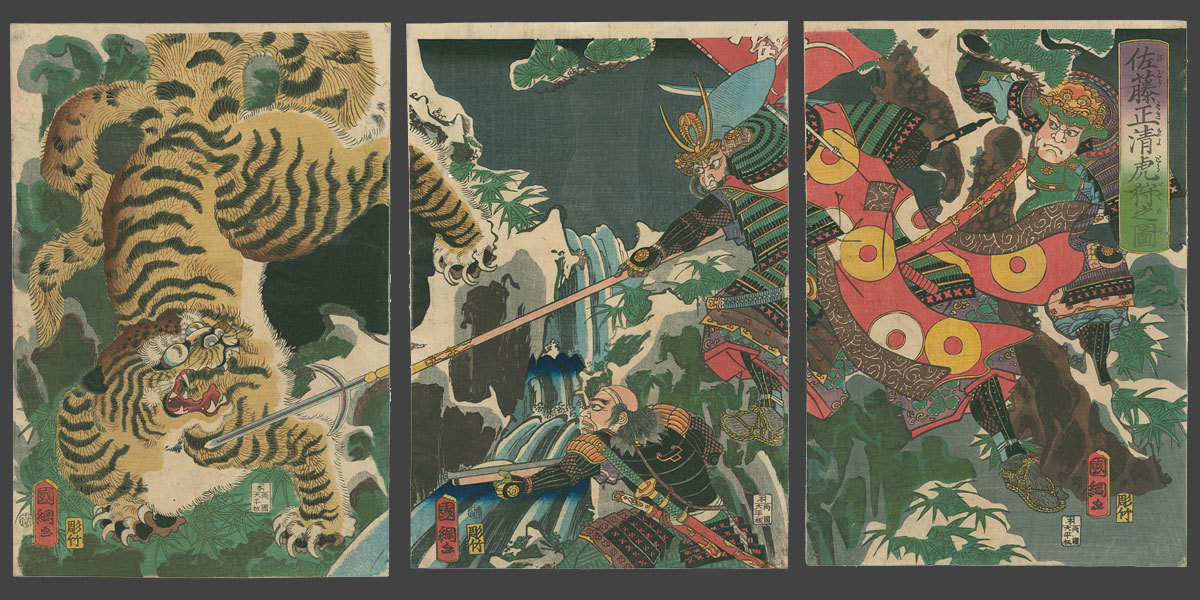
Satō Masakiyo Hunting the Magic Two-Tailed Tiger (Satō Masakiyo no tora-gari no zu)
1860
Color woodblock print (nishiki-e), ōban triptych
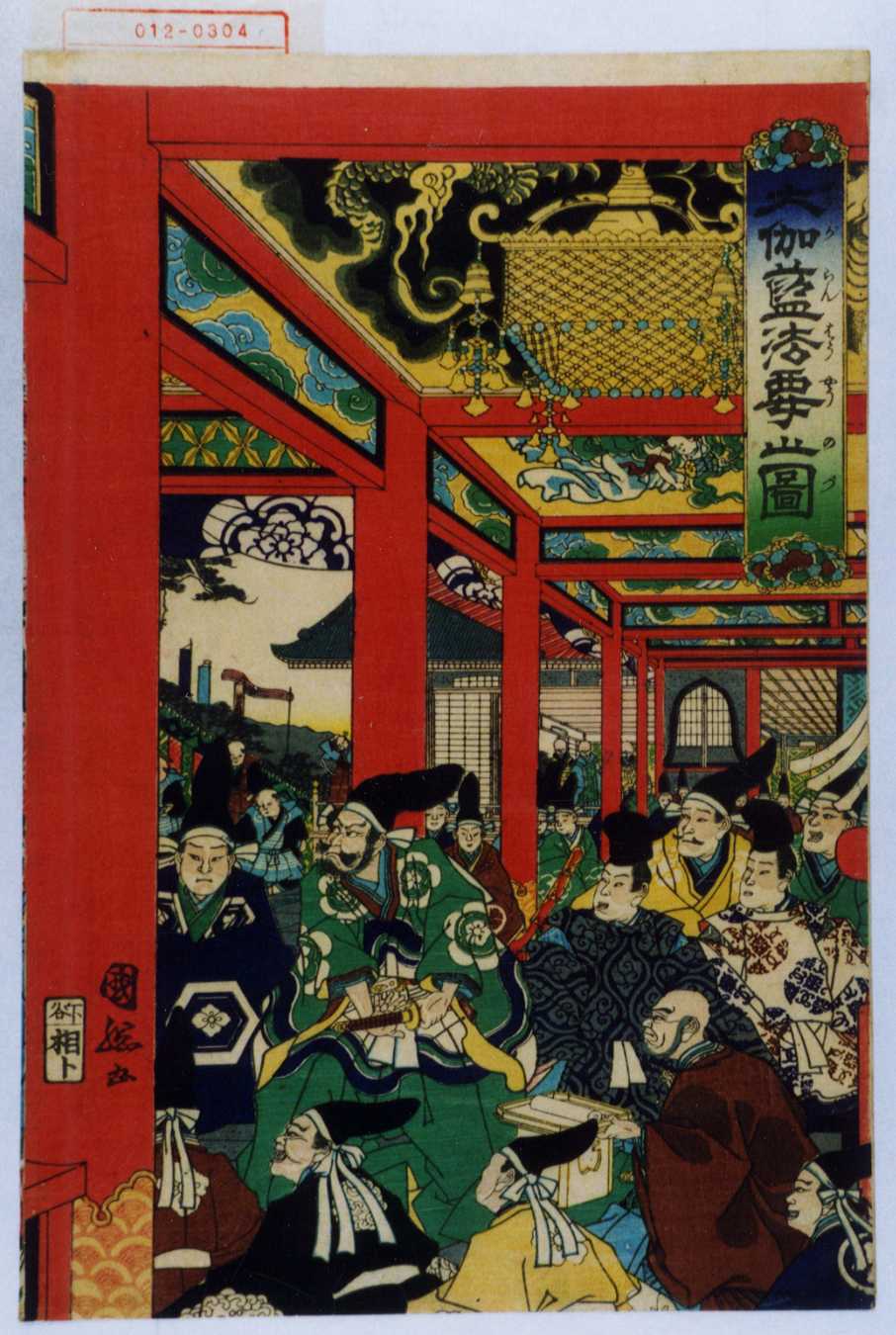
Daigaran hōyō no zu (Image of a Great Temple Buddhist Ceremony)
大伽藍法要之図
1863
Color woodblock print (nishiki-e), ōban triptych

Loyal Retainer with Severed Enemy Heads beside a Camp Fire, from a Loyal Retainers Series
ca. 1850
Color woodblock print (nishiki-e), chūban tate-e
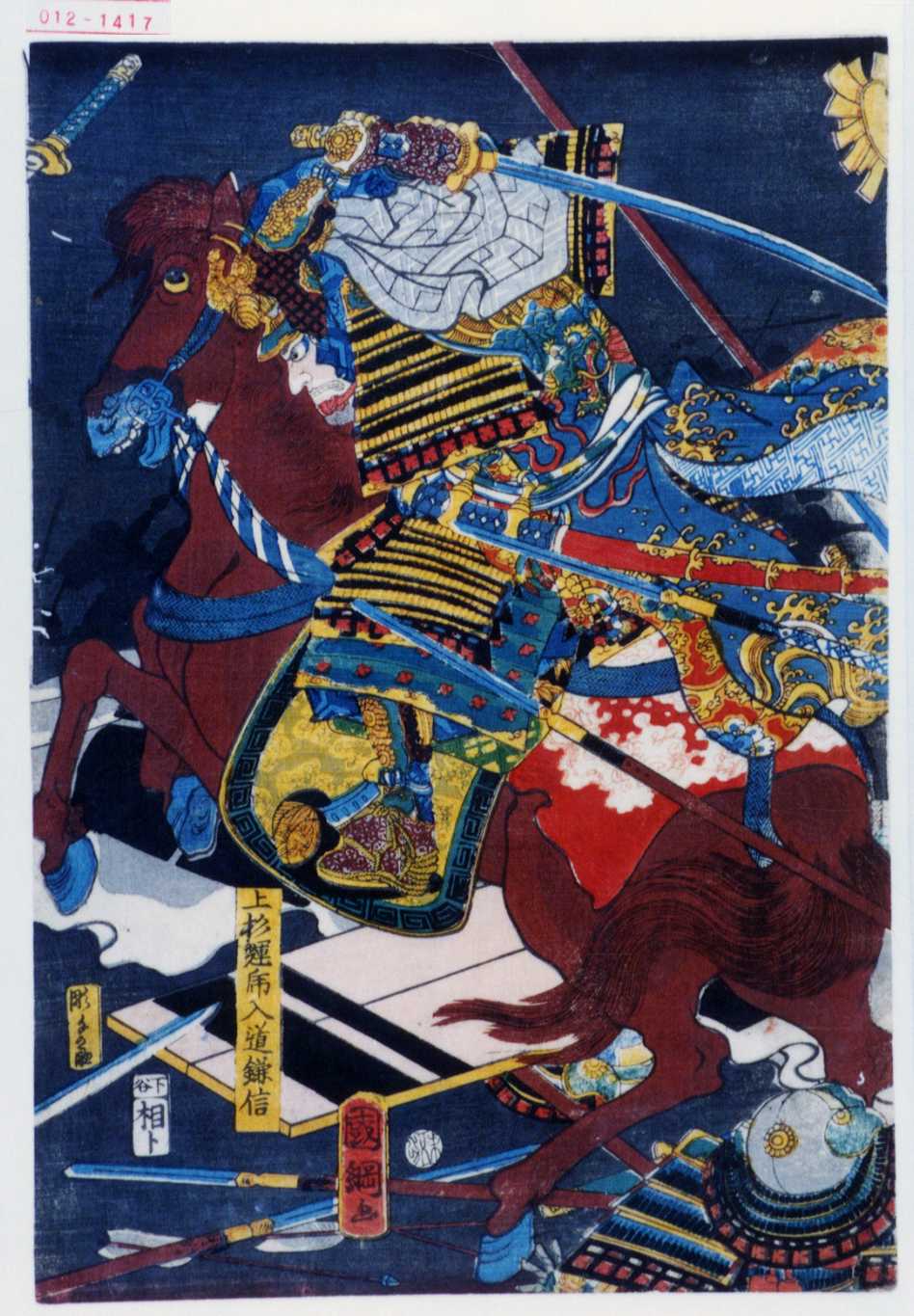
Uesugi Terutora Nyūdō Kenshin, from the series A Complete Picture of the Great Battle of Kawanakajima between Two Generals of Kō and Etsu (Kō-Etsu ryōshō Kawanakajima ōgassen zen)
甲越両将川中島大戦全 上杉輝虎入道謙信
ca. 1858–1864
Color woodblock print (nishiki-e), ōban
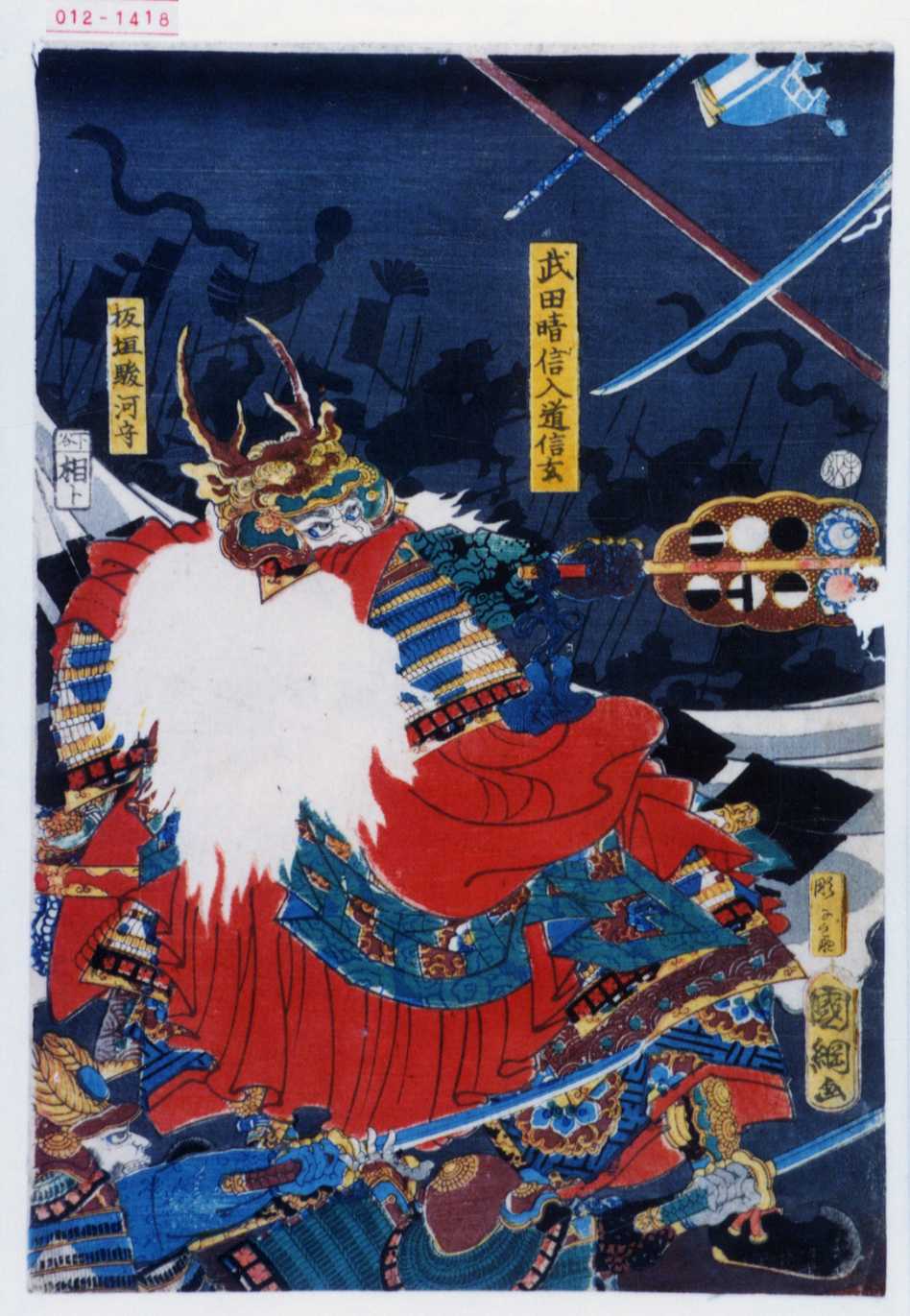
Takeda Harunobu Nyūdō Shingen and Itagaki Suruga-no-kami, from the series A Complete Picture of the Great Battle of Kawanakajima between Two Generals of Kō and Etsu
甲越両将川中島大戦全 武田晴信入道信玄 板垣駿河守
ca. 1858–1864
Color woodblock print (nishiki-e), ōban

Phoenix in Flight over a Paulownia Tree (Hō kiri ni mau)
ca. 1830–1860
Color woodblock print (kachō-ga)