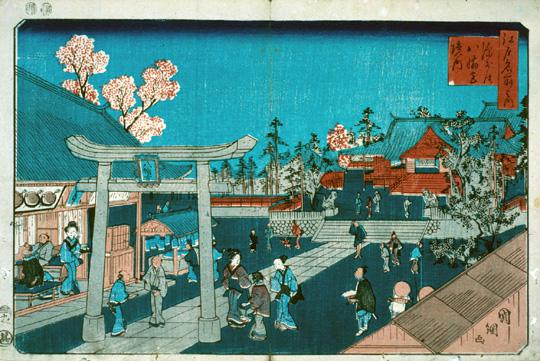
Precincts of the Hachiman Shrine at Fukagawa, from the series Famous Places in Edo (Edo meisho)
江戸名所之内 深川八幡境内
- Date:
- 9/1853
- Medium:
- Color woodblock print (nishiki-e), ōban
- Source:
- Chazen Museum of Art
Description
This ōban color woodblock print by Utagawa Kunitsuna I, dated to the ninth month of 1853 and held by the Chazen Museum of Art at the University of Wisconsin (accession number OBJ8779), depicts the precincts of the Hachiman Shrine at Fukagawa — the great Tomioka Hachimangū in the eastern Fukagawa district of Edo — from the series Edo meisho (Famous Places in Edo). The Tomioka Hachimangū, founded in 1627 on reclaimed land east of the Sumida River, was the principal shrine of the Fukagawa quarter and one of the busiest pilgrimage and festival destinations in the city. Its sandō (approach path), great stone torii, main hall, and sumo dohyō (the shrine's celebrated sumo grounds, where the modern professional tournaments traced their origins) made it a recurring subject for meisho-e designers throughout the nineteenth century.
Kunitsuna's dated impression of 9/1853 places the print at the same publication moment as Hiroshige's most active work on the Sixty-odd Provinces and just before Hiroshige's One Hundred Famous Views of Edo (1856-1858), which would set the high-water mark for the late-Edo meisho-e genre. The Chazen Museum holds the print alongside its companion (OBJ8780, the Kaminarimon at Asakusa) as part of a Famous Places in Edo set that documents Kunitsuna's contribution to a genre dominated by his more celebrated contemporaries.
Fukagawa carried particular cultural weight in mid-nineteenth-century Edo as both a religious destination and an entertainment district, with the surrounding waterways supporting boat-restaurants, geisha houses, and the relocated kabuki theaters that fled the city center after the Tenpō-era reforms. Kunitsuna's view of the Hachiman precincts thus participates in the broader meisho-e program of documenting the city's sacred and secular geography as a continuous fabric of urban experience.
More Prints by Utagawa Kunitsuna

Phoenix in Flight over a Paulownia Tree (Hō kiri ni mau)
ca. 1830–1860
Color woodblock print (kachō-ga)
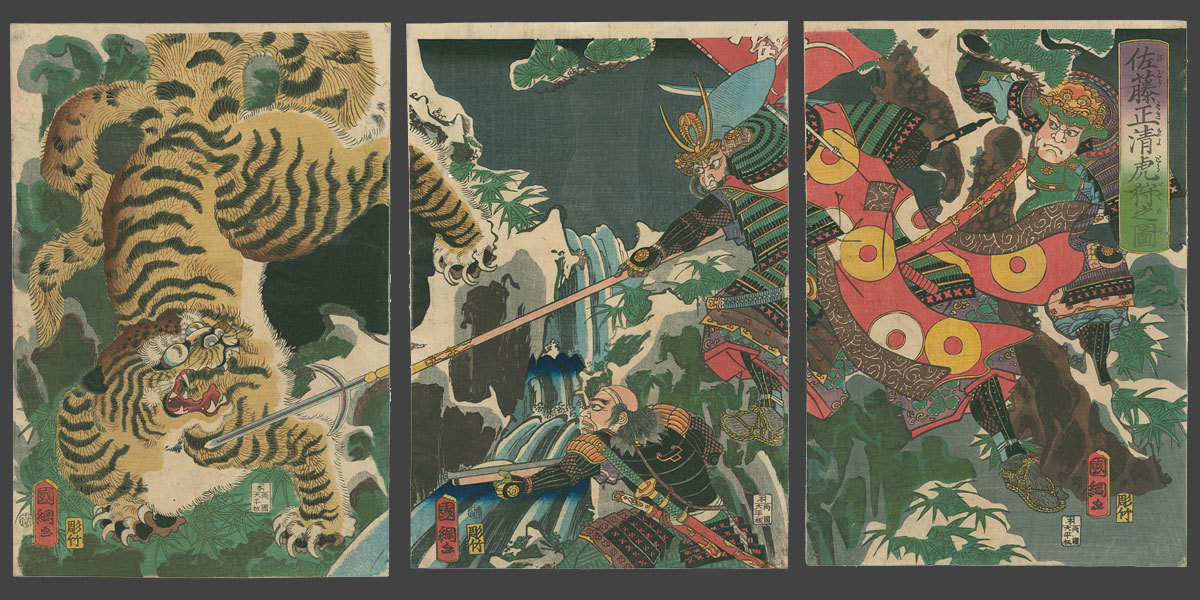
Satō Masakiyo Hunting the Magic Two-Tailed Tiger (Satō Masakiyo no tora-gari no zu)
1860
Color woodblock print (nishiki-e), ōban triptych

Banzuiin Chōbei Meeting His End at the Residence of Terasai Kanshin (Banzuiin Chōbei Terasai Kanshin no yashiki ni oite saigo gōyū no zu)
幡随院長兵衛寺西閑心の屋敷において最後がうゆうの図
1856
Color woodblock print (nishiki-e), ōban
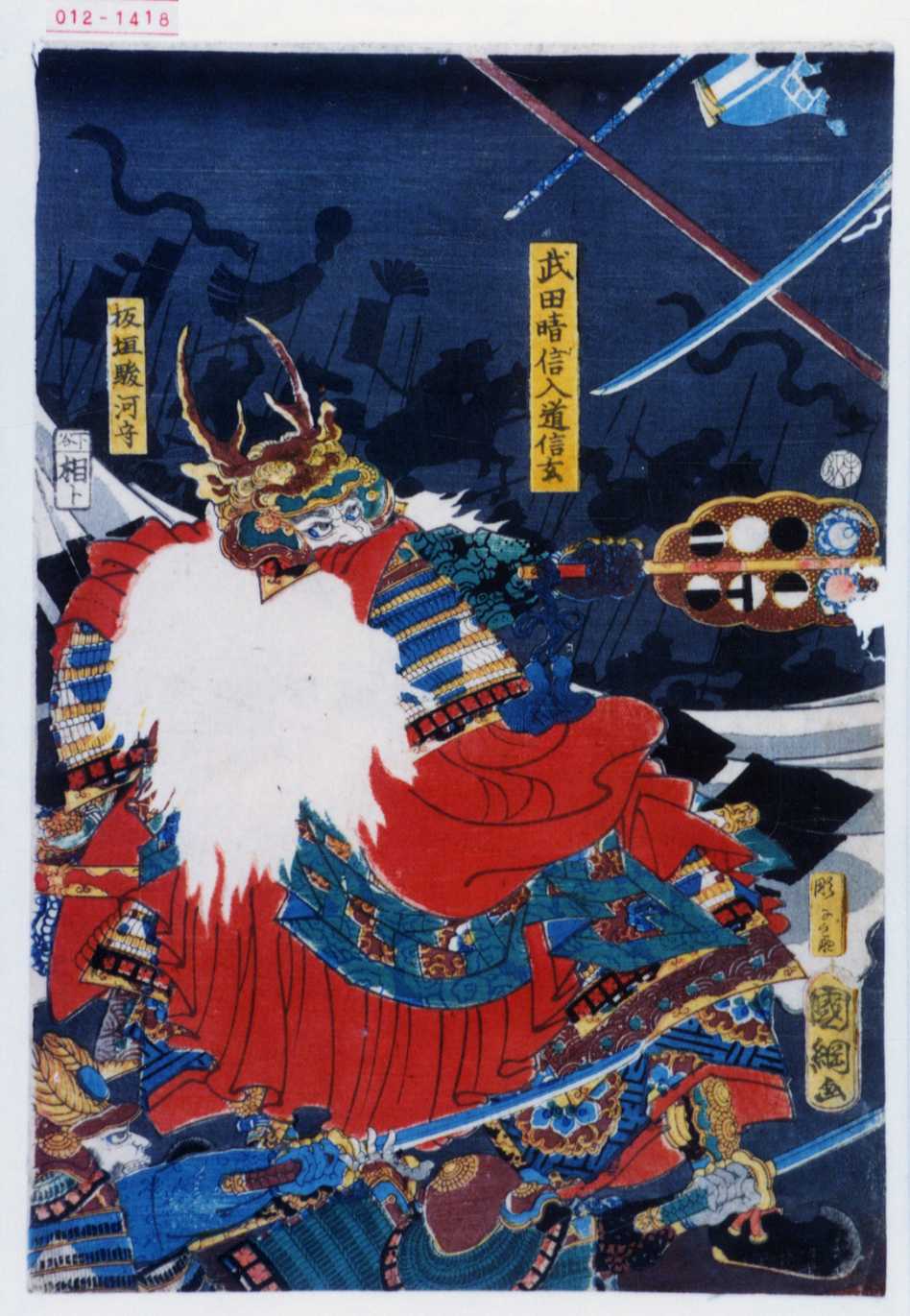
Takeda Harunobu Nyūdō Shingen and Itagaki Suruga-no-kami, from the series A Complete Picture of the Great Battle of Kawanakajima between Two Generals of Kō and Etsu
甲越両将川中島大戦全 武田晴信入道信玄 板垣駿河守
ca. 1858–1864
Color woodblock print (nishiki-e), ōban
Frequently Asked Questions
Precincts of the Hachiman Shrine at Fukagawa, from the series Famous Places in Edo (Edo meisho) (江戸名所之内 深川八幡境内) was created by Utagawa Kunitsuna (歌川国綱) in 9/1853.