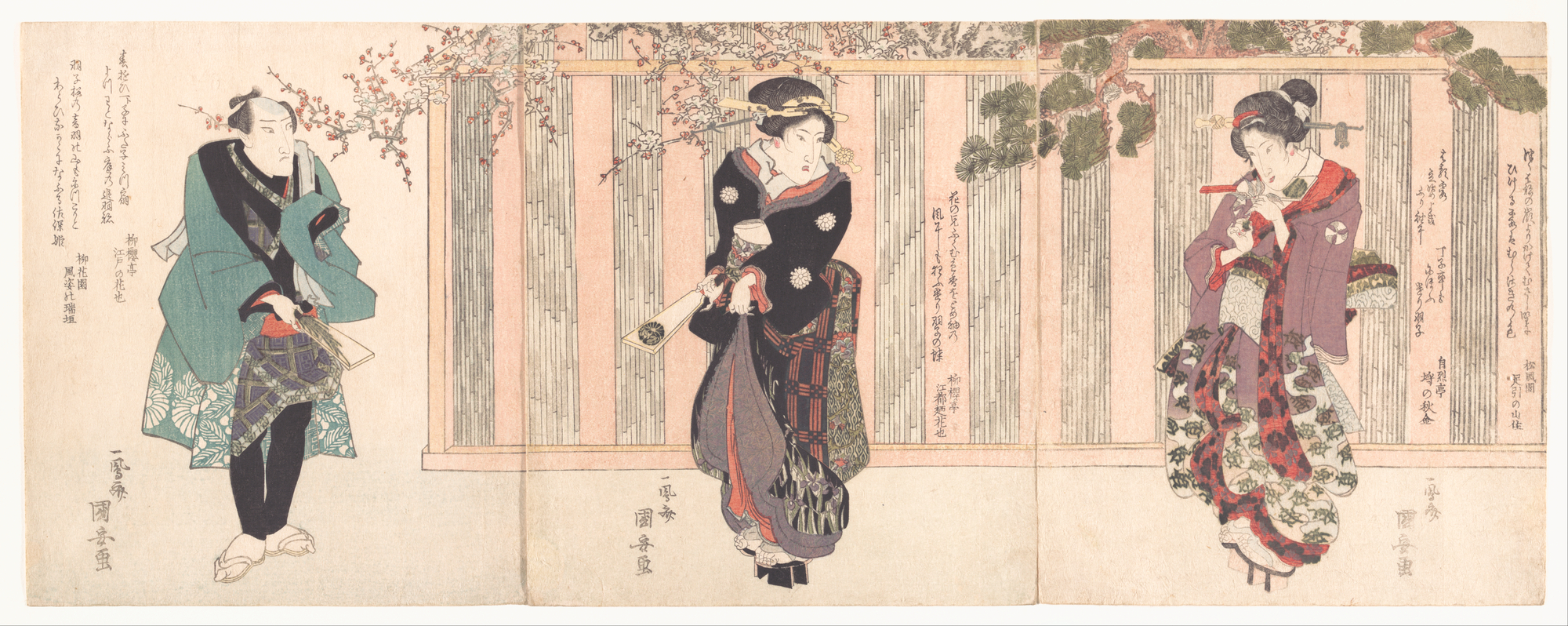
Three Kabuki Actors Playing Hanetsuki
- Date:
- ca. 1823
- Medium:
- Triptych of woodblock prints (surimono); ink and color on paper
- Source:
- The Metropolitan Museum of Art
Description
This surimono triptych of woodblock prints, held by the Metropolitan Museum of Art (accession number 2001.715.4a-c) and dated to circa 1823, depicts three kabuki actors playing hanetsuki, the traditional New Year's battledore-and-shuttlecock game in which paddles (hagoita) are used to keep a feathered shuttlecock aloft. The triptych comprises three sheets of approximately 18.4 by 21.3 cm each and is executed in the refined surimono idiom — ink and color on paper enhanced with the elaborate decorative techniques (embossing, metallic and mica printing, exceptionally fine block-cutting) that distinguished privately commissioned sheets from the standard commercial nishiki-e market. Hanetsuki was a customary New Year's pastime particularly associated with women and children, and surimono depicting the game were standard New Year greetings issued by poetry circles to their members. By replacing the conventional female and child players with three kabuki actors, Kuniyasu produces a witty mitate (visual parody) that combines the seasonal subject with theatrical celebrity portraiture, characteristic of his interest in the crossover between bijin-ga, yakusha-e, and ningyo-puppet subjects. The triptych is an excellent example of Kuniyasu's mature surimono practice and a representative document of the early-Bunsei (1820s) print market's elaborate cultivation of privately printed New Year sheets among poetry-club connoisseurs in Edo.
More Prints by Utagawa Kuniyasu

Beauty representing spring, from an untitled series of beauties representing the four seasons
c. 1818/30
Color woodblock print; oban

Woman holding puppet of actor Onoe Kikugoro III as Gokuin Sen'emon
c. 1820s
Color woodblock print; sheet from oban pentaptych
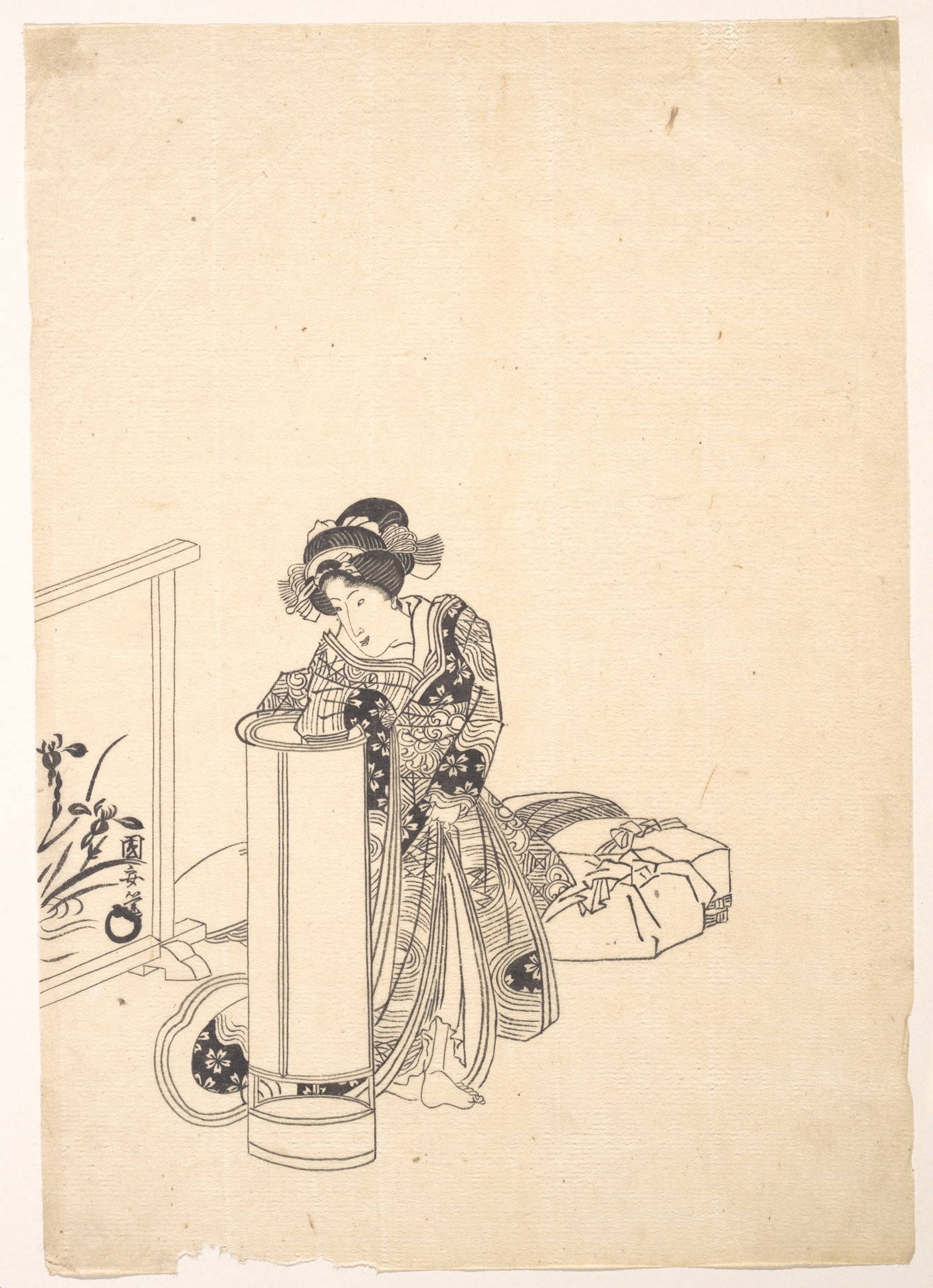
Young Woman Leaning over a Tall Lamp
early 19th century
Monochrome woodblock print; ink on paper

Beauty representing autumn, from an untitled series of beauties representing the four seasons
c. 1818/30
Color woodblock print; oban
Frequently Asked Questions
Three Kabuki Actors Playing Hanetsuki was created by Utagawa Kuniyasu (歌川国安) in ca. 1823.